
CPVC (Chlorinated Polyvinyl Chloride)
Cream-tan rigid plastic pipe rated for hot and cold potable water; brittle in cold and UV; 50-75 year service life.
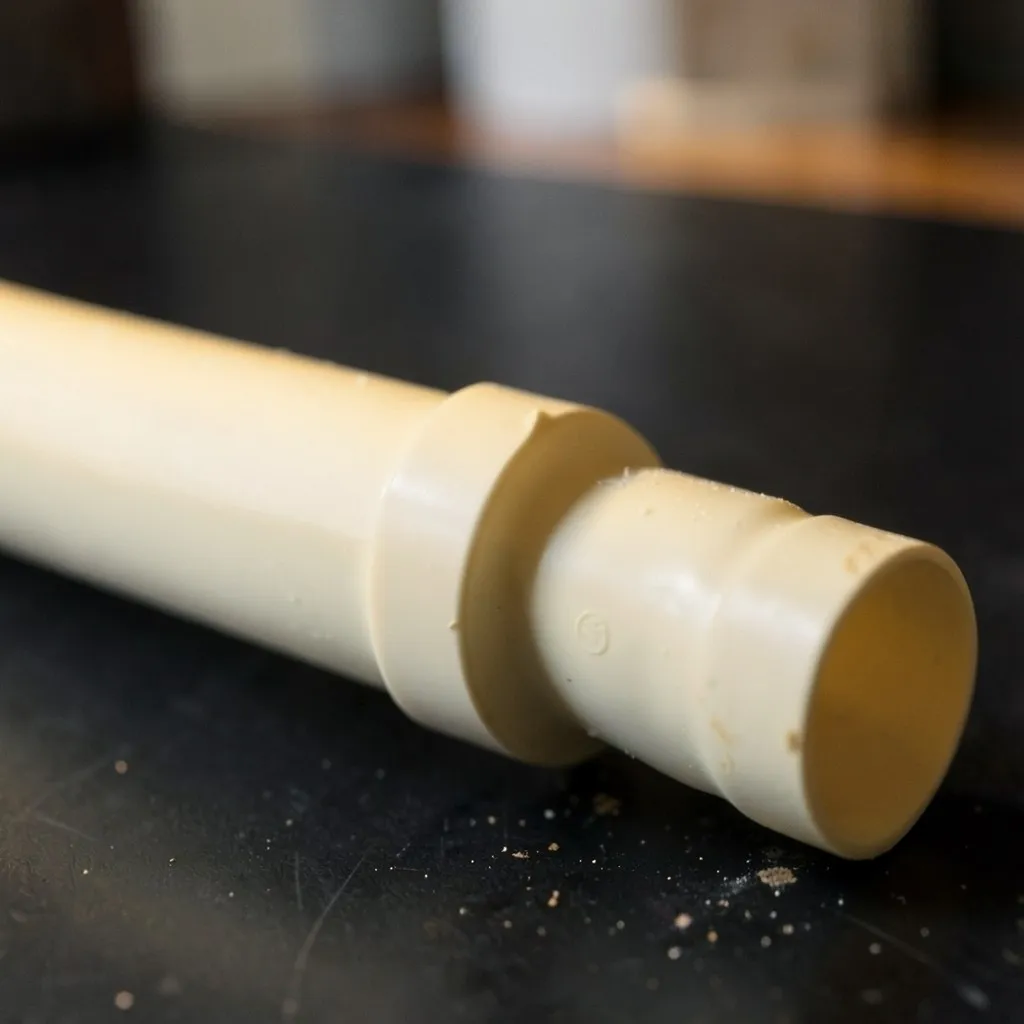
CPVC stands for Chlorinated Polyvinyl Chloride. It is a thermoplastic produced by adding chlorine to standard PVC resin, which raises the heat-deflection temperature enough to carry hot water. CPVC is approved for potable water supply, both hot and cold, and is one of the three dominant plastic options for residential repipe work alongside PEX and copper. It is sold in nominal pipe sizes from 1/2 inch through 2 inches for residential use, with Schedule 40 wall thickness for general plumbing and CTS (copper tube size) SDR 11 for tighter applications.
How do you identify CPVC pipe?
CPVC is rigid and uniformly cream, tan, or off-white in color, distinguishing it from white PVC (which is not rated for hot water) and the gray of polybutylene. Pipe is stamped with the manufacturer name, the ASTM standard (commonly F441 or F442), nominal size, pressure rating, and NSF-61 certification mark. Fittings match the pipe color and are joined with a two-step solvent-cement process: purple primer first, then orange or yellow CPVC cement. Joints cure within minutes but reach full strength in 1 to 24 hours depending on pipe size and ambient temperature.
How long does CPVC pipe last and how does it fail?
Manufacturers cite a 50 to 75 year design life under typical residential conditions. Real-world failure points are mechanical rather than chemical. CPVC becomes brittle below about 40 degrees F and can fracture if struck, dropped, or stepped on during cold-weather installation. Prolonged UV exposure degrades the resin, so any exterior or attic run must be jacketed or painted with a light-colored latex. Incompatible chemicals, including some spray foam insulations, certain fire-stop sealants, and petroleum-based thread sealants, can stress-crack CPVC at joints; manufacturer compatibility lists are part of any code-compliant install.
What does CPVC pipe replacement involve?
CPVC repairs are made by cutting out the damaged section and solvent-welding in a coupling and replacement run. Whole-system repipes are scoped the same way as PB or galvanized: trunk and branch lines from the meter or water heater out to fixture stub-outs, with drywall access patches and pressure tests. Mixing CPVC with PEX or copper is allowed using transition fittings rated for the connection (threaded brass adapters, push-to-connect, or proprietary transition couplings).
Is CPVC pipe approved under plumbing code?
CPVC is recognized in both the IPC (Section 605) and UPC (Section 604) for hot and cold potable water distribution. ASTM F441 covers Schedule 40 and 80 pipe; ASTM F442 covers SDR-PR pipe; ASTM F493 covers the solvent cement. NSF/ANSI 61 certification is required for any potable contact use. Local AHJs may add restrictions on concealed installations or require specific support spacing (typically every 3 feet horizontal for 1/2 inch pipe).
Researching the term is one thing — hiring for it is another. See whole-home repipe services for scope, timelines, and what drives the price, or call (888) 530-4445 for a no-cost estimate.
For the full picture — materials, process, timelines and what drives the cost — read Whole-Home Repipe: The Complete Guide.
What related terms should you know?
What sources back this up?
Need a verified plumber for whole-home repipe?
AlertPlumber matches you with a licensed plumber for whole-home repipe. Written estimate before any work begins.