
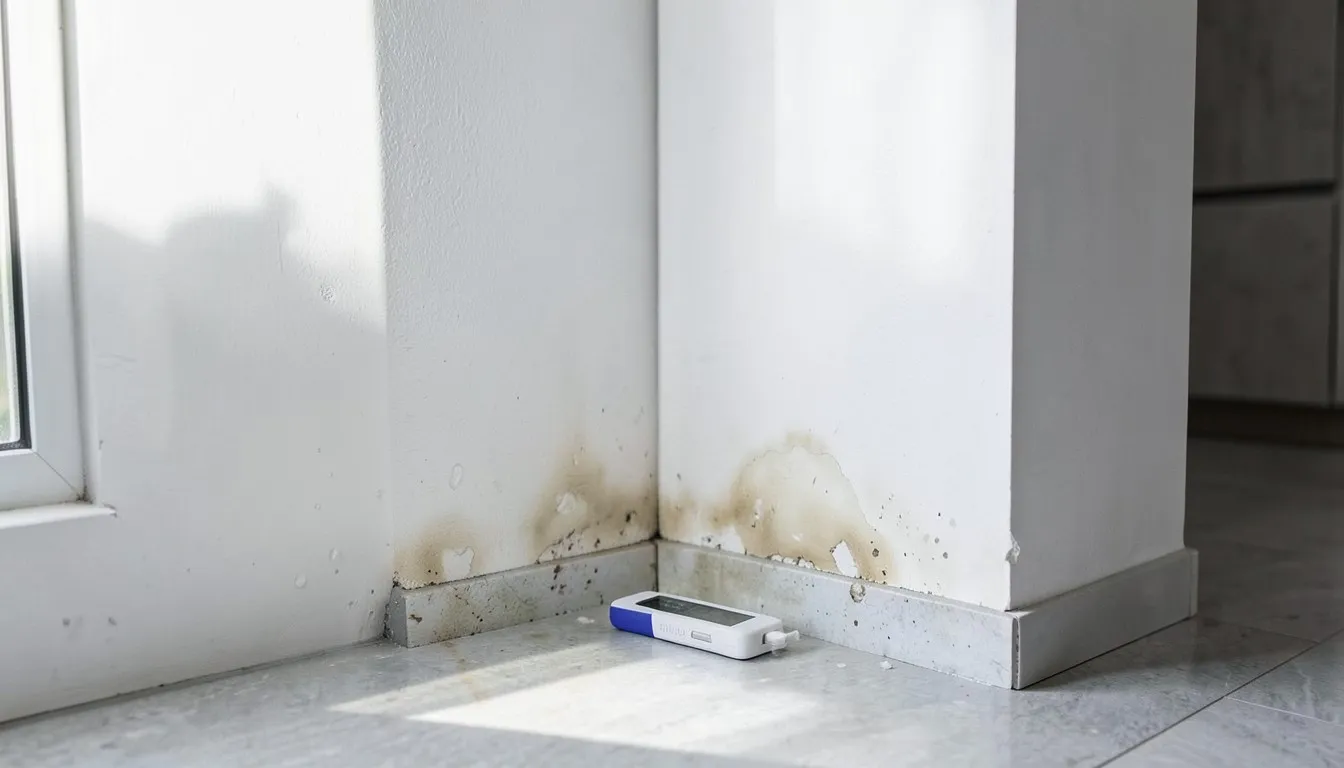
Emergency Leak Detection in Kansas City, Missouri
Leak Detection in Kansas City, Missouri locates hidden water and gas leaks using acoustic and thermal equipment. Local conditions in Kansas City: water measured at 10, a 32 frost line and a median home age of 58 years.
Camera first, quote second — know exactly what's wrong in your Kansas City home before you approve a dollar.
What does the local plumbing data show for Kansas City, MO?
Seeing these conditions at your place in Kansas City? A state-licensed plumber can confirm it over the phone — free, no obligation.
What are the pipe conditions in Kansas City, MO?
Non-invasive leak detection uses acoustic amplification, thermal imaging, and pressure isolation to locate water loss in supply lines and drain systems without opening walls or floors. Kansas City homes with galvanized or older copper supply runs face the highest pinhole leak incidence — a slow leak inside a wall cavity can cause mold and structural damage for months before becoming visible. A professional leak detection prevents unnecessary demolition by confirming the exact break location before any drywall is cut. AlertPlumber connects you with a Missouri-licensed plumber who locates first and opens second.
Kansas City's housing stock spans multiple construction eras — median home age 58 years — meaning pipe materials and failure modes vary significantly by neighborhood and building vintage. An inspection-led approach that confirms pipe material before recommending a service path is standard practice for mixed housing profiles.
Hard water in Kansas City accelerates scale buildup inside water heater tanks, on heating elements, and at fixture connections. Sediment accumulation in tank heaters reduces efficiency and shortens element life; visible deposits at aerators and showerheads are an early indicator. A licensed plumber can assess whether a water softener or conditioner is appropriate for the home's service configuration.
Frost line depth in Kansas City means supply lines and outdoor plumbing must be installed below the freeze threshold — typically 32 — to prevent pipe burst during cold events. Exterior hose bibs, irrigation shutoffs, and any exposed pipe runs are the most common winterization service points in freeze-risk markets.
- Median home age
- 58 yrs
- Water hardness
- 10 gpg
- Frost line
- 32 in.
- Lead lines
- Active replacement
- Permit
- $110
A licensed MO plumber reads these conditions the moment you describe the symptom.
What shapes plumbing demand in Kansas City, MO?
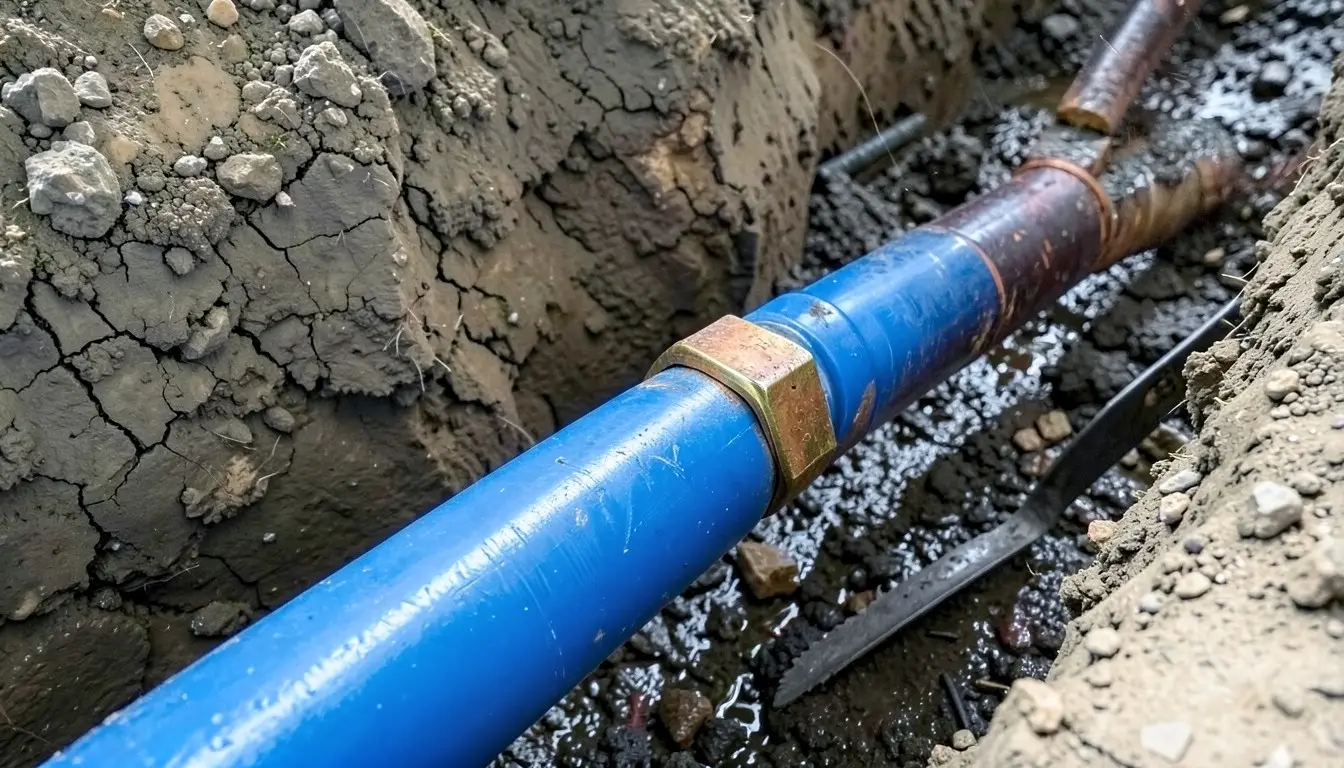
1950s–70s copper supply is now 50–70 years into its service cycle in Kansas City. Thermal fatigue at fittings and slab-on-grade access complexity — common in Sun Belt construction — make repair vs. replacement a live decision on most jobs. This housing cohort is the active primary replacement wave in this market.
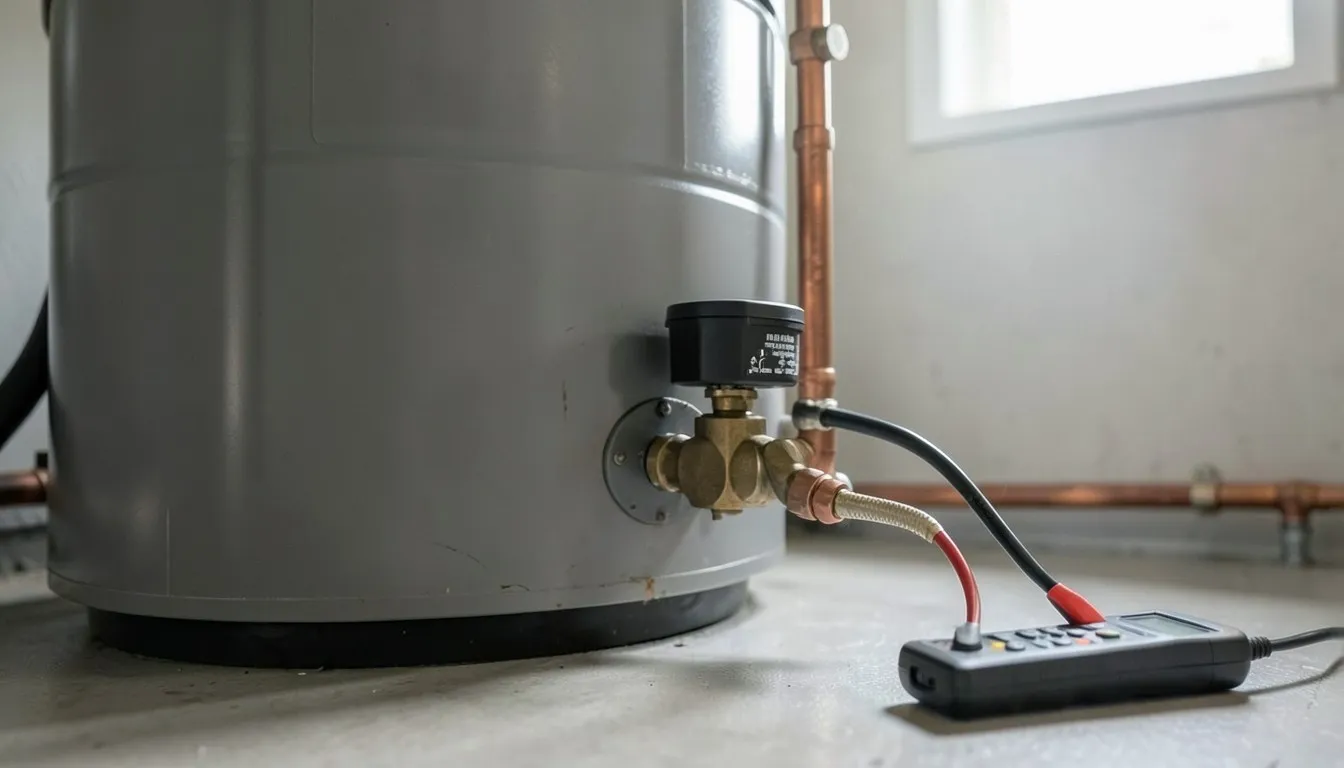
8–14 GPG shortens water heater service life to 8–11 years in Kansas City and drives rolling maintenance demand at aerators, shower cartridges, and heat exchanger ports. Annual flushing prevents premature failure; skipped maintenance cycles push units toward early replacement. Scale-related calls represent a significant share of the annual service workload here.
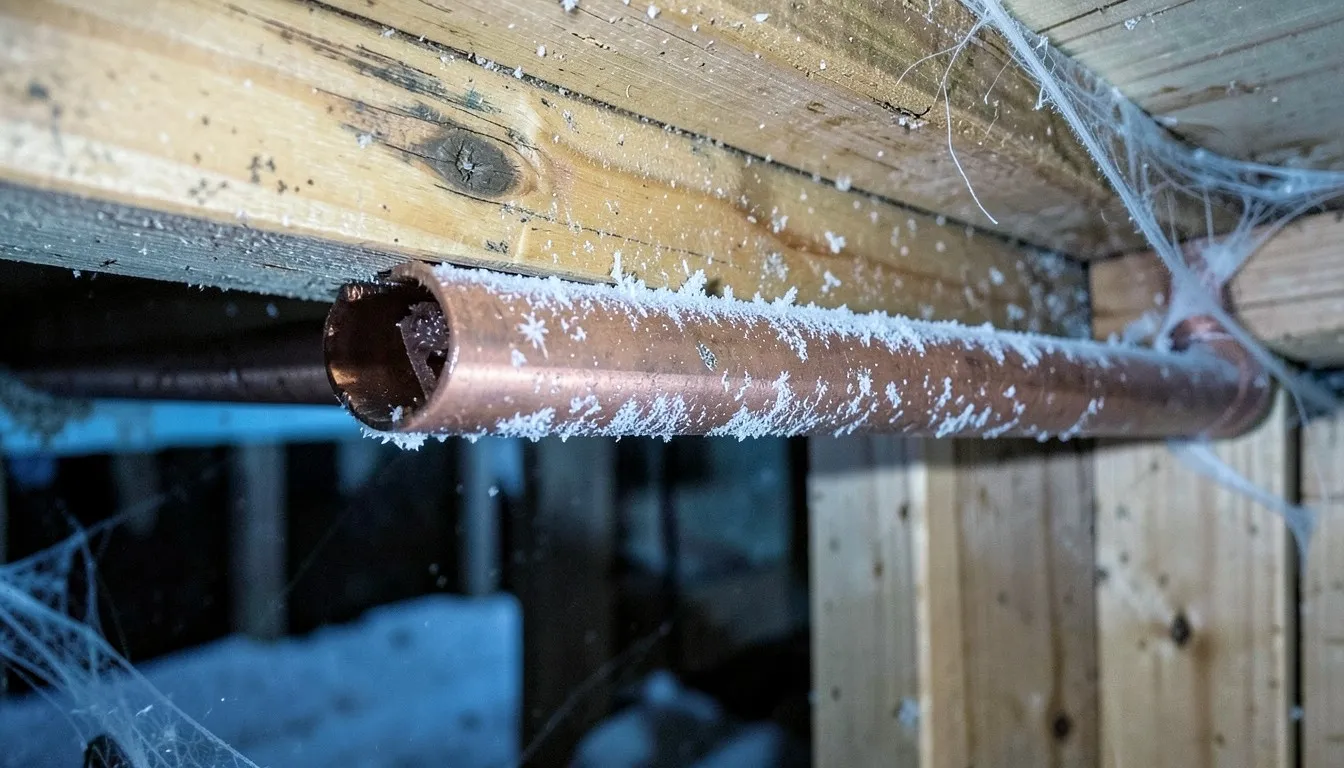
The primary surge in Kansas City runs January–March, with a secondary wave at the spring thaw — when pipes that held through the freeze rupture as pressure is restored above 32°F. Scheduling competition peaks exactly when emergency calls are highest. Homeowners who wait for visible damage compete for the same limited plumber slots at the worst possible time.
Why diagnose before repairing in Kansas City?
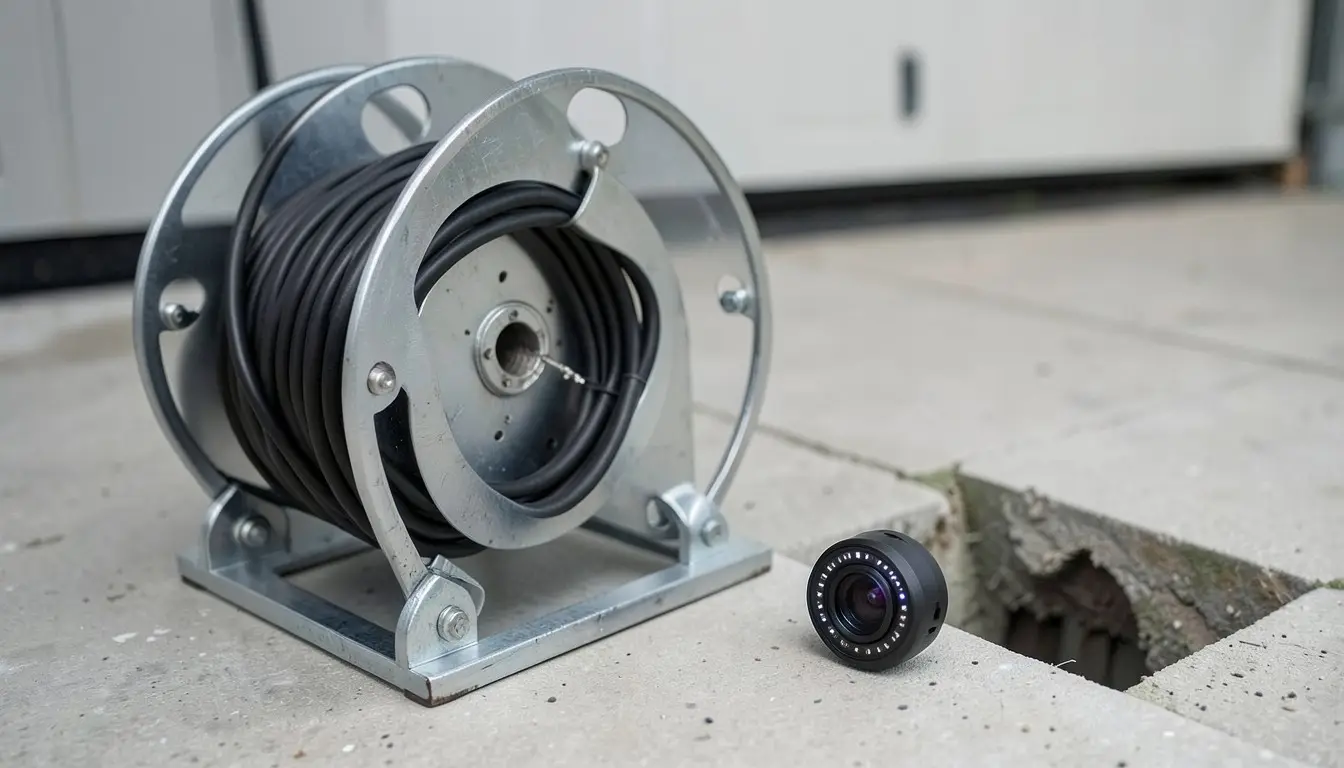
Describe the symptom — not the repair. AlertPlumber routes to an MO-licensed plumber trained in diagnostics. The site visit uses camera tracing, acoustic detection, or hydrostatic pressure testing — matched to the reported failure type.
The plumber delivers a written diagnostic report: confirmed failure location, available repair methods, and tradeoffs — disruption level, material durability, long-term cost, and whether a Kansas City building permit applies to the selected method.
You select the repair path. The Missouri-licensed plumber proceeds on the authorized method with a fixed scope and price. Where required, the permit application to Kansas City is handled by the contractor.
Leak Detection cost calculator — Kansas City
Pre-filled for leak detection in Kansas City. Adjust the ZIP for a neighboring area, or change the service to compare. Calculator pulls from the city's scraped permit-fee + state plumber-density data.
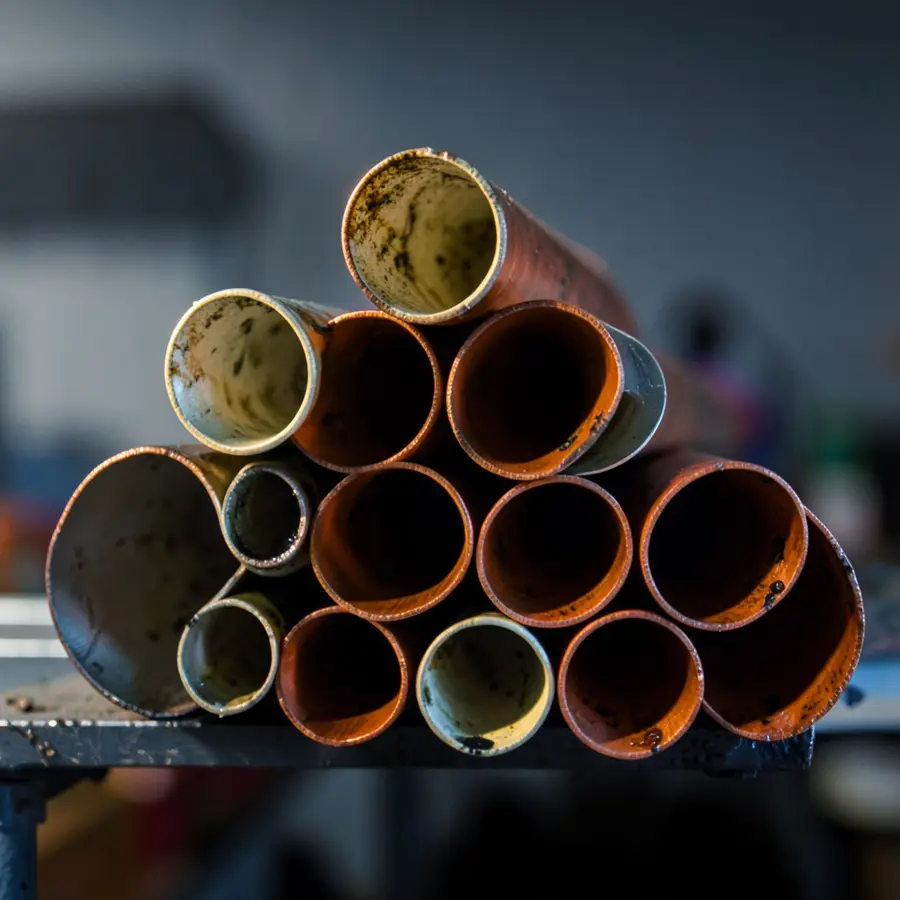
Leak Detection in Kansas City — the longer it runs, the more it costs.
Slow failures compound: soft pipe walls, root penetration, mineral buildup. A verified plumber calls back with a scope-first estimate before anything is dug up.
What else do people ask about leak detection in Kansas City?
How much does professional leak detection cost in Kansas City, MO?
A non-destructive leak detection workup in Kansas City typically runs $265–$510 flat, billed before any repair quote. The price covers FLIR thermal scanning, acoustic ground-microphone listening on the supply manifold, and a static pressure-isolation test. The detection fee is usually credited toward repair if you book the same crew. Repair itself sits on top — a Brookside or Country Club Plaza craftsman-bungalow galvanized-supply replacement spot runs $1,650–$3,400 once the wall is opened, a Waldo or South KC ranch Type-M-copper-in-slab pinhole spot repair $1,400–$3,200, hidden-wall pinhole repair behind plaster $420–$1,050. Add a KCMO Water Services Department $110 city plumbing permit on the Missouri side for any line cut or fixture replacement that triggers MO BPC permit-pull obligations — KCK BPU on the Kansas side runs a separate fee schedule and inspector queue, so confirm which side of the state line the address sits on before the truck rolls. Detection fee on the Plaza loft portfolio is at the high end because tower-stack access takes longer than a 1958 ranch.
How do I know if I have a hidden leak in my Kansas City home?
Symptoms split sharply by neighborhood and era. Brookside / Country Club Plaza / Westport 1900s-1930s craftsman bungalow + tudor on galvanized supply: rust-tinted water at first draw, faint hissing inside lath-and-plaster walls, warm baseboard near the bath stack, a 20%+ KCMO Water Services bill jump with steady usage. Waldo / South KC 1950s-1970s ranch tract on Type-M copper-in-slab: warm spot underfoot in the hall or kitchen (slab pinhole on hot side at 8-10 gpg moderate-hard), hairline grout cracks fanning from a single tile, mold smell at the carpet edge. Power & Light District / Crossroads / River Market 2000s+ infill lofts and condos: wet ceiling panels in the unit below yours, HOA water-bill allocation spike, condensate or stack leak at chase walls. Across all three, KCMO meter low-flow indicator movement with every fixture off ends the debate — call detection. Two billing cycles is the longest this should be left unexamined; tornado-belt April-June saturation makes secondary structural damage cascade fast.
What detection methods does a Kansas City plumber actually use?
The standard Kansas City sequence: (1) static pressure-isolation test on the supply manifold confirms a leak exists and isolates hot vs cold side, (2) FLIR T-series thermal imaging localizes warm anomalies on slab, walls, or rim joist, (3) acoustic ground-microphone listening triangulates within 12–18 inches over Missouri River + Kansas River alluvial subgrade — the alluvial silt-loam transmits acoustic signal differently than the Equus Beds aquifer sand 200 miles southwest, so the technician adjusts gain accordingly, (4) electronic line-tracing maps copper or galvanized run before any plaster or slab cut. The 1958 median build year is the deciding factor: pre-1965 Brookside and Westport homes get a galvanized-pinhole-at-elbow first-pass, 1950s-70s Waldo ranches get a hot-side-slab-pinhole first-pass Copper Development Association, Copper Tube Handbook, Power & Light infill lofts get a stack-and-chase first-pass.
Will Missouri HO-3 homeowners insurance cover Kansas City leak detection?
Most Missouri HO-3 policies cover the DETECTION fee when the underlying leak is classified as "sudden and accidental" — not gradual seepage that's been weeping behind a Brookside lath-and-plaster wall for two years. Standard MO HO-3 pays for tear-out + access (slab cut, plaster opening, detection report, moisture-mapping) but excludes repair of the failed pipe itself, which carriers treat as wear-and-tear on a 1958-median-build housing stock. Tornado-belt April-June wind events open a separate adjuster path — if a Liberty or Lee's Summit storm event shifted the structure and a pipe joint sheared, the cause-of-loss flips to wind/storm and the repair itself can become covered. Submit the matched plumber's written report with FLIR thermal imagery, acoustic triangulation log, and pressure-test results within the carrier's 60-day proof-of-loss window. Verbal diagnosis alone gets denied. The MO BPC license number on the report is what carriers cross-check against Missouri Board of Plumbers.
Why is the cross-state-line KCMO Water vs KCK BPU billing complexity a leak-detection issue?
Kansas City sits across two states with two separate water utilities — KCMO Water Services Department on the Missouri side, Kansas City Board of Public Utilities (KCK BPU) on the Kansas side — and the property line on a North Kansas City, Liberty, or KCK address determines which meter, which billing cycle, and which leak-adjustment policy applies. KCMO Water Services bills monthly with wastewater pegged to winter-quarter average; KCK BPU bills bi-monthly on a different cycle. A hidden leak on the Missouri side shows up as a 20%+ KCMO Water bill spike with matching wastewater multiplier; the same leak on the Kansas side may not register for two months under BPU's longer cycle. KCMO Water Services offers a one-time leak adjustment if the homeowner submits a credentialed plumber's repair invoice within 60 days, citing KCMO Water Services Department billing rules; KCK BPU runs its own adjustment process. The matched detection plumber will note which utility appears on the bill before sequencing the diagnostic — wrong utility on the report kills the adjustment claim.
Can a Kansas City homeowner locate the leak without calling a plumber?
You can confirm a leak EXISTS on your own — shut every fixture, watch the KCMO Water meter's low-flow triangle indicator (or the KCK BPU equivalent on the Kansas side). Any movement over 15 minutes with everything off means water is escaping somewhere on your supply side. You cannot reliably LOCATE the leak yourself, and the tornado-belt April-June window is exactly when DIY-cap homeowner pattern produces the worst outcomes — a homeowner caps a hose-bib silcock, declares the leak fixed, and the actual pinhole upstream keeps weeping into the slab through two storm cycles. Consumer-grade IR thermometers don't have spatial resolution to distinguish a slab pinhole from a sun-warmed grout line, and rental moisture meters can't read through 4 inches of concrete on a Waldo ranch slab. Confirm existence yourself; leave location to a plumber with calibrated FLIR T-series and an acoustic ground-microphone tuned for Missouri+Kansas River alluvial silt-loam.
Why does Missouri River + Kansas River alluvial soil change leak moisture-mapping?
Kansas City sits in the Missouri River + Kansas River basin alluvial plain — silt-loam over deeper sand and gravel laid down by the two rivers, very different from Wichita's Equus Beds aquifer sand or the Cheney Reservoir watershed loess USGS Central Midwest Water Science Center. Three implications for leak detection: (1) alluvial silt-loam holds moisture longer than Plains loess, so a slab leak running 30 days saturates a 6-8 foot radius before surface symptoms emerge — moisture-mapping has to extend further from the FLIR hit, (2) tornado-belt April-June rainfall layered on already-saturated alluvial subgrade pushes the hydrostatic floor against slabs and confuses the thermal contrast a FLIR camera relies on, (3) on Brookside and Westport 1900s-1930s craftsman foundations (rubble stone or early concrete), alluvial soil movement during freeze-thaw cycles in 110-freeze-day winters cracks galvanized supply at the elbow. The matched plumber's workflow accounts for the alluvial-soil moisture footprint before recommending where to cut.
How accurate is FLIR thermal imaging in Kansas City's mixed seasonal Plains climate?
For a hot-line slab pinhole on a Waldo or South KC 1950s-70s Type-M-copper ranch, a properly calibrated FLIR T-series camera localizes within an 18-inch radius about 85–92% of the time on the first scan. Kansas City's 110-freeze-day winter is actually FLIR's friend — the slab-vs-leak thermal contrast is sharpest December-February NOAA NWS Pleasant Hill (KC forecast office). Accuracy drops in three Kansas City scenarios: (a) cold-line pinhole on a Brookside galvanized supply — no thermal contrast against ambient slab, requires acoustic-first sequencing, (b) tornado-belt April-June saturated alluvial soil under a slab — the thermal floor is uniformly damp, washing out the FLIR contrast, (c) Power & Light District 2000s+ infill loft with insulated stack-chase walls — the stack insulation hides thermal signal, requiring a borescope drop. A skilled Kansas City tech reads the season and the housing era before deciding whether FLIR or acoustic runs first.
Should I get a system-wide pressure test on my Kansas City home?
Yes if the address is a Waldo or South KC 1950s-70s Type-M-copper-in-slab ranch and you've had one pinhole repaired. A system-wide static pressure test ($165–$295) isolates each branch (hot, cold, irrigation, exterior hose-bib silcocks) and holds 80 psi for 15 minutes — any pressure drop signals an additional weak point. Kansas City-area plumbers report homes with one detected hot-side slab pinhole have a 38–52% probability of a second pinhole within 36 months on the same manifold at 8-10 gpg moderate-hard water, because the entire run was installed by the same crew on the same day from the same coil. Brookside and Westport 1900s-1930s galvanized homes get tested differently — pressure-test only after the matched plumber confirms the galvanized can hold 80 psi without rupturing at a different pinhole. Tornado-belt April-June is the busiest detection-season; book the pressure test in February-March before the queue fills.
Are AlertPlumber-matched plumbers verified for leak detection in Kansas City, MO?
The partner network requires every plumber routed through AlertPlumber for Kansas City leak detection on the Missouri side to maintain active Missouri state credentialing — confirmed against Missouri Board of Plumbers, which lists 5,840 active MO BPC statewide. Detection on the Kansas side (KCK, North Kansas City spillover, Lenexa-Overland Park ring) is credentialed under Kansas state rules, a separate 3,420-licensee pool — the matched plumber's credentials are routed to the correct state-of-record based on the property address before the call is dispatched. AlertPlumber re-checks credential status at the time the call is routed, not just at signup, so an expired or suspended license cannot accept the lead. The dispatcher names the matched contractor on the callback so you can independently verify on the MO Board of Plumbers lookup before they roll the truck. Detection equipment (calibrated FLIR T-series, ground-microphone acoustic tuned for Missouri+Kansas River alluvial silt-loam, pressure-isolation manifold) is operator-trained and varies by shop — confirm the specific tools on the live callback before authorizing the visit. EPA SDWA Safe Drinking Water Act compliance is the carrier-of-record's obligation; the matched plumber's repair restores SDWA-compliant integrity.
The fix gets cheaper the sooner a plumber sees it.
Degradation problems compound quietly. Call now, or use the form below and a licensed Missouri plumber calls you back with a no-obligation estimate for the leak detection.
Need a leak detection callback in Kansas City?
In a meeting, with the kids, or just prefer not to hold? Drop your ZIP and number below. AlertPlumber routes your request to a verified plumber in your area — they’ll call you back directly.
- 1 Submit your info. ZIP, phone, and what kind of work you need.
- 2 AlertPlumber matches you with a verified plumber serving your area.
- 3 The plumber calls you back with a written estimate, no obligation.
Leak Detection in Kansas City — catch it early
Degradation-driven failures worsen over time and cost more to fix the longer they run. A verified MO plumber in Kansas City diagnoses your specific condition and provides a written scope before any work begins.