
Pipe Joint
Any connection point between two sections of pipe or between a pipe and a fitting. The quality of pipe joints determines a plumbing system's leak-free service life.
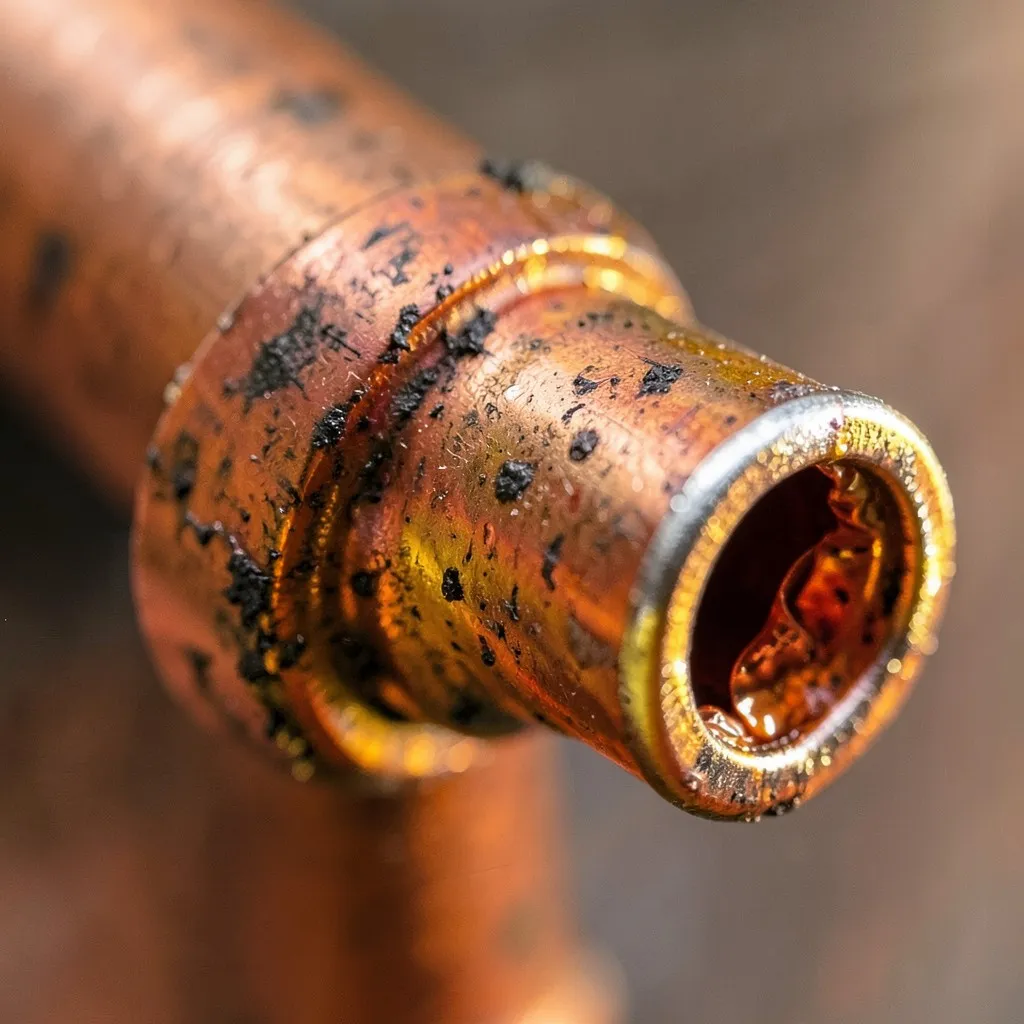
A pipe joint is any point where two pipe sections or a pipe and fitting are connected to form a continuous, watertight (or airtight, for gas) connection. Every plumbing system contains hundreds of joints — at every fitting, valve, fixture connection, and pipe coupling. The type of joint used depends on the pipe material, the service (water supply, drain, gas), the permanence required, and the installation environment.
What types of pipe joints are there?
- Soldered (sweat) joints — copper: the traditional method for copper supply lines. Flux + heat + lead-free solder wick into the joint gap by capillary action. When done correctly, extremely durable (40+ years). Requires torch, flux, and skill.
- Push-fit joints — copper, CPVC, PEX: no tools or heat. A grab ring and O-ring inside the fitting create a watertight connection when the pipe is inserted. SharkBite is the dominant brand. Fast and removable but premium-priced.
- Solvent-weld joints — PVC, CPVC, ABS: primer dissolves the pipe surface; cement fuses the plastic at a molecular level. Permanent, very strong when cured correctly. Requires correct primer/cement pairing for the pipe material.
- Crimp/clamp joints — PEX: a metal ring (crimp ring or clamp ring) is compressed over a PEX fitting connection using a crimp tool. The industry standard for PEX supply systems.
- Threaded joints — steel, brass, iron: tapered NPT (National Pipe Thread) male threads screw into female threads, sealing through thread engagement plus pipe dope or PTFE tape on the male threads.
- Compression joints: a ferrule compressed by a nut against the fitting body. Used at fixture supply connections and on small-diameter copper lines.
- Mechanical joints — cast iron: Fernco rubber couplings with hose clamps join cast iron to PVC or cast iron to cast iron without cutting threads or soldering.
How do pipe joints fail?
The most common joint failures: dried-out PTFE tape on threaded joints, pinholes at poorly soldered copper joints, and improperly primed PVC solvent-weld joints. Any joint showing active moisture (drip, seeping, mineral staining) should be repaired promptly — a small leak worsens over time.
Researching the term is one thing — hiring for it is another. See whole-home repipe services for scope, timelines, and what drives the price, or call (888) 530-4445 for a no-cost estimate.
For the full picture — materials, process, timelines and what drives the cost — read Whole-Home Repipe: The Complete Guide.
What related terms should you know?
What sources back this up?
Need a verified plumber for whole-home repipe?
AlertPlumber matches you with a licensed plumber for whole-home repipe. Written estimate before any work begins.