
Push-Fit Fitting
Quick-connect plumbing fitting that joins copper, PEX, or CPVC pipe by pushing pipe into the body without solder, crimp, or glue.
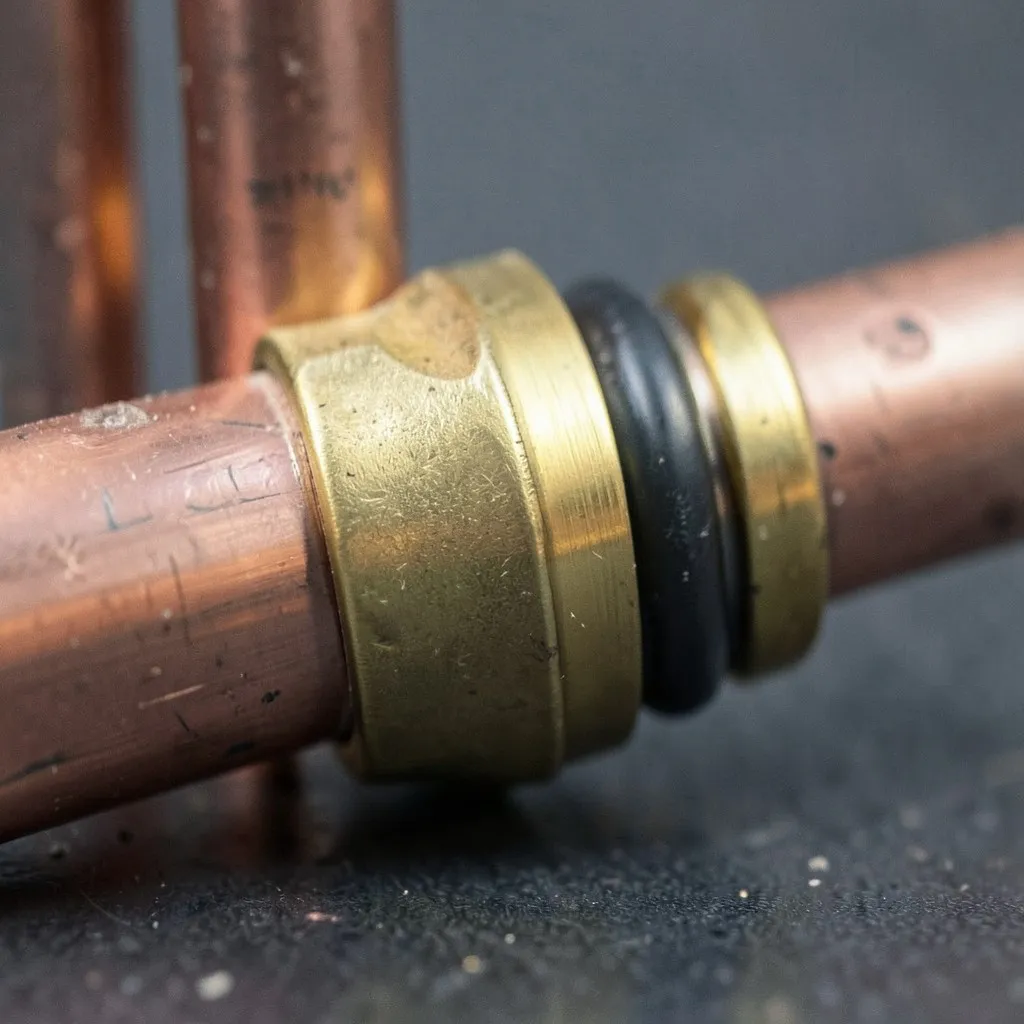
A push-fit fitting, sometimes called a push-to-connect or by the brand name SharkBite, is a mechanical fitting that joins pipe without heat, solder, glue, or specialized crimping tools. The fitting body contains a stainless-steel grip ring with internal teeth that bite into the pipe and an EPDM O-ring that seals against the pipe wall. The pipe is cut square, deburred, marked for insertion depth, and pushed firmly into the fitting until it bottoms out. Disassembly uses a small release collar or tool that retracts the grip ring.
The fittings work on copper (types K, L, and M), PEX-a, PEX-b, PEX-c, and CPVC, and there are also models with PEX-stiffener inserts factory-installed. They are widely used in emergency repair, where shutting off heat sources or waiting for solvent cement to cure is impractical, and in retrofit work where mixing pipe materials is unavoidable.
Pricing in 2026 typically runs 5 to 15 dollars per half-inch fitting at retail, several times the cost of a sweat or crimp equivalent. Larger diameters and specialty configurations such as transition unions or angle stops cost more. The cost premium is offset by speed and the absence of consumables and tools, which makes push-fit attractive for one-off repairs and for technicians who do not solder.
Code acceptance is broad. Push-fit fittings tested to ASSE 1061 are listed in the IPC and UPC for potable water and hydronic heating. Major manufacturers rate their fittings for behind-wall and underground use with a 25-year warranty when installed per instructions. Despite the listing, some local jurisdictions and some inspectors require push-fit fittings to remain accessible, so the manufacturer warranty and the local code amendment should both be checked before concealing them.
The professional debate over push-fit reliability is genuine. Critics point to the O-ring as a wear item that can fail decades after installation, to debris or pipe-end burrs that score the seal during assembly, and to the higher per-joint cost. Defenders cite decades of field history, third-party listings, and manufacturer warranties as evidence that a properly installed push-fit joint behind a wall is no more risky than a properly soldered or crimped joint. Best practice for any concealed joint is the same regardless of method: cut and deburr the pipe, mark and verify insertion depth, support the pipe so the joint is not under bending or tensile stress, and pressure-test before closing the wall. PEX-crimp and sweat copper remain the lower-material-cost choices for new construction, while push-fit holds an advantage in repair, transition, and emergency scenarios.
Researching the term is one thing — hiring for it is another. See whole-home repipe services for scope, timelines, and what drives the price, or call (888) 530-4445 for a no-cost estimate.
For the full picture — materials, process, timelines and what drives the cost — read Whole-Home Repipe: The Complete Guide.
What sources back this up?
Need a verified plumber for whole-home repipe?
AlertPlumber matches you with a licensed plumber for whole-home repipe. Written estimate before any work begins.