
Sanitary Tee
A drain-waste-vent fitting shaped like a letter T with a curved sweep on the branch inlet, designed to connect branch drains to vertical stacks while maintaining proper flow direction.
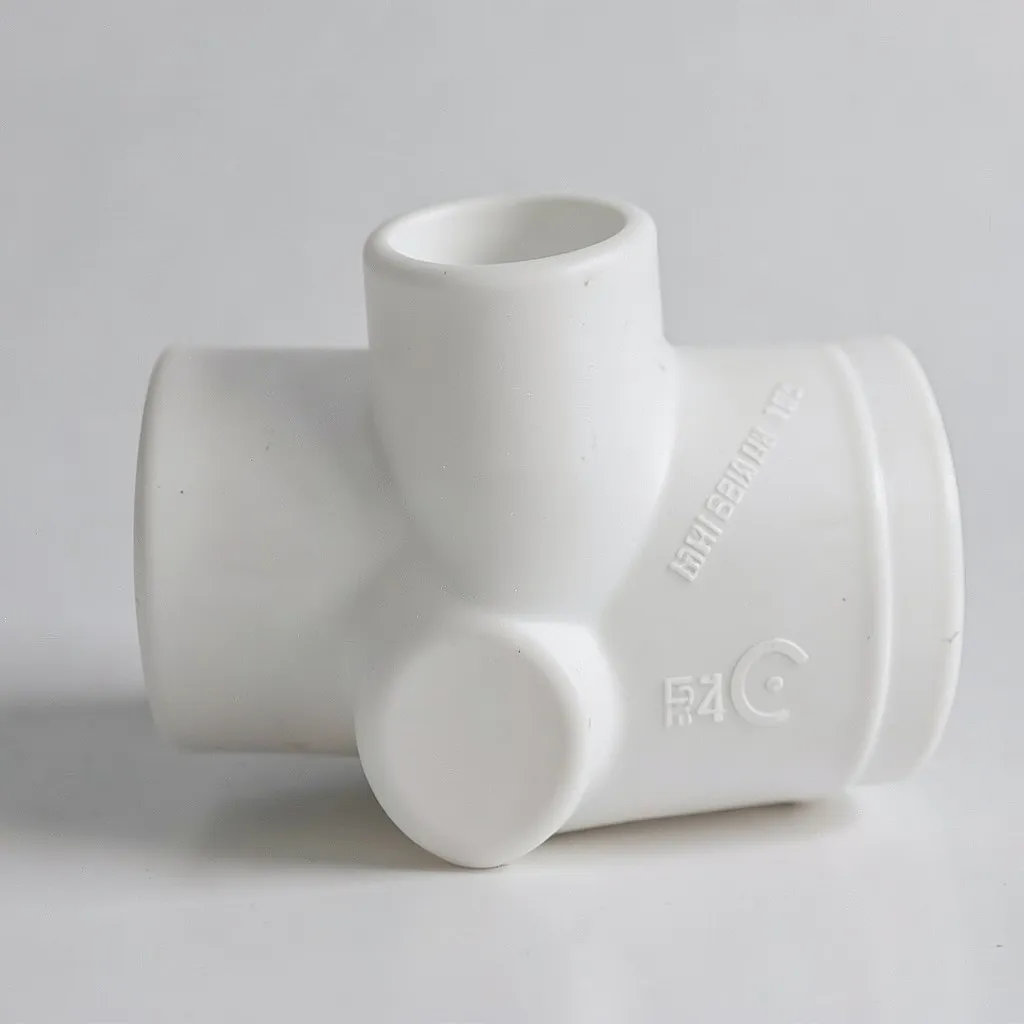
A sanitary tee is a drain-waste-vent (DWV) fitting with a T-shape where the branch inlet has a curved (swept) entry that directs flow in one direction only — downward into the main drain. The curve (sweep) prevents solids from hanging up in the fitting and ensures wastewater flows smoothly from the branch line into the vertical stack. Sanitary tees are one of the most common DWV fittings in residential plumbing.
How do sanitary tees differ from standard tees?
A standard (plumbing) tee has a straight-through pattern with a 90-degree branch opening. This is fine for venting (where only air flows) but not for drains — the sharp 90-degree turn creates turbulence, slow flow, and clogs. A sanitary tee's swept branch has a gentle curve that transitions flow direction smoothly. The asymmetry means sanitary tees are directional — they install with the sweep pointing downward toward the direction of drain flow.
What code restrictions apply to sanitary tees?
The International Plumbing Code specifies exactly where sanitary tees can and cannot be used:
- Allowed: branch drains connecting into vertical stacks (the curved branch faces the direction of vertical flow)
- Not allowed: horizontal-to-horizontal connections — a sanitary tee used on its side would direct flow up into the branch rather than down. Use a wye + 1/8 bend combination or a combo fitting instead.
Where are sanitary tees typically used?
- Connecting lavatory, bathtub, or laundry drains to a vertical soil stack
- Stack connections in multi-story DWV systems
- Vent connections at the top of stacks
What materials are sanitary tees made from?
Sanitary tees are available in PVC (Schedule 40), ABS, cast iron (hub and hubless), and copper. PVC and ABS are standard for new construction; cast iron is used where noise reduction is a priority (apartments, hotels).
Researching the term is one thing — hiring for it is another. See drain cleaning services for scope, timelines, and what drives the price, or call (888) 530-4445 for a no-cost estimate.
For the full picture — materials, process, timelines and what drives the cost — read Drain Cleaning: The Complete Guide.
What related terms should you know?
What sources back this up?
Need a verified plumber for drain cleaning?
AlertPlumber matches you with a licensed plumber for drain cleaning. Written estimate before any work begins.