
Rough-In Plumbing
The first phase of plumbing installation where supply lines, drain pipes, and vent stacks are run through walls and floors before drywall or fixtures are installed.
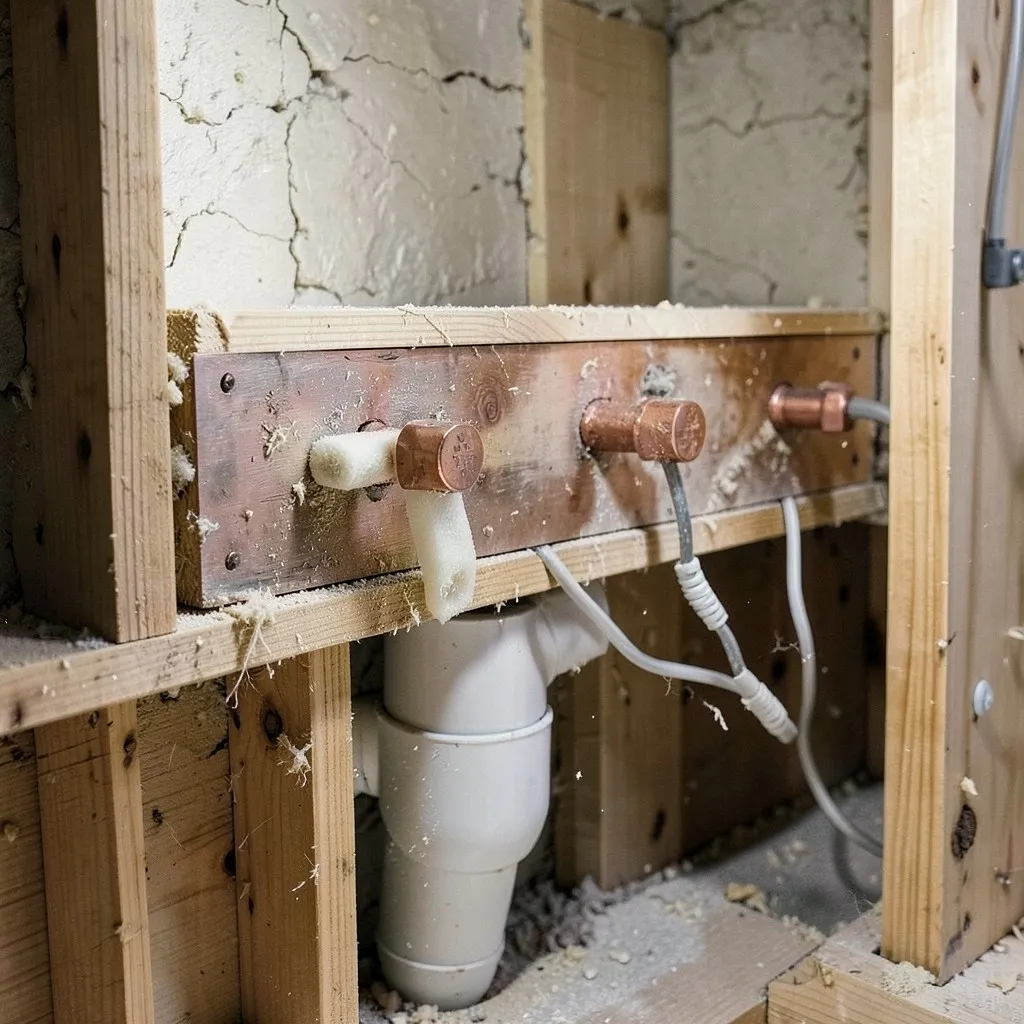
Rough-in plumbing is the first phase of a plumbing installation, completed before drywall, tile, or finish surfaces go up. During rough-in, a plumber installs all the pipes, drain lines, and vent stacks that will be hidden inside walls, floors, and ceilings — leaving stub-outs at the locations where fixtures will eventually connect.
What happens during rough-in plumbing?
- Supply lines (hot and cold) are run from the main shutoff to each fixture location
- Drain-waste-vent (DWV) pipes are installed with correct slope (¼ inch per foot for horizontal drains)
- Vent stacks are run up through framing to the roof
- Stub-outs are capped and left protruding from walls at code-required heights
- Inspection is scheduled — most jurisdictions require a rough-in inspection before walls close
Rough-in dimensions are the measurements from a finished wall or floor to the center of a drain or supply stub-out. These numbers must match the fixture you're installing. Common rough-in dimensions:
- Toilet: 12 inches from finished wall to drain center (some older homes are 10 or 14 inches)
- Bathroom sink: 18–21 inches above finished floor for drain stub-out
- Shower: drain centered in the pan, supply valve 48 inches above finished floor
- Kitchen sink: drain stub-out 18–20 inches above finished floor
Why does rough-in matter?
Errors at this stage are expensive to fix after drywall is hung. If a toilet rough-in is 10 inches instead of 12, you need a special offset flange or a completely different toilet model. Getting rough-in dimensions verified before walls close is the job of both the plumber and the general contractor.
What does rough-in plumbing cost?
Rough-in plumbing for a new bathroom addition runs $1,500–$4,500 depending on complexity, distance from existing stacks, and local permit fees. Full-house rough-in on new construction runs $8,000–$18,000 for a 2,000 sq ft home.
Researching the term is one thing — hiring for it is another. See whole-home repipe services for scope, timelines, and what drives the price, or call (888) 530-4445 for a no-cost estimate.
For the full picture — materials, process, timelines and what drives the cost — read Whole-Home Repipe: The Complete Guide.
What related terms should you know?
What sources back this up?
Need a verified plumber for whole-home repipe?
AlertPlumber matches you with a licensed plumber for whole-home repipe. Written estimate before any work begins.