
Pipe Scale
Mineral deposits (primarily calcium carbonate) that accumulate on the interior walls of pipes and water heaters in hard-water areas, reducing flow capacity and causing premature equipment failure.
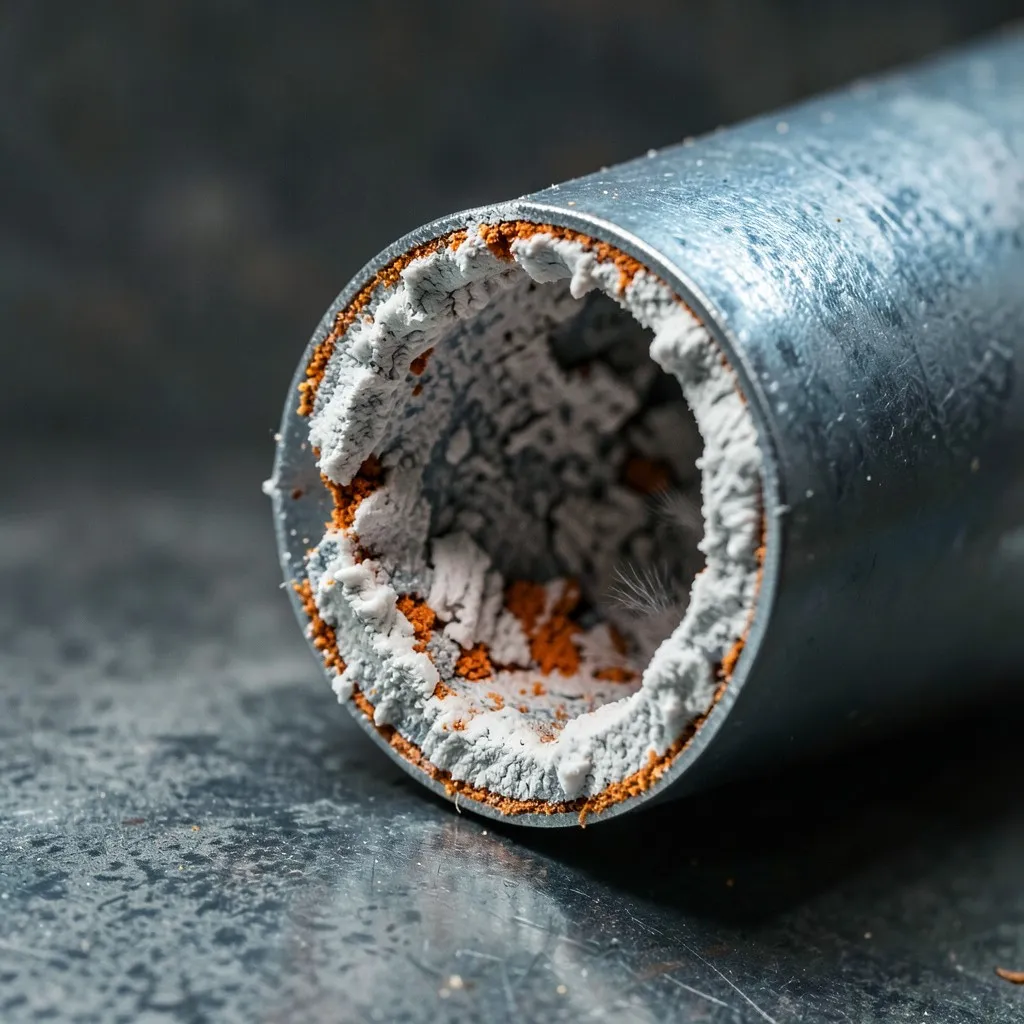
Pipe scale (also called mineral scale, limescale, or calcium deposits) is the hard, chalky buildup of calcium carbonate (CaCO₃) and magnesium compounds that precipitates from hard water onto the interior surfaces of pipes, water heaters, appliances, and fixtures. As water is heated or pressure drops, dissolved calcium and magnesium minerals crystallize out of solution and adhere to surfaces — accumulating into a white, gray, or brownish crust that progressively reduces pipe diameter and insulates heat-exchange surfaces.
How does pipe scale form?
Hard water contains elevated concentrations of calcium and magnesium ions (measured in grains per gallon or mg/L). When this water is heated above about 140°F, or when pressure drops, the minerals become less soluble and precipitate as calcium carbonate. Hot water pipes and water heater tank interiors accumulate scale fastest; cold supply lines accumulate scale more slowly but still measurably over decades.
What are the effects of scale buildup?
- Reduced pipe diameter: severe scale can reduce a ¾-inch pipe's effective interior to ⅜ inch or less, causing dramatic pressure loss throughout the house — a common finding when repiping older homes in hard-water regions
- Water heater failure: scale on the tank floor insulates the burner or element, causing overheating, cracking the glass lining, and ultimately rusting the tank (see: water heater flush)
- Appliance damage: scale clogs dishwasher spray arms, reduces washing machine water intake valve flow, clogs tankless water heater heat exchangers
- Faucet aerator and showerhead clogging: visible mineral buildup on fixtures is scale at the outlet points
How do you prevent and treat pipe scale?
A whole-house water softener is the most effective prevention — softened water contains no hardness minerals to deposit. For existing scale: white vinegar (acetic acid) dissolves calcium carbonate — soak showerheads and aerators in vinegar overnight; descale tankless water heaters annually with a vinegar flush. Chemical descalers (citric acid solutions) treat severe buildup in appliances. Severely scaled galvanized or copper pipe typically requires replacement.
Researching the term is one thing — hiring for it is another. See water softener installation services for scope, timelines, and what drives the price, or call (888) 530-4445 for a no-cost estimate.
For the full picture — materials, process, timelines and what drives the cost — read Water Softener Installation Guide.
What related terms should you know?
What sources back this up?
Need a verified plumber for water softener installation?
AlertPlumber matches you with a licensed plumber for water softener installation. Written estimate before any work begins.