
Pipe Dope
A paste-form thread sealant applied to threaded pipe joints to prevent leaks. Also called pipe joint compound — used on metal threaded connections where PTFE tape may not provide enough sealing.
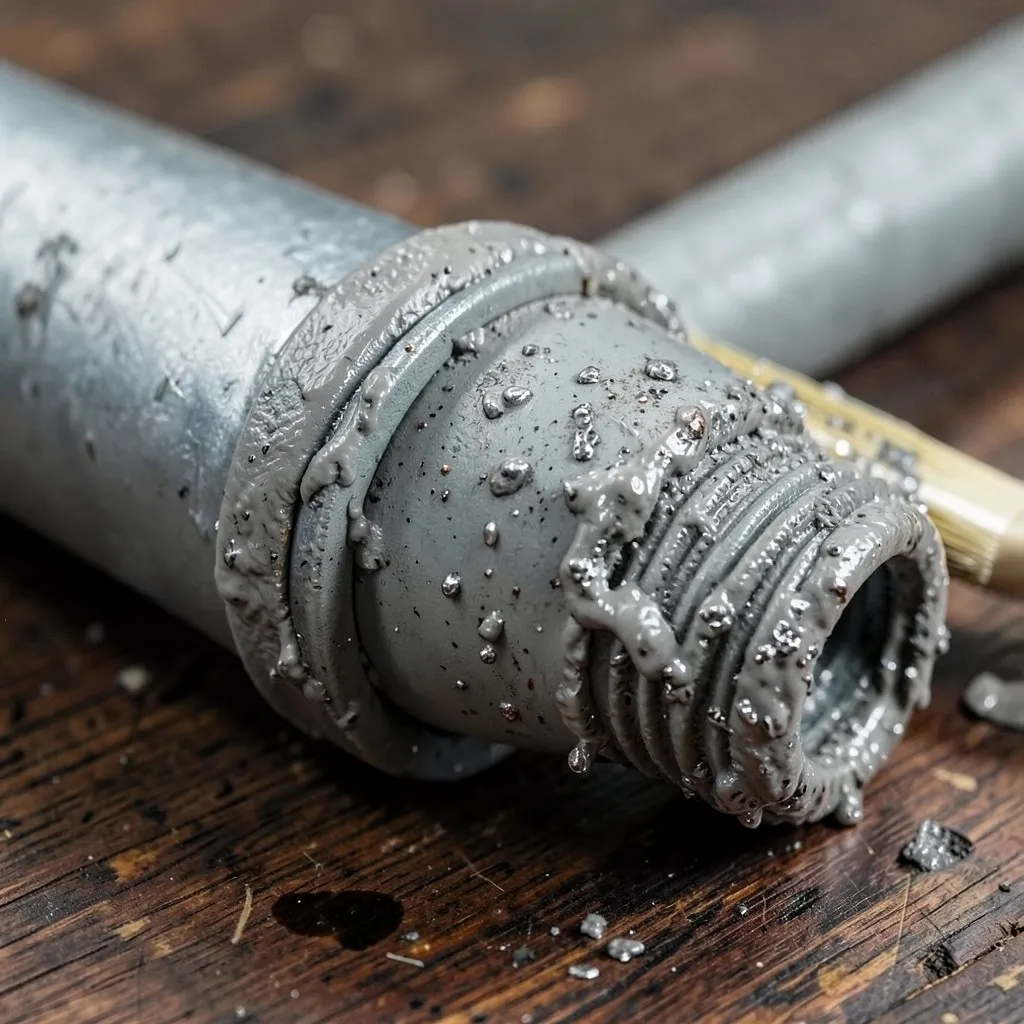
Pipe dope (formally called pipe joint compound or pipe thread sealant) is a paste applied to the male threads of a pipe connection before assembly to fill voids in the thread engagement, preventing water, gas, or steam from leaking through the threaded joint. Unlike PTFE tape (plumber's tape), which is a solid wrap, pipe dope is a viscous paste that fills gaps more thoroughly on coarser or damaged threads.
What types of pipe dope are there?
- Standard (non-hardening): the most common type — stays soft and workable, allowing disassembly later. Good for water and low-pressure steam lines. Brands like Rectorseal T Plus 2 are industry standards.
- Gas-rated: specifically formulated and tested for use on natural gas and LP gas lines. Never use a water-only compound on gas threads. Look for "gas-rated" or listings under ANSI/UL standards.
- PTFE-enhanced: paste blended with PTFE particles for additional sealing. Works on most metals and plastic threads.
- Hard-set (anaerobic): cures by polymerizing in the absence of air (like thread locker compounds). Provides maximum seal but requires special removers to disassemble.
Pipe dope or PTFE tape — which should you use?
Both are thread sealants but suit different applications. PTFE tape (plumber's tape) is preferred on fine threads, brass-to-brass connections, and any joint you may need to disassemble. Pipe dope is preferred on steel pipe, coarser NPT threads, corroded or slightly damaged threads, and connections subject to vibration. Many professional plumbers apply PTFE tape first, then a thin coat of pipe dope over it — especially on gas lines and threaded steel pipe.
How do you apply pipe dope?
Apply pipe dope only to the male (outer) threads, not the female (inner) threads, to avoid pushing compound into the pipe. Use a brush or your finger to coat all threads. Assemble hand-tight, then wrench-tighten 1–3 additional turns (NPT threads taper, so they seal through engagement, not torque). Wipe off excess. Cure time before pressure testing: 1–2 hours for most non-hardening compounds.
Researching the term is one thing — hiring for it is another. See whole-home repipe services for scope, timelines, and what drives the price, or call (888) 530-4445 for a no-cost estimate.
For the full picture — materials, process, timelines and what drives the cost — read Whole-Home Repipe: The Complete Guide.
What related terms should you know?
What sources back this up?
Need a verified plumber for whole-home repipe?
AlertPlumber matches you with a licensed plumber for whole-home repipe. Written estimate before any work begins.