
Sweating Pipes
Condensation on cold-water pipes in humid spaces; looks like a leak but is moisture from the air collecting on the cold pipe surface.
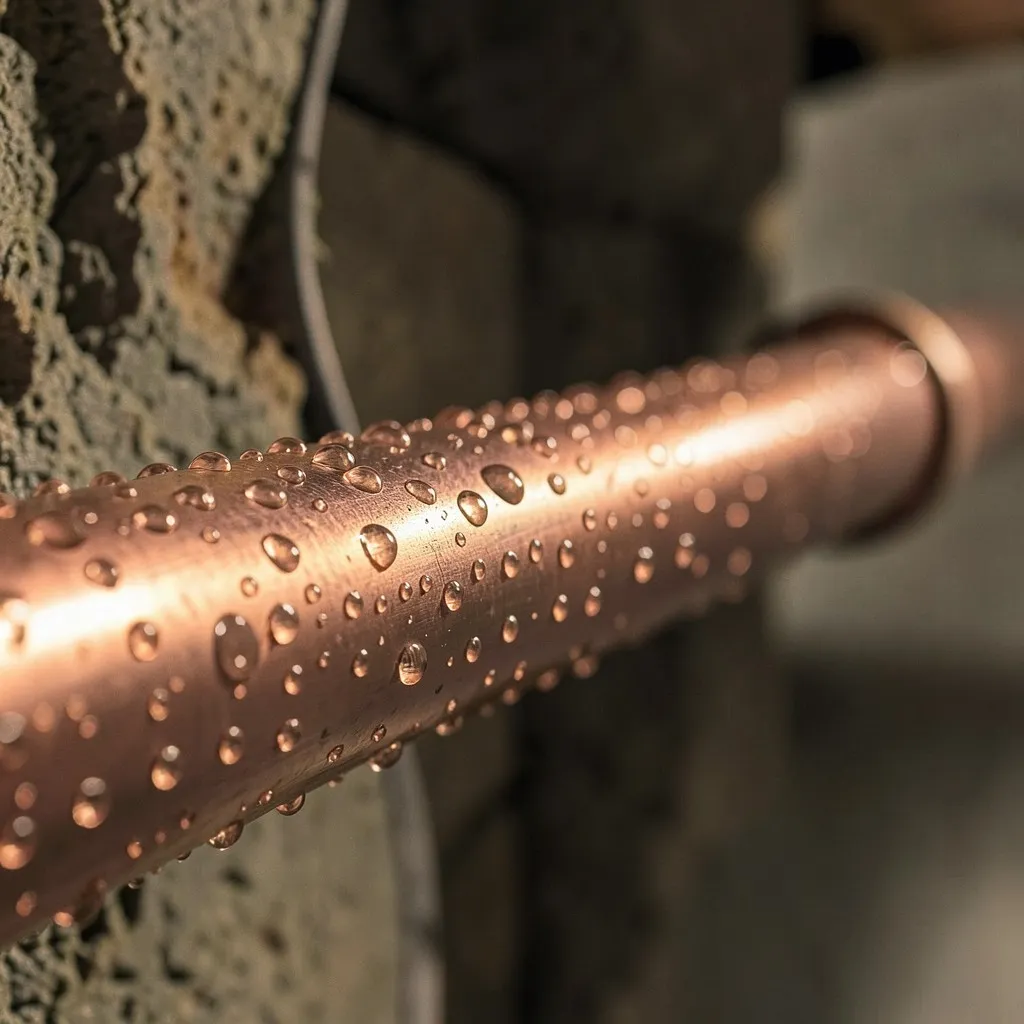
Sweating pipes describes the visible water droplets that form on cold-water supply lines and toilet tanks when warm, humid air contacts a cold metal or plastic surface. The water is not coming from inside the pipe, it is humidity from the surrounding air condensing on the cold exterior, the same physics that fogs a glass of ice water on a summer afternoon. The phenomenon is most common in basements, crawl spaces, utility closets, and garages during late spring and summer when indoor humidity climbs above 60 percent and incoming municipal water sits at 50 to 60 degrees Fahrenheit.
The distinction between sweating and a true leak matters because the remedies are completely different. A genuine leak produces water continuously regardless of weather, leaves mineral or rust staining at a single fixed point, and gradually worsens. Sweating produces a uniform film of moisture along the entire length of an exposed cold pipe, drips at the lowest point, dries up overnight when humidity drops, and disappears entirely in winter. If the pipe in question carries hot water and is wet, that is always a leak, never condensation.
Warning signs that condensation has become a problem rather than a cosmetic nuisance include:
- Water stains or sagging on drywall or ceiling tiles directly below an exposed pipe
- Persistent puddles on basement or utility room floors in summer
- Mold or mildew growth on nearby framing, joists, or stored cardboard boxes
- Rust streaks running down galvanized steel or cast iron pipe surfaces
- Wet insulation in crawl spaces, which loses R-value once saturated
The first-line fix is closed-cell foam pipe insulation, sold in six-foot lengths pre-slit down one side. Standard polyethylene foam costs $1.50 to $4 per foot for half-inch and three-quarter-inch copper, with rubber elastomer insulation running $4 to $8 per foot for higher humidity zones. Installation is a do-it-yourself job: the foam slips around the pipe, the slit is sealed with adhesive tape or built-in self-sealing strips, and elbows and tees can be wrapped or covered with pre-formed fittings. A basement worth of pipe insulation typically runs $40 to $150 in materials.
For chronically humid spaces, a 30 to 50 pint dehumidifier ($180 to $400 in 2026) addresses the root cause by holding indoor humidity below 50 percent, which stops condensation on every cold surface in the room rather than just the pipes. Toilet tank sweating can be eliminated with an anti-sweat mixing valve ($75 to $150 installed) that adds a small amount of warm water to the fill line, raising tank temperature above the dew point. The 2024 IPC and most local codes do not mandate pipe insulation for condensation control, but they do require it on hot-water lines for energy efficiency.
Researching the term is one thing — hiring for it is another. See frozen pipe repair services for scope, timelines, and what drives the price, or call (888) 530-4445 for a no-cost estimate.
For the full picture — materials, process, timelines and what drives the cost — read Frozen Pipe Repair: Complete Guide.
What related terms should you know?
What sources back this up?
Need a verified plumber for frozen pipe repair?
AlertPlumber matches you with a licensed plumber for frozen pipe repair. Written estimate before any work begins.