
Plumber's Tape (PTFE Tape)
Thin polytetrafluoroethylene (PTFE) tape wrapped around threaded pipe connections to create a leak-free seal. Also called Teflon tape. Used on all threaded supply connections.
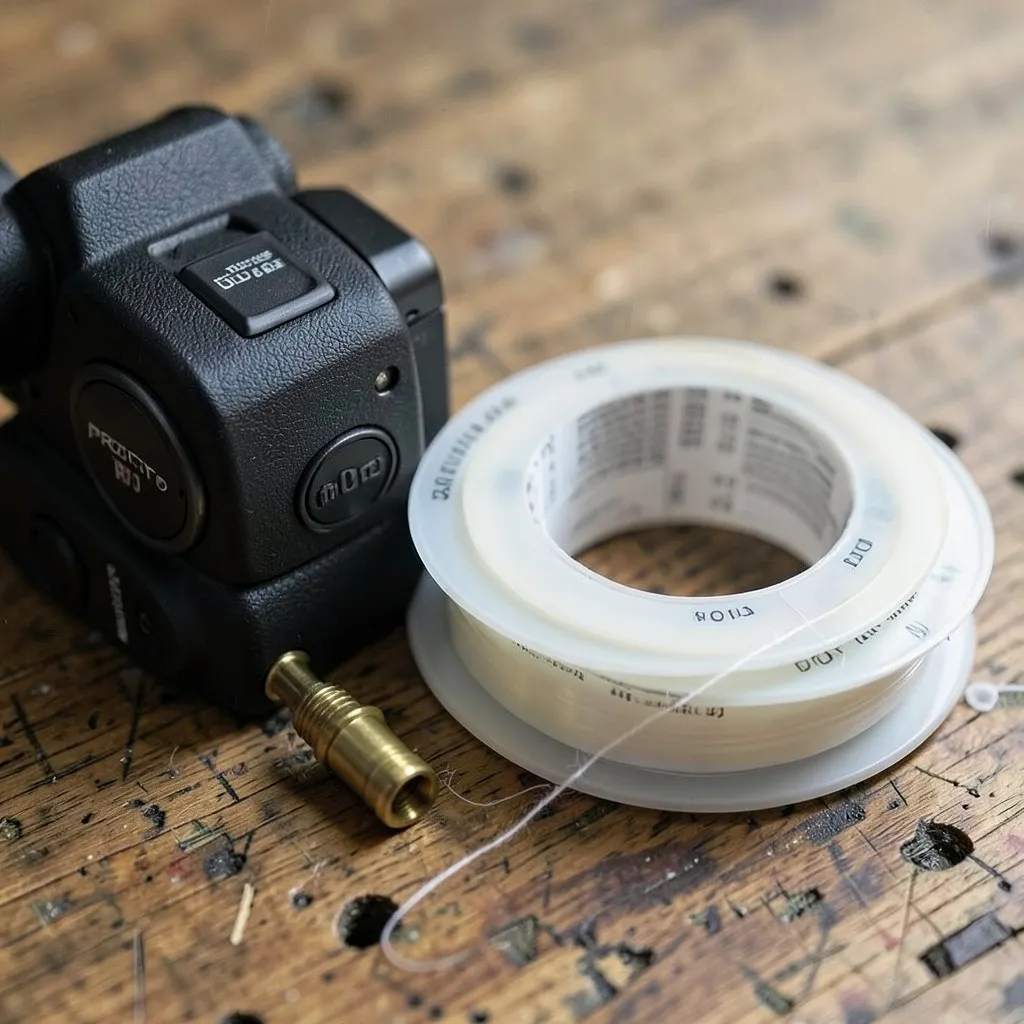
Plumber's tape — officially called PTFE tape (polytetrafluoroethylene) and commonly called Teflon tape — is a thin, white, non-adhesive tape wrapped around threaded pipe fittings before assembly. It fills microscopic gaps in threaded connections, creating a leak-free seal on pressurized supply lines.
How do you apply plumber's tape correctly?
- Start at the first thread of the male fitting
- Wrap clockwise when looking at the end of the pipe (same direction you'll tighten the fitting)
- Apply 2–3 wraps, stretching the tape slightly so it seats into the threads
- Tear the tape and press the end flat
- Thread the fitting on by hand first, then tighten with a wrench
Wrapping the wrong direction is the most common mistake — if you wrap counterclockwise, the tape bunches and shreds as you tighten, defeating the seal entirely.
What do PTFE tape colors mean?
- White — standard, for water supply lines (NPT threads)
- Yellow — thicker, rated for gas lines (do not substitute white on gas)
- Pink — rated for potable water supply with NSF 61 certification
- Blue/Green — oxygen lines and specialty gases
When should you not use PTFE tape?
Tape belongs on tapered threads that seal by wedging — NPT pipe threads — and nowhere else. Three joints are routinely ruined by it:
- Compression fittings — the seal is the brass ferrule crushing onto the tube. Tape on the nut threads only lets the nut turn further before it feels tight, which over-crushes the ferrule.
- Flare fittings — the seal is metal-to-metal between the flared tube and the fitting cone. Tape does nothing there and can hold the faces apart.
- Slip-joint and tailpiece nuts under a sink — a nylon or rubber washer makes that seal. Tape on those straight threads is the usual reason a trap keeps weeping after it has been taken apart and reassembled.
Plastic female threads deserve their own caution. Tape reduces friction enough that a fitting can be turned well past hand-tight without feeling resistant, and the wedging action of the tapered thread then splits the plastic — sometimes days later, once the joint has been under pressure.
PTFE tape or pipe dope — which should you use?
Tape is cleaner and easier for DIY use. Pipe dope (a paste) provides a stronger seal on older, coarser iron pipe threads and in high-vibration applications. Professional plumbers often use both together on critical connections.
A roll of standard PTFE tape costs $1–$3 and is one of the most used items in a plumber's kit.
Researching the term is one thing — hiring for it is another. See whole-home repipe services for scope, timelines, and what drives the price, or call (888) 530-4445 for a no-cost estimate.
For the full picture — materials, process, timelines and what drives the cost — read Whole-Home Repipe: The Complete Guide.
What related terms should you know?
What sources back this up?
Need a verified plumber for whole-home repipe?
AlertPlumber matches you with a licensed plumber for whole-home repipe. Written estimate before any work begins.