
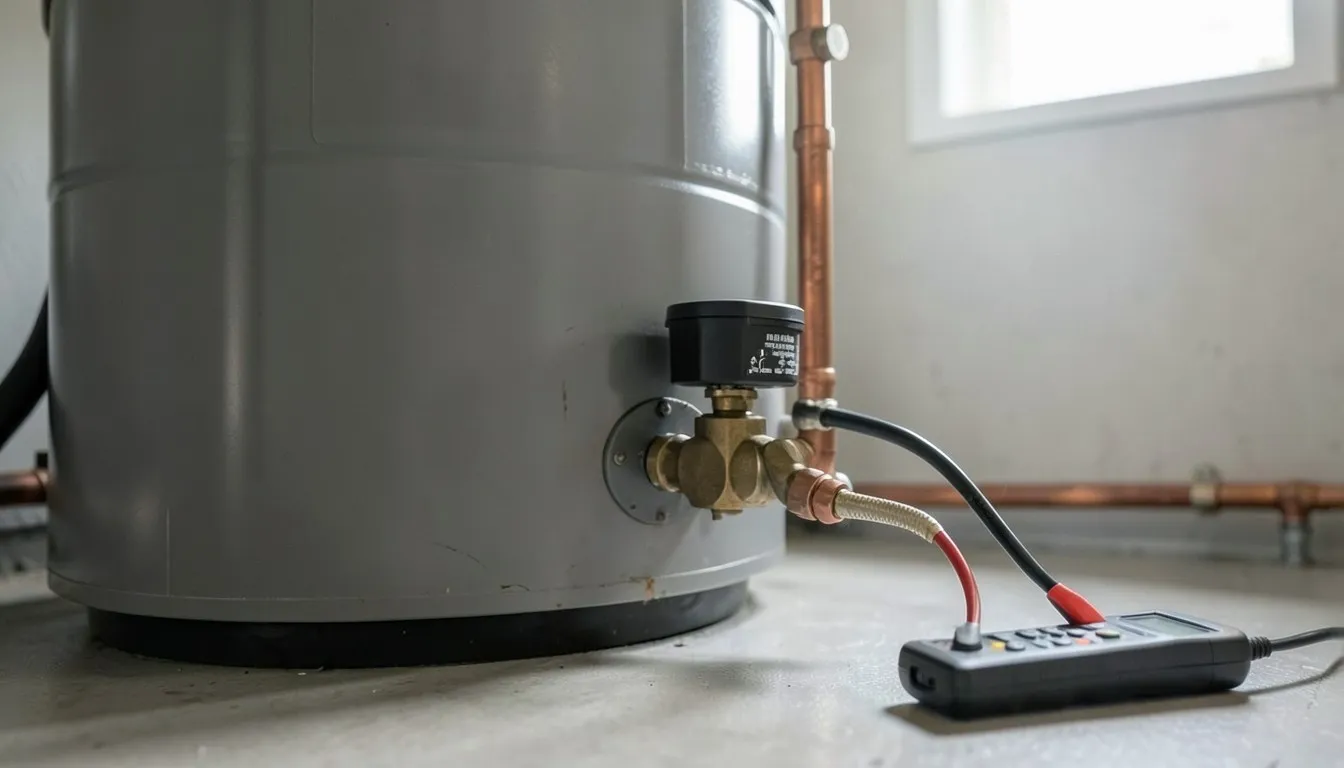
Emergency Water Heater Repair in Austin, Texas
Water Heater Repair in Austin, Texas fixes no-hot-water, leaking tank, pilot light, and thermostat issues. Local conditions in Austin: water measured at 12, a 4 frost line and a median home age of 30 years.
Active water damage compounds by the hour — a licensed TX plumber is on call for Austin right now.
What does the local plumbing data show for Austin, TX?
Seeing these conditions at your place in Austin? A state-licensed plumber can confirm it over the phone — free, no obligation.
What are the pipe conditions in Austin, TX?
Water heater repair in Austin starts with isolating the failure mode: a unit producing no hot water usually has a failed heating element or thermostat (electric) or a pilot or gas valve issue (gas); a unit leaking at the base has a failed tank — a repair is not possible and replacement is immediate. Sediment flushing and anode rod replacement extend the life of units under 10 years significantly; units over 12 years are typically beyond economic repair. AlertPlumber routes your request to a Texas-licensed plumber who diagnoses before recommending repair vs. replacement.
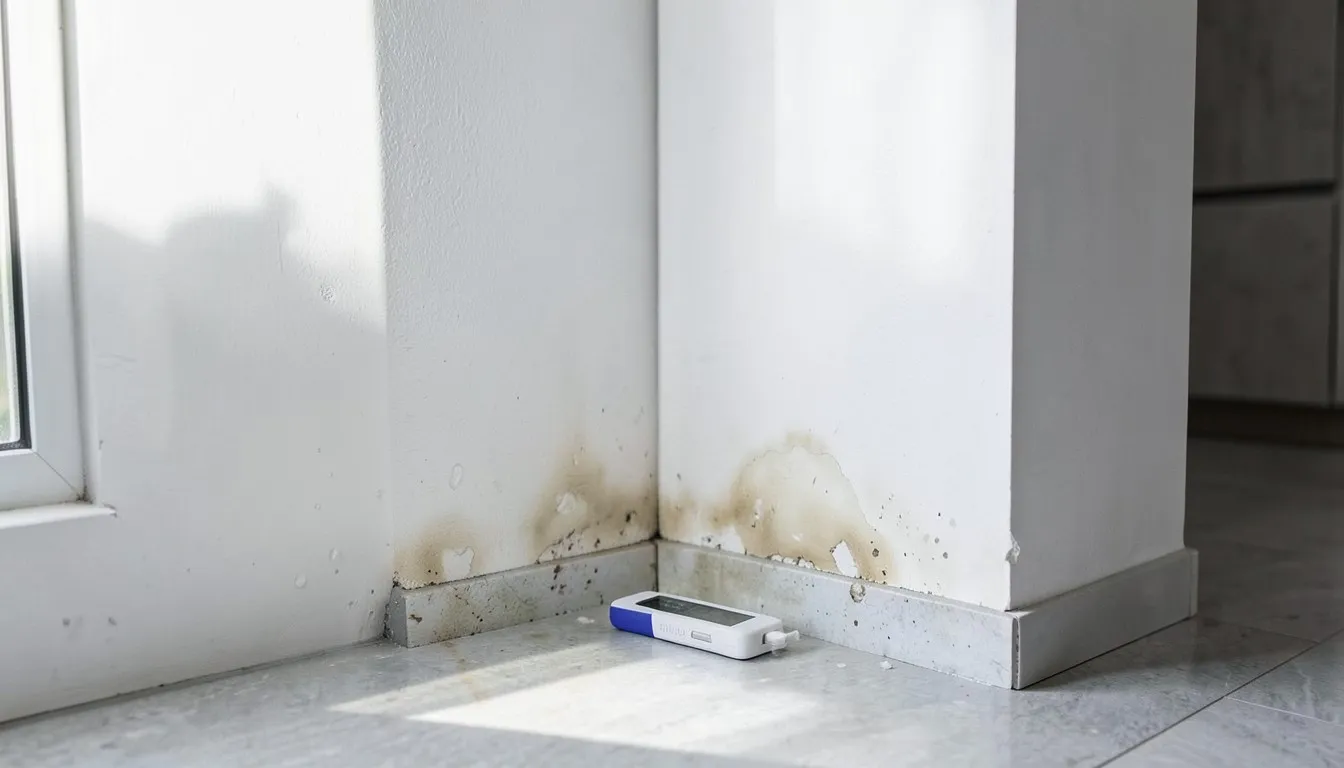
Austin's housing stock spans multiple construction eras — median home age 30 years — meaning pipe materials and failure modes vary significantly by neighborhood and building vintage. An inspection-led approach that confirms pipe material before recommending a service path is standard practice for mixed housing profiles.
Very hard water in Austin is a primary driver of accelerated appliance failure: water heater anode rods exhaust in 2–3 years instead of 6–8, scale deposits at fixture connections form within months of installation, and tankless heat exchangers accumulate mineral buildup that can reduce lifespan by half without regular descaling. A softener or whole-house conditioner is strongly recommended alongside any appliance service call.
- Median home age
- 30 yrs
- Water hardness
- 12 gpg
- Frost line
- 4 in.
- Permit
- $165
A licensed TX plumber reads these conditions the moment you describe the symptom.
What local infrastructure shapes Water Heater Repair in Austin?
Austin water heater repair in the 1990s and early 2000s residential construction cohort reflects a timing convergence: at 30 years median housing age, original tank water heater installations from the rapid-growth construction decade are at the upper end of the expected service window, and the 12 GPG Colorado River-sourced supply has spent those 30 years accelerating sediment accumulation and anode depletion inside every unserviced unit. Very-hard supply at 12 GPG deposits calcium carbonate on heating elements at a rate that shortens effective element service life below the 8 to 12 year interval documented for soft-water markets.
Austin Water delivers approximately 12 grains per gallon to residential distribution — a very-hard reading that places Austin in the high-scaling category for water heater repair frequency. The arid climate means no cold-inlet-water break in winter that would slow sediment formation at the tank bottom heat exchanger. Scale layer thickness in a 30-year Austin unit with no descaling history correlates with reduced heating efficiency and elevated BTU consumption per gallon heated, signs that appear before the unit fails outright.
The $165 permit covers water heater repair and replacement scope. Texas reports 27,810 state-credentialed plumbing contractors statewide. Element inspection, sediment flush, and anode rod assessment are standard first-stage repair steps at this hardness level before any replacement recommendation is made.
What shapes plumbing demand in Austin, TX?
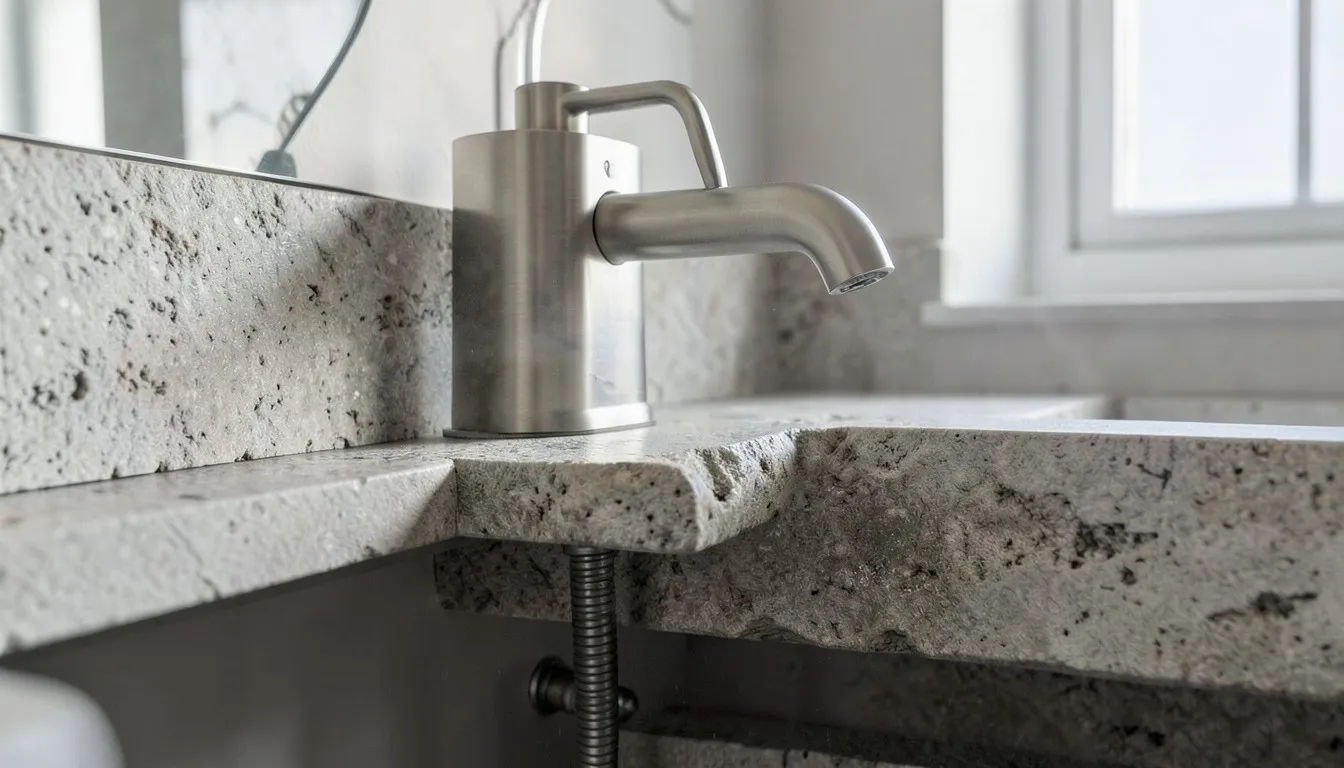
CPVC becomes brittle in the 20–35-year range and snaps under thermal stress or incompatible pipe dopes. Early PEX fittings (pre-2010) may develop chloramine compatibility issues at 15–25 years. The 1980s–1990s housing stock in Austin is entering its first wave of material-driven service calls — not from neglect, but from normal service-life progression.
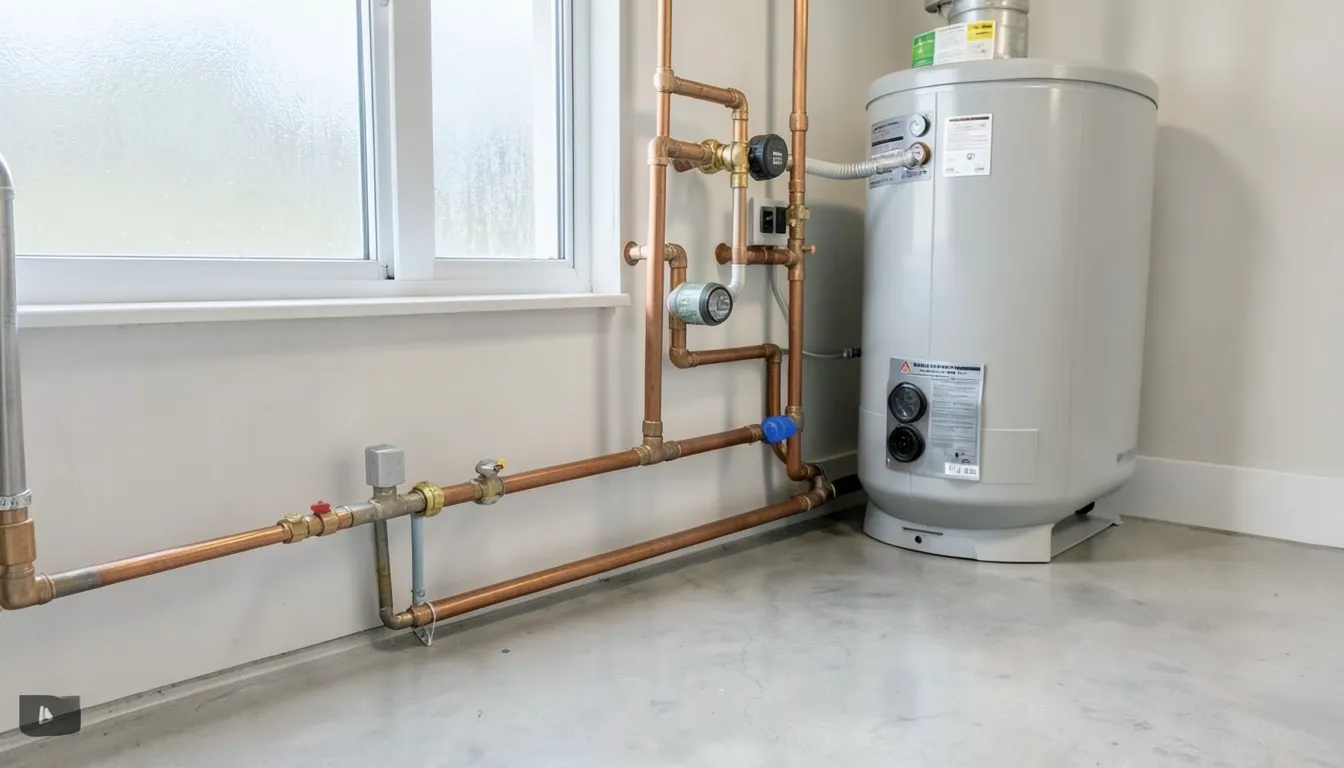
At 15–20+ GPG, calcium scale forces compressed equipment cycles in Austin: tank heaters average 6–9 years vs. the 10–12-year national benchmark, and tankless units require annual descaling. Anode rods calcify within 12–18 months. Most plumbers here assess heater age against the local scale timeline — not the manufacturer's service life.
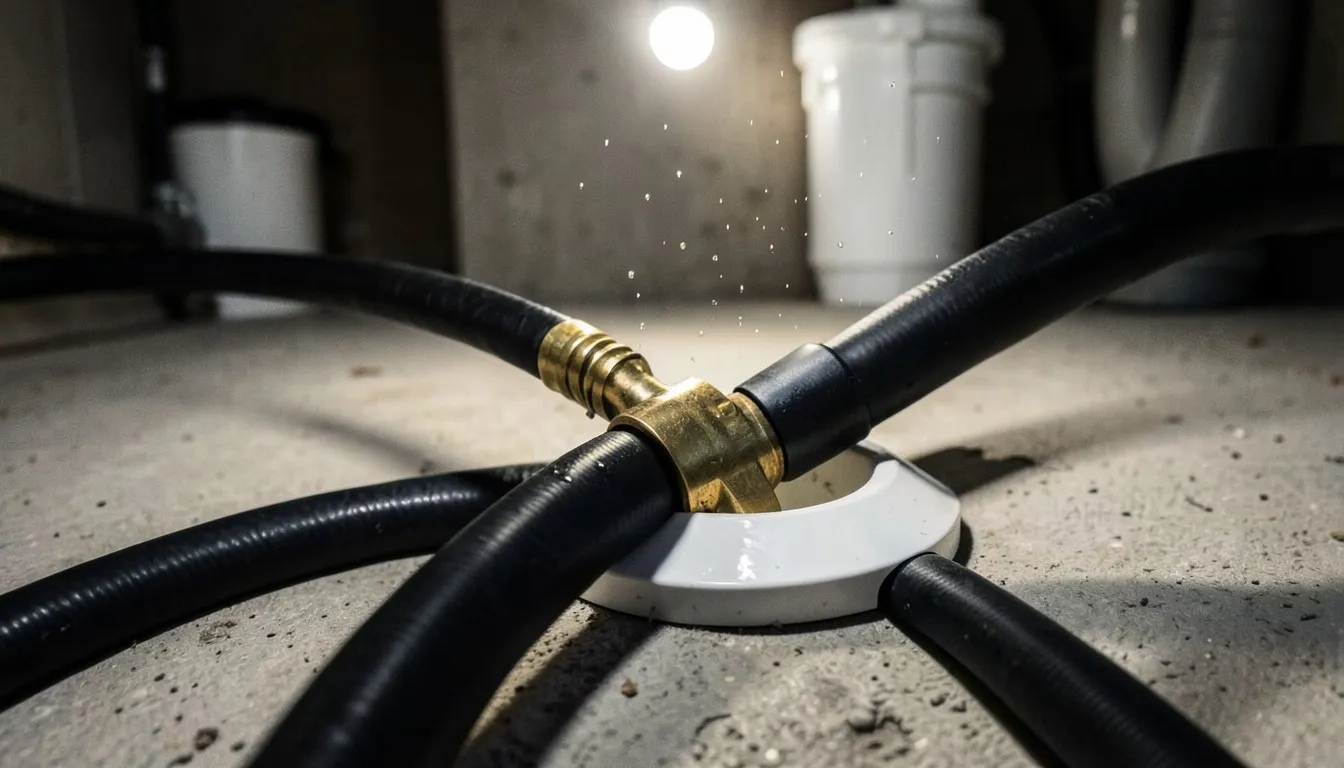
Without a hard freeze season, demand in Austin distributes evenly through the year. Maintenance-driven categories dominate: end-of-life water heater replacement, root intrusion clearing, and fixture repair. Deferred maintenance surfaces gradually as partial failures rather than acute winter emergencies — which means issues compound silently until they become a larger job.
Active damage in Austin — how is it contained, assessed and restored?
Submit your Austin address and describe the active damage — flooding, failed shutoff, burst or frozen line. AlertPlumber marks the request as priority and a TX-licensed plumber confirms receipt within 15 minutes, without routing through a national call center.
The plumber arrives with a confirmed ETA, locates the nearest shutoff, and maps the damage boundary — affected lines, access points, material condition. You receive a verbal assessment of what requires immediate containment and what can wait until the full repair scope is confirmed.
You approve a written containment and repair scope before any work begins. Temporary isolation is priced separately from full restoration. No phase proceeds without your explicit sign-off.
Water Heater Repair cost calculator — Austin
Pre-filled for water heater repair in Austin. Adjust the ZIP for a neighboring area, or change the service to compare. Calculator pulls from the city's scraped permit-fee + state plumber-density data.
Water Heater Repair emergency in Austin?
Every hour without a repair increases structural risk and remediation cost. A verified plumber calls back with an ETA and a written estimate before any work begins.
What else do people ask about water heater repair in Austin?
How much does water heater repair cost in Austin?
Austin water heater repair quotes typically land $195–$565 for a single-fault repair on a Texas Gas Service-fed gas tank — failed thermocouple, gas control valve, T&P relief valve, or anode-rod swap — and $1,650–$3,150 for a full 40–50 gallon tank replacement installed in a 1995-median-build Austin garage configuration. The $165 Austin Development Services permit bundles into any tank-replacement quote. Hill Country limestone hardness at 12 gpg (USGS Trinity/Edwards aquifer + Austin Water blend) drives faster sediment baking than the 11 gpg measured downstream in Arlington, so replacement quotes at age 8–9 are more common in Austin than in soft-water markets. Heat-pump conversion runs $3,400–$5,200 installed before the Austin Energy rebate offset described below. See DOE Energy Saver for federal cost framing.
What symptoms mean my Austin water heater needs repair vs replacement?
Three symptom clusters drive Austin water heater dispatch volume: (1) no hot water on a Texas Gas Service-fed tank — usually a failed thermocouple ($195–$310) or pilot assembly fouled by Hill Country dust in garage installs; (2) rumbling/kettle-boiling from 12 gpg limestone scale baked onto the tank floor — a flush ($155–$235) buys time but signals tank end-of-life past year 8; (3) bottom-pan water, which on a 1995-median-build Austin garage tank almost always means perforation from sediment corrosion and mandates replacement, not repair. Side-of-tank discharge from the T&P or drain valve is a $195–$365 component fix instead. A state-credentialed plumber confirms failure mode in a 5-minute visual before quoting full replacement on Austin properties.
Why does Austin water heater wear differ from other Texas cities?
Three Austin-specific drivers: (1) 12 gpg Hill Country limestone hardness — the Trinity/Edwards aquifer blend Austin Water draws from runs harder than the 11 gpg Arlington pulls from the AWU/Tarrant County system, so sediment buildup arrives 12–18 months earlier on Austin tanks (USGS hardness reference); (2) Feb 2021 freeze legacy — the 23-freeze-day winter ruptured tens of thousands of Austin tanks and reset garage-mount freeze-protection retrofit demand that still drives current dispatch volume; (3) Texas Gas Service market — Austin is on Texas Gas Service, NOT Atmos Energy (which serves Arlington), so meter-side shutoff procedures, gas-pressure spec on regulator replacement, and utility coordination differ from DFW. The 1995 median build year also means most Austin tanks sit in attached garages rather than Sun Belt attics or Northeast basements.
Tank vs tankless vs heat-pump — what fits an Austin home?
Decision framework for Austin properties: tank replacement ($1,650–$3,150) fits Texas Gas Service-fed homes built 1985–2005 with existing 3/4" gas line and garage venting in place — the lowest-friction swap. Tankless ($3,800–$5,800) fits Westlake Hills/Tarrytown luxury hillside homes where high simultaneous demand (multiple primary baths, soaking tubs) justifies the gas-line upsize; descaling cadence on 12 gpg water is annual to hold manufacturer warranty. Heat-pump (HPWH) fits Mueller / The Gulch / SoBro 2010s+ infill where the property runs all-electric or where Austin Energy GreenChoice/EE rebates apply — Austin Energy publishes residential HPWH incentives at austinenergy.com, and the federal 25C credit stacks on top per DOE Energy Saver. South Austin Zilker/Travis Heights pre-PVC pockets with older galvanized supply often need supply-line work as part of any conversion.
Will Texas HO-3 cover Austin water heater damage after the post-2021 underwriting reset?
Standard Texas HO-3 policies cover sudden, accidental discharge water damage (a tank ruptures and floods an Austin garage) but do NOT cover the tank itself, and do NOT cover gradual leakage the homeowner should have spotted. After Feb 2021's 23-freeze-day event drove tens of thousands of tank ruptures across Austin, Texas carriers tightened underwriting: many policies now require documented anode-rod inspection, drip-pan presence, and freeze-protection on garage-mount tanks before paying full discharge claims. III covers HO-3 framing. Austin homes with garage-located water heaters need visible drip-pan documentation — adjusters routinely deny claims where the leak signature shows weeks of seepage. Submit the state-credentialed plumber's written failure report with timestamped photos for fastest resolution; the post-2021 underwriting reset has made claim documentation more decisive than it was pre-freeze.
How often should I swap the anode rod on Austin's 12 gpg water?
Manufacturer default is 3–5 years; on Austin Water's 12 gpg Hill Country limestone blend, plan on 2–3 years for magnesium anodes and 3–4 years for aluminum/zinc. Inspection is a 20–30 minute job ($165–$245) and a swapped rod ($110–$185 in parts) routinely buys 2–3 additional years of tank life — pushing a 1995-median-build Austin garage tank from an 8-year average toward 11–12. Powered (impressed-current) anodes fit Westlake Hills / Tarrytown high-end installs where homeowners want a multi-decade tank. South Austin Zilker / Travis Heights properties with older galvanized supply lines see faster anode consumption from dissolved-metal interaction; ask the plumber to inspect supply-side fittings during the same visit. DOE Energy Saver documents anode chemistry at federal level.
How fast can an Austin plumber arrive and finish the repair?
Most Austin-area plumbers in the AlertPlumber network respond within 1–3 hours during business hours and 2–4 hours overnight for a no-hot-water dispatch on a Texas Gas Service-fed tank; the matched plumber confirms an exact ETA on the callback before rolling. Single-fault component repair (thermocouple, T&P, gas control valve, anode rod) finishes in 60–110 minutes once the truck arrives. Full tank replacement on a 1995-median-build Austin garage install runs 3–5 hours including drain-down, code-bringup (drip pan, expansion tank, seismic-equivalent strapping per Austin Development Services), and Texas Gas Service relight. Tankless or HPWH conversion in Mueller/SoBro infill or Westlake Hills hillside properties typically books for a same-week morning slot — gas-line upsize, condensate routing, or 240V circuit work may require a follow-up inspection day for the $165 permit close-out.
Westlake Hills luxury tankless vs Mueller HPWH — what fits which Austin neighborhood?
Austin tank-vs-tankless-vs-HPWH choice tracks neighborhood housing stock: Westlake Hills / Tarrytown / Old West Austin luxury hillside homes with Texas Gas Service, multiple primary baths, and existing gas-line capacity favor tankless ($3,800–$5,800) — high simultaneous demand and limited mechanical-room footprint reward the wall-mount form factor. Mueller / The Gulch / SoBro 2010s+ infill built tighter to Austin Energy's all-electric framing favor heat-pump (HPWH) — the Austin Energy GreenChoice/EE rebate plus federal 25C credit drives 30–40% off-the-top capital savings, and the new-build envelope handles the dehumidifier-side output. South Austin Zilker / Travis Heights pre-PVC pockets with older galvanized supply often stay on tank replacement because conversion economics get eaten by supply-line rework. North Austin Allandale / Crestview 1960s-1980s ranch stock splits between tank and tankless depending on remodel state.
What permit and credential applies to Austin water heater work?
Component-level repair (element, thermostat, T&P valve, anode rod) does not pull a permit in Austin. A full tank, tankless, or heat-pump replacement DOES: Austin Development Services charges $165 for the plumbing/mechanical permit and inspection — the state-credentialed Texas plumber pulls it on your behalf and bundles the fee into the written quote. Permit-required scope follows IPC Chapter 5. TX TSBPE lists 27,810 active state-credentialed plumbers; the partner network routes AlertPlumber dispatches in Austin only to plumbers in continuous good standing on TSBPE. Drinking-water touchpoints sit under EPA SDWA. Homeowners can independently verify any plumber's credential at the TSBPE lookup before authorizing work.
What does heat-pump conversion economics look like with the Austin Energy rebate?
HPWH conversion math for Austin: gross install $3,400–$5,200 on an existing 240V circuit (add $400–$900 for new circuit / panel work in pre-1995 Allandale/Crestview stock). The Austin Energy residential HPWH rebate via GreenChoice/EE programs (current schedule at austinenergy.com) offsets capital meaningfully — Austin Energy is the city-owned electric utility that supports a CA-Title-24-equivalent rebate framework, similar in structure to SMUD in Sacramento but Austin-specific. The federal 25C tax credit stacks on top per DOE Energy Saver. AHRI-rated UEF on a current HPWH runs ~3.5x a standard electric tank — see AHRI Directory to verify the model the plumber quotes. Net of Austin Energy rebate + 25C, Mueller/SoBro infill conversions often pencil to a 4–6 year operating-cost payback against a Texas Gas Service tank — a stronger case than DFW Atmos Energy markets where electric-vs-gas spreads run thinner. Capital Metro/MoPac corridor commercial properties run the same math at scale.
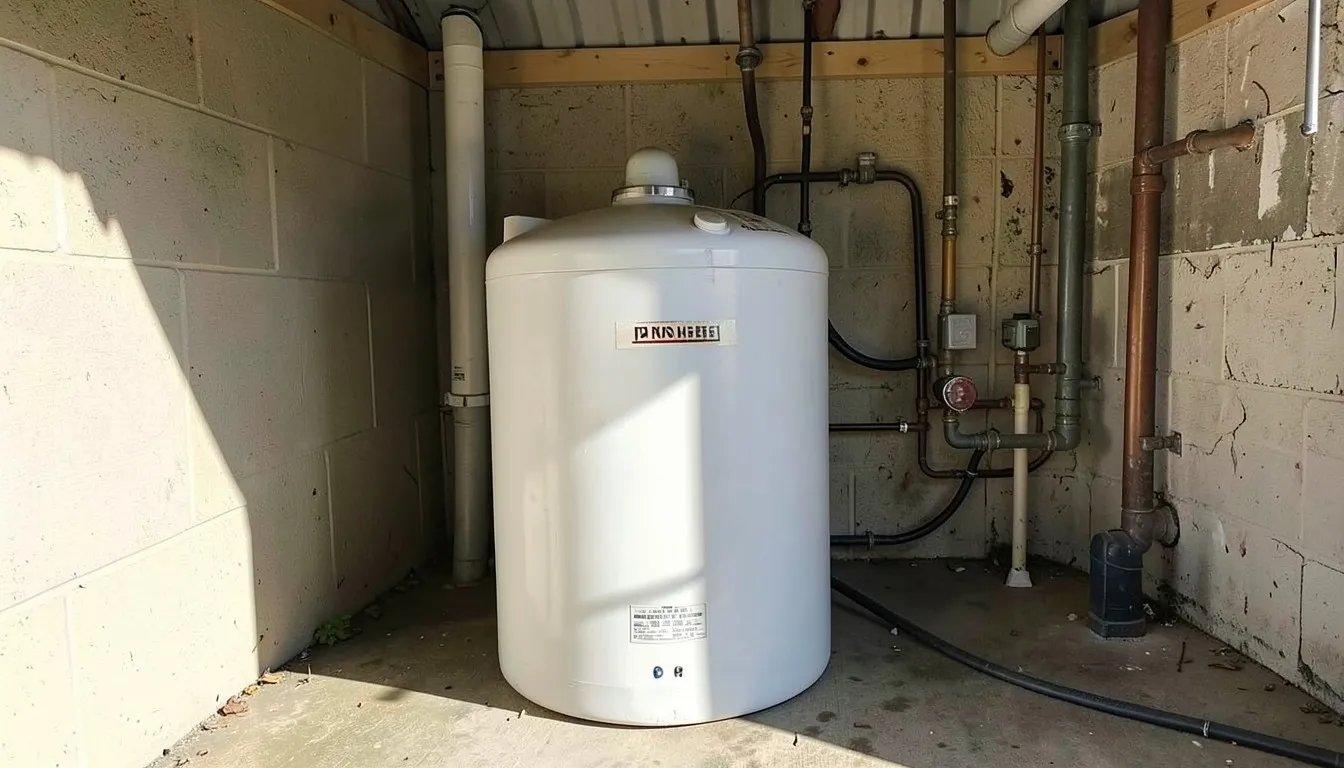
Sixty seconds from now, a plumber can be working your problem.
Call and talk to dispatch, or put your number in the form below — a licensed Texas plumber calls you back about the water heater repair and gives a written estimate by phone.
Need a water heater repair callback in Austin?
In a meeting, with the kids, or just prefer not to hold? Drop your ZIP and number below. AlertPlumber routes your request to a verified plumber in your area — they’ll call you back directly.
- 1 Submit your info. ZIP, phone, and what kind of work you need.
- 2 AlertPlumber matches you with a verified plumber serving your area.
- 3 The plumber calls you back with a written estimate, no obligation.
Water Heater Repair in Austin — fast response
Acute plumbing failures cannot wait. AlertPlumber has verified Texas plumbers available for water heater repair in Austin — call now or submit the form above for rapid callback.