
Vacuum Breaker
A backflow prevention device that opens to admit air when pressure drops, preventing a vacuum from siphoning contaminated water back into the potable supply — required on hose bibbs and irrigation systems.
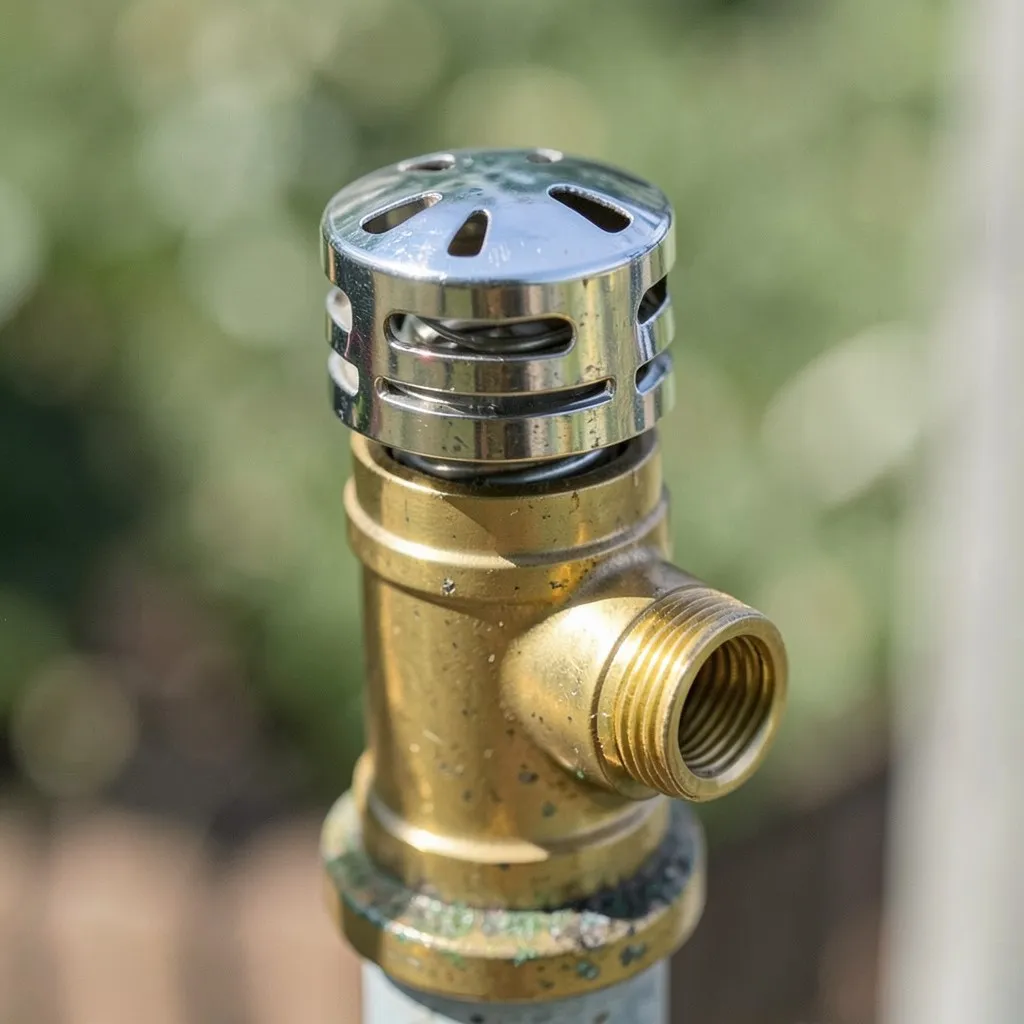
A vacuum breaker is a simple, spring-loaded backflow prevention device that opens to admit air into a supply pipe when the pressure in the pipe drops below atmospheric pressure. This prevents a vacuum (negative pressure) from forming and siphoning non-potable water — from a garden hose, sprinkler head, or submerged attachment — back into the potable water supply. Vacuum breakers are required by code on hose bibbs, irrigation systems, laundry connections, and laboratory or commercial faucets with hose thread connections.
Why are vacuum breakers required?
Imagine a garden hose submerged in a bucket of fertilizer while water is running. If municipal pressure suddenly drops (fire suppression use, main break), negative pressure can siphon the fertilizer water back through the hose into your home's supply pipes — potentially contaminating the drinking water supply. A hose bibb vacuum breaker (atmospheric vacuum breaker) on the spigot prevents this by venting air into the hose when pressure drops, breaking the siphon before backflow can occur.
What types of vacuum breaker are there?
- Atmospheric vacuum breaker (AVB): the simplest type — installs directly on a hose bibb or irrigation valve. Cannot be under continuous pressure (must have a 1-second pressure-free period each day). Cost: very low.
- Pressure vacuum breaker (PVB): for irrigation systems with multiple zones. Can remain under continuous pressure. Must be installed at least 12 inches above the highest sprinkler head. Cost: higher than an AVB.
- Hose bibb vacuum breaker: a small threaded device that screws onto the hose thread of an outdoor spigot. Cheap, required in most areas. Replace every 3–5 years as the rubber seal degrades.
What code requirements apply to vacuum breakers?
The IPC and UPC require vacuum breakers on every hose bibb connected to the potable water system. Irrigation systems with spray heads must have a pressure vacuum breaker or reduced-pressure assembly. Failure to install these devices can result in failed plumbing inspections and homeowner liability for water contamination events.
Researching the term is one thing — hiring for it is another. See whole-home repipe services for scope, timelines, and what drives the price, or call (888) 530-4445 to talk to a local plumber about the job.
For the full picture — materials, process, timelines and what drives the cost — read Whole-Home Repipe: The Complete Guide.
What related terms should you know?
What sources back this up?
Need a plumber for whole-home repipe?
Calls are connected to independent licensed local plumbers in our partner's network for whole-home repipe. Ask for the license number and a written estimate before any work begins.