
Check Valve
A one-way valve that allows water or gas to flow in only one direction and automatically closes to prevent reverse flow — used on water heaters, sump pumps, irrigation systems, and more.
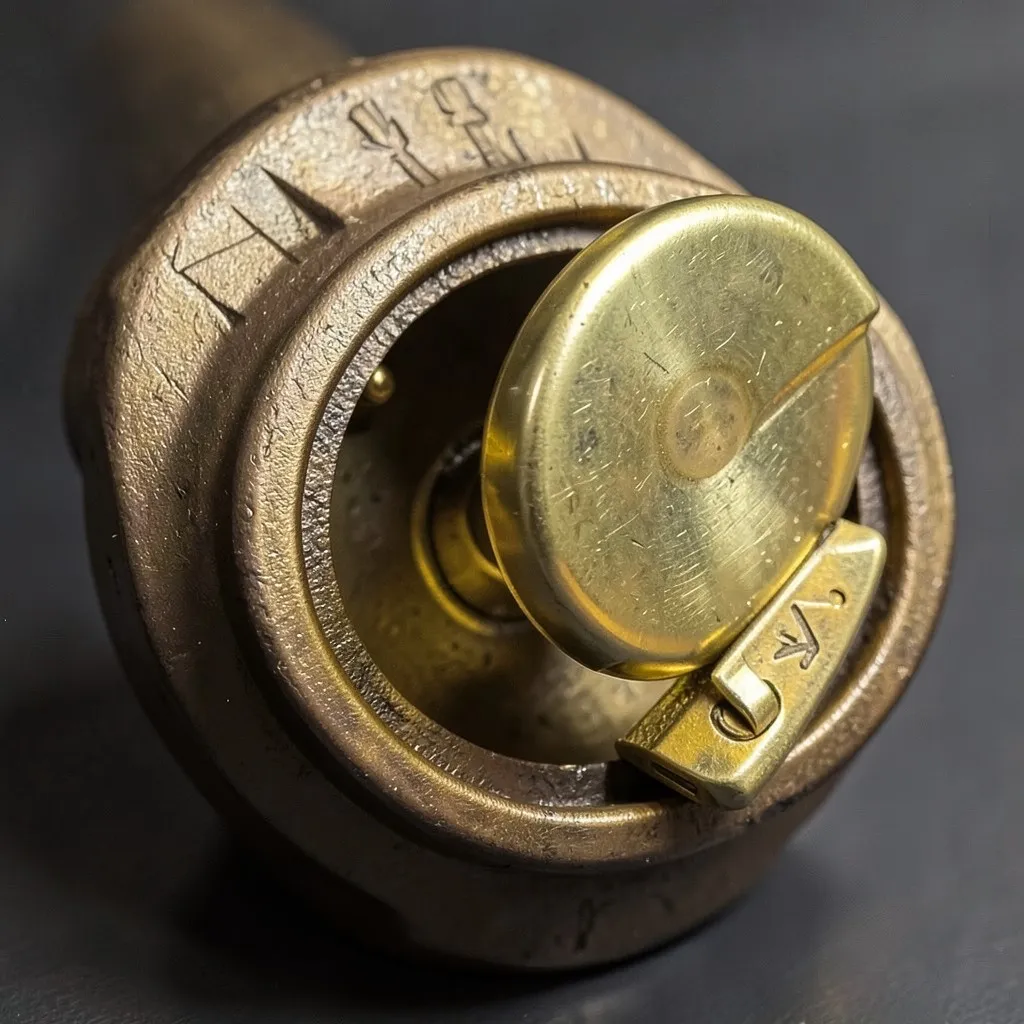
A check valve (also called a non-return valve or one-way valve) is a valve that opens to allow flow in one direction and closes automatically when flow reverses — requiring no manual operation. Check valves are used throughout plumbing systems wherever backflow would cause damage, contamination, or system failure: sump pump discharge lines, water heater expansion tank connections, irrigation systems, and backflow prevention assemblies.
How do check valves work?
The two most common check valve mechanisms are:
- Swing check: a hinged disc (clapper) swings open as forward flow pushes it, and gravity (or backpressure) swings it closed when flow stops or reverses. Common in larger-diameter lines.
- Spring check (lift check): a spring-loaded disc or ball is pushed open by forward flow pressure. When pressure drops or reverses, the spring snaps the disc closed. More reliable for vertical installations and systems with low flow velocity.
- Ball check: a ball sits in a seat and is displaced by forward flow; reverse flow pushes the ball back into the seat. Common in sewage and sump pump applications.
Where are check valves commonly used?
- Sump pump discharge: prevents pumped water from flowing back into the sump pit when the pump shuts off
- Water heater expansion tank: a check valve in the cold water supply line to the water heater creates a closed system that requires an expansion tank to absorb thermal expansion
- Irrigation backflow prevention: prevents irrigation water from siphoning back into the potable supply
- Boiler systems: prevents hot water from flowing backward through cold supply connections
What maintenance do check valves need?
Check valves in residential plumbing rarely need maintenance, but they do fail — typically by getting stuck open (due to debris fouling the seat) or stuck closed (corrosion or a stuck spring). A failed check valve on a sump pump line allows discharged water to immediately refill the pit, causing the pump to run continuously. Cost: inexpensive, depending on size and type.
Researching the term is one thing — hiring for it is another. See sump pump repair services for scope, timelines, and what drives the price, or call (888) 530-4445 to talk to a local plumber about the job.
What related terms should you know?
What sources back this up?
Need a plumber for sump pump repair?
Calls are connected to independent licensed local plumbers in our partner's network for sump pump repair. Ask for the license number and a written estimate before any work begins.