
Backflow Preventer
Valve assembly that prevents non-potable water from being siphoned or pushed back into the potable supply.
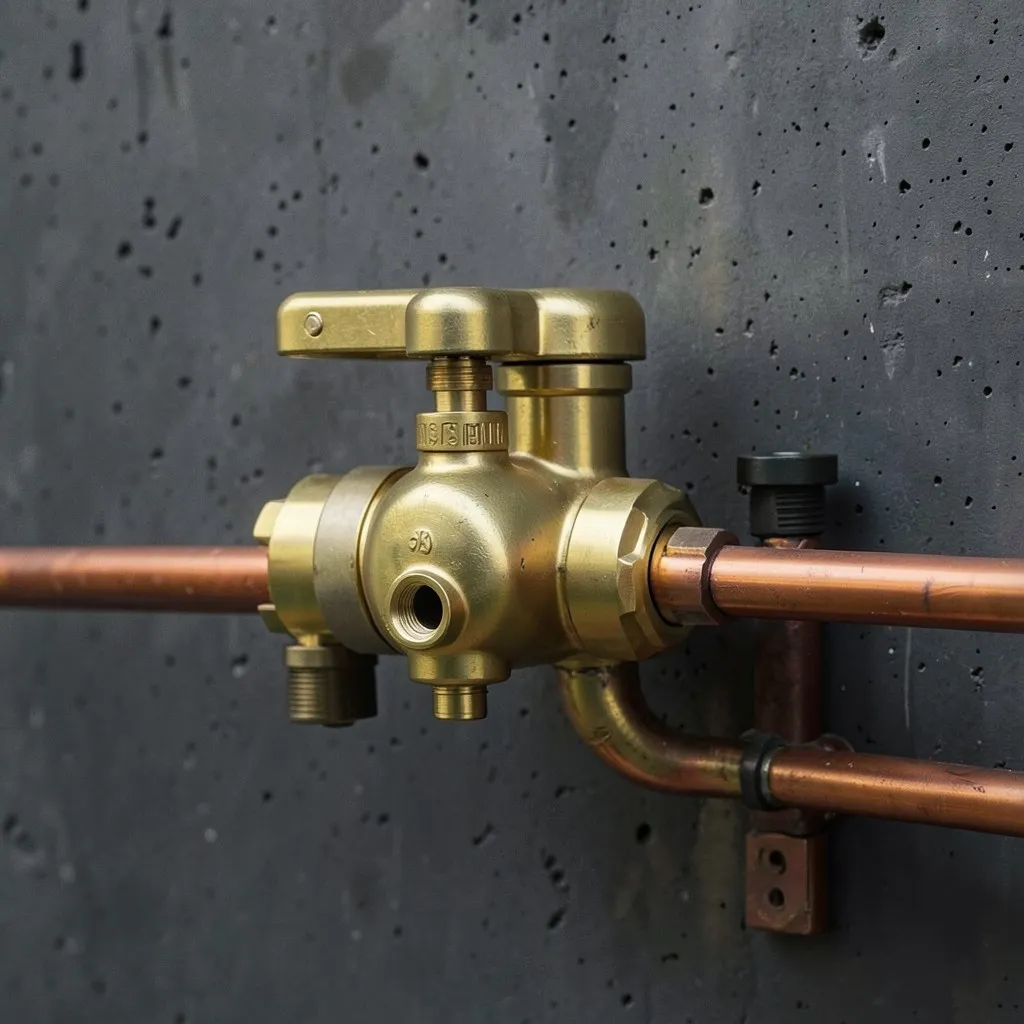
A backflow preventer is a mechanical assembly installed on a potable water line to stop contaminated water from reversing direction and entering the drinking-water supply. Backflow can occur from back-siphonage (a sudden pressure drop in the main, such as during a hydrant flow or main break) or back-pressure (a downstream system, such as a boiler or pressurized irrigation line, exceeding supply pressure). Common assembly types include the reduced-pressure-zone (RPZ) device for high-hazard cross-connections, the double-check valve assembly (DCVA) for low-hazard connections, the pressure vacuum breaker (PVB) for irrigation, and the atmospheric vacuum breaker (AVB) for hose bibs.
When is a backflow preventer required?
The Safe Drinking Water Act and most state plumbing codes require an approved backflow preventer on every cross-connection between potable water and a non-potable system. Typical mandatory installations include lawn-irrigation systems, fire-sprinkler feeds, boiler make-up lines, commercial dishwashers and ice machines, dental and medical equipment, and any service connection serving an industrial or agricultural site. Most jurisdictions require annual testing by a certified backflow tester, with results filed with the local water utility.
What are the signs of backflow preventer failure?
- Continuous dripping or spitting from the relief port (RPZ devices)
- Discolored, cloudy, or foul-tasting water at indoor fixtures
- Visible corrosion, mineral buildup, or freeze damage on the assembly body
- Failed annual test report from the certified tester
- Pressure loss downstream of the device
- Notice from the water utility flagging a failed cross-connection survey
What does backflow preventer installation cost in 2026?
A 3/4-inch double-check valve assembly for residential irrigation runs $250 to $600 installed; a 3/4- to 1-inch RPZ for a high-hazard application runs $500 to $1,200 installed, plus $40 to $90 per device for the required annual test. Larger 2-inch and 4-inch assemblies serving fire systems or commercial buildings typically run $1,500 to $6,000 installed. Internal rebuild kits cost $80 to $250 in parts.
What code applies to backflow preventers?
Backflow protection is addressed in IPC Section 608, IRC Section P2902, ASSE 1013 (RPZ), ASSE 1015 (DCVA), and EPA Safe Drinking Water Act cross-connection control guidance.
Researching the term is one thing — hiring for it is another. See whole-home repipe services for scope, timelines, and what drives the price, or call (888) 530-4445 for a no-cost estimate.
For the full picture — materials, process, timelines and what drives the cost — read Whole-Home Repipe: The Complete Guide.
What related terms should you know?
What sources back this up?
Need a verified plumber for whole-home repipe?
AlertPlumber matches you with a licensed plumber for whole-home repipe. Written estimate before any work begins.