
Pressure Tank
A tank in a well water system that stores pressurized water and maintains consistent pressure between pump cycles — preventing the pump from short-cycling and extending its service life.
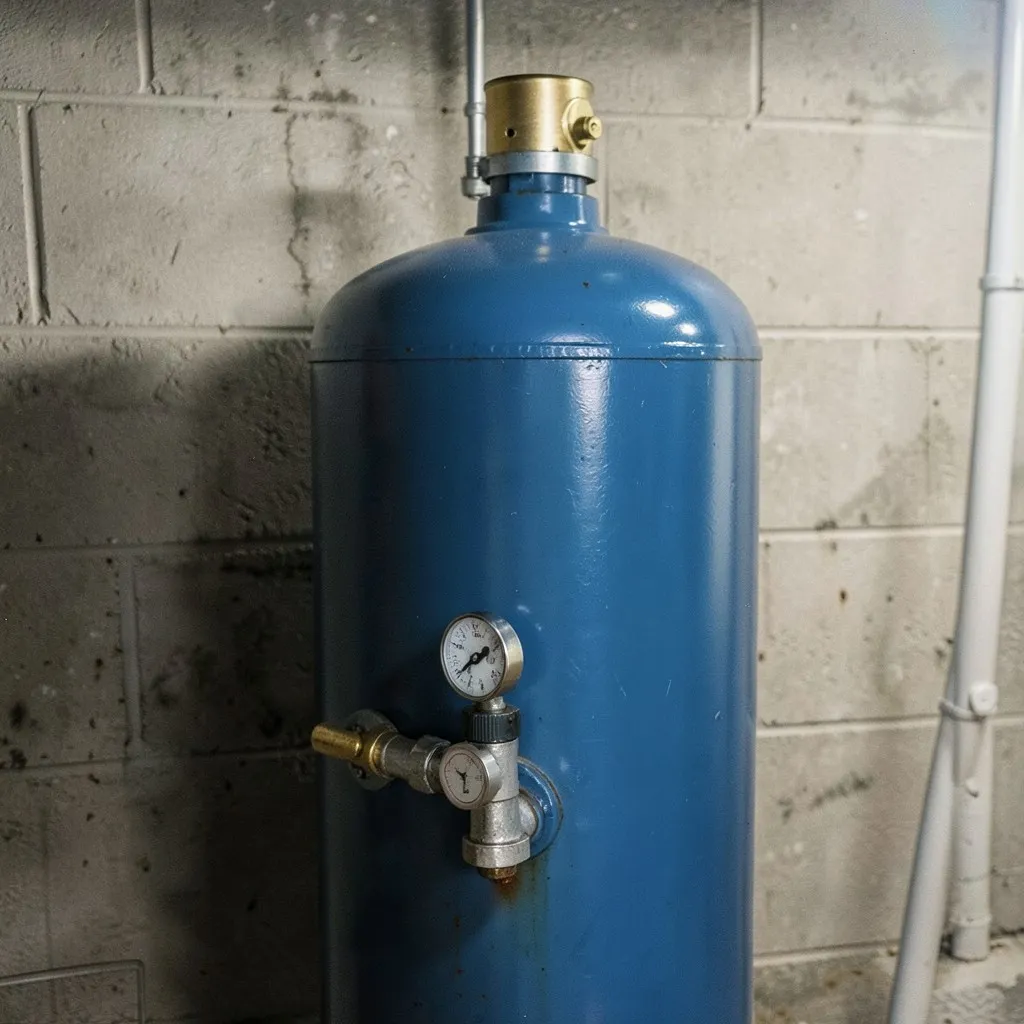
A pressure tank (also called a well pressure tank or captive air tank) is a component in a private well water system that stores a quantity of pressurized water and maintains system pressure between pump cycles. Without a pressure tank, the well pump would start and stop every time someone turned on a faucet — a condition called short cycling that burns out pump motors in months. The pressure tank acts as a buffer, storing enough pressurized water to supply typical household demand between pump activations.
How does a pressure tank work?
Inside the tank is a rubber bladder (or diaphragm) that divides the tank into two chambers: one pre-charged with air (at 2 PSI below the system's cut-in pressure) and one that fills with water from the well pump. When the pump runs, water pressurizes the water side of the bladder, compressing the air side. When a fixture opens, the compressed air pushes water out of the tank until pressure drops to the pump cut-in point (typically 30 or 40 PSI), then the pump restarts.
What are typical pressure switch settings?
A pressure switch controls the pump: the most common settings are 30/50 PSI (pump on at 30, off at 50) or 40/60 PSI (pump on at 40, off at 60). Higher settings provide better pressure at fixtures but require a larger, more powerful pump. The air precharge in the tank should be set to 2 PSI below the cut-in pressure when the tank is empty of water.
What are the signs of pressure tank failure?
- Short cycling: pump turns on and off rapidly (every few seconds) — the bladder has failed and the tank is waterlogged (no air charge)
- Pressure fluctuations: pressure surges and drops noticeably between pump cycles
- Water from the air valve stem: the bladder has ruptured, allowing water into the air side
What does a pressure tank cost?
Replacement pressure tanks cost $100–$400 depending on size (gallons of drawdown capacity). A plumber or well contractor charges $200–$600 to replace one, including pressure switch adjustment and system testing.
Researching the term is one thing — hiring for it is another. See whole-home repipe services for scope, timelines, and what drives the price, or call (888) 530-4445 for a no-cost estimate.
For the full picture — materials, process, timelines and what drives the cost — read Whole-Home Repipe: The Complete Guide.
What related terms should you know?
What sources back this up?
Need a verified plumber for whole-home repipe?
AlertPlumber matches you with a licensed plumber for whole-home repipe. Written estimate before any work begins.