
Pipe Cutter
A hand tool that cuts copper, CPVC, or PEX pipe with a clean, square edge using a rotating cutting wheel rather than a saw — essential for making leak-free plumbing joints.
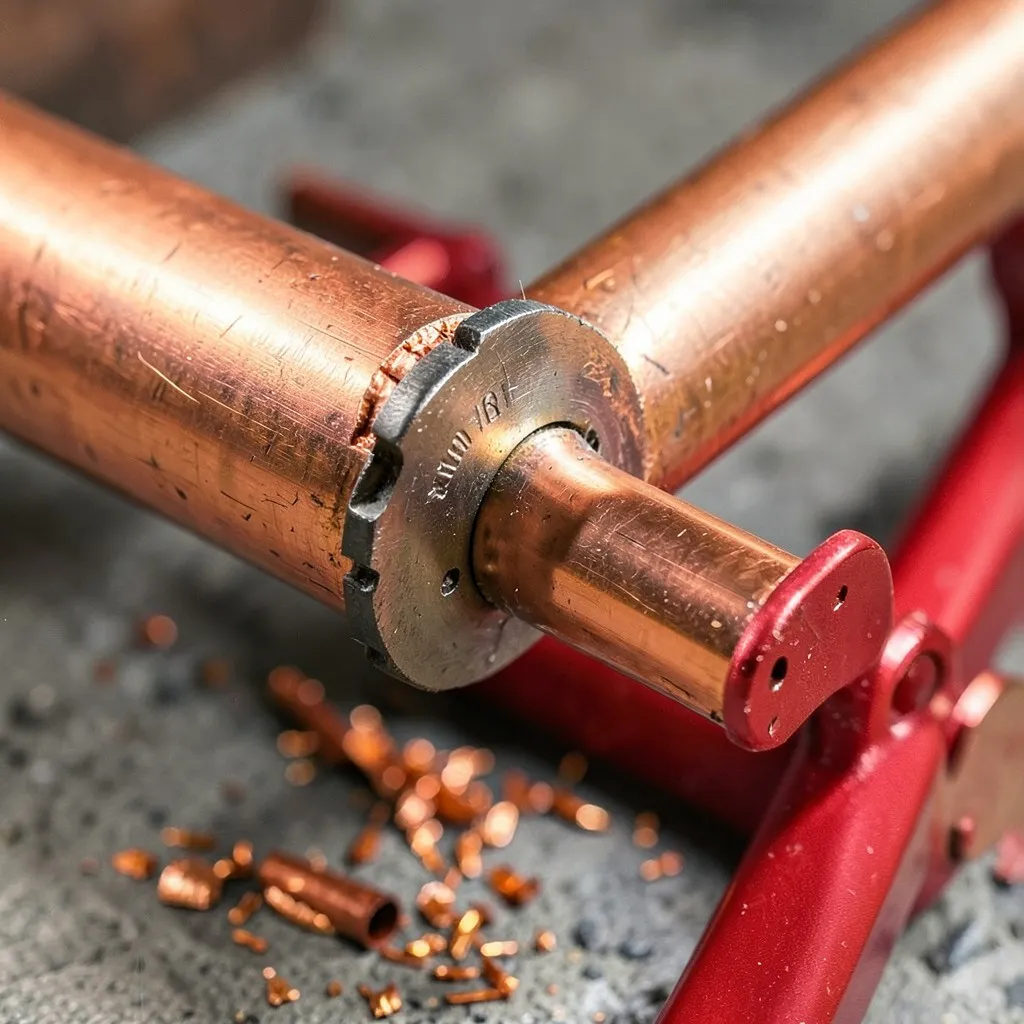
A pipe cutter is a hand tool designed to cut copper, CPVC, or PEX tubing with a clean, square, burr-free end. Unlike a hacksaw (which works but leaves rough edges and requires deburring), a rotary pipe cutter uses a hardened cutting wheel that scores and compresses the pipe wall as you rotate the tool around the pipe, eventually severing it with a clean edge perpendicular to the pipe axis.
What types of pipe cutters are there?
- Standard rotary cutter: the classic tool — a C-shaped frame with a cutting wheel and adjustable feed screw. Works on copper, brass, and steel. Sizes typically cover ⅛" – 1" pipe. Clamp, rotate, tighten slightly, rotate again, repeat until cut.
- Mini or close-quarter cutter: a smaller version for tight spaces (under sinks, inside walls). Can cut pipe with only 1–2 inches of clearance. Essential for retrofit work.
- PEX cutter (ratcheting shear): a scissors-like tool with a curved blade designed specifically for PEX tubing. Cuts in a single squeeze rather than rotating. Cleaner cut on plastic than a rotary cutter.
- CPVC cutter: either a ratcheting shear or standard rotary with a plastic-rated cutting wheel. Saws and rotary cutters both work on CPVC, but shears are faster.
Why does cut quality matter?
A square, burr-free cut is essential for watertight joints. A diagonal cut in a push-fit (SharkBite) fitting won't engage the O-ring properly and will leak. A burred edge inside a soldered fitting restricts flow and prevents solder from wicking correctly. Always deburr the inside of copper pipe cuts with the reaming blade built into the cutter's frame, or with a small round file.
What does a pipe cutter cost?
A quality rotary pipe cutter runs $8–$25. Mini close-quarter cutters cost $12–$30. PEX shears cost $15–$40. These are must-have tools for any plumbing repair involving pipe replacement.
Researching the term is one thing — hiring for it is another. See whole-home repipe services for scope, timelines, and what drives the price, or call (888) 530-4445 for a no-cost estimate.
For the full picture — materials, process, timelines and what drives the cost — read Whole-Home Repipe: The Complete Guide.
What related terms should you know?
What sources back this up?
Need a verified plumber for whole-home repipe?
AlertPlumber matches you with a licensed plumber for whole-home repipe. Written estimate before any work begins.