
Gate Valve
A multi-turn shutoff valve that uses a rising wedge gate to stop flow. Common in older homes but increasingly replaced by ball valves, which are faster and more reliable.
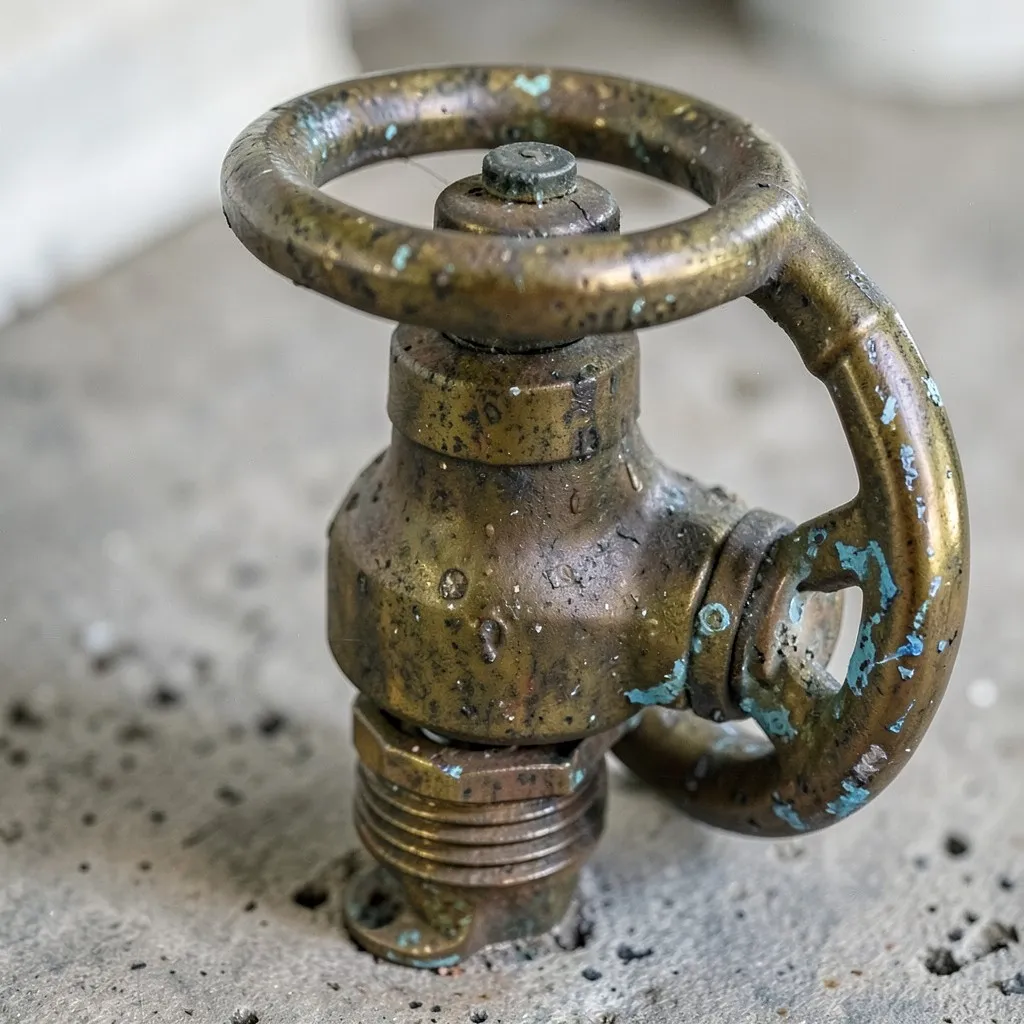
A gate valve is a type of shutoff valve that controls flow by raising or lowering a metal wedge (the gate) into the path of the water. Turning the handwheel counterclockwise (open) lifts the gate out of the flow path; clockwise (closed) lowers it back down. Unlike a ball valve's single quarter-turn, fully opening or closing a gate valve typically requires 8–12 full rotations.
How do gate valves differ from ball valves?
Gate valves were the residential standard before the 1990s. They offer virtually no flow restriction when fully open (the gate retracts entirely into the valve body), which made them popular on water mains. However, they have significant disadvantages compared to modern ball valves:
- Slow operation: 8–12 turns to open or close vs. a single quarter-turn for a ball valve
- Prone to seizing: gate valves not operated for years can become impossible to close due to mineral buildup and corrosion on the stem
- Gate corrosion: the brass or cast-iron gate can corrode, leaving the valve unable to fully seal even when "closed"
- Not suitable for throttling: partially open gate valves vibrate and wear rapidly — they should be either fully open or fully closed
Where will you find gate valves?
Gate valves are common in homes built before 1985, typically at the main water entry, water heater inlets, and irrigation system connections. Municipal water distribution systems still use large gate valves because they provide minimal flow restriction at high volumes and open/close slowly (which prevents water hammer in large mains).
When should you replace a gate valve?
If your main shutoff or water heater isolation valve is a gate valve and hasn't been operated in years, consider upgrading to a ball valve before an emergency forces the issue. Cost: one plumber visit to swap the main shutoff. If a gate valve is currently working and properly isolating, there's no urgency — but exercise it (open/close) annually to keep the stem from seizing.
Researching the term is one thing — hiring for it is another. See whole-home repipe services for scope, timelines, and what drives the price, or call (888) 530-4445 to talk to a local plumber about the job.
For the full picture — materials, process, timelines and what drives the cost — read Whole-Home Repipe: The Complete Guide.
What related terms should you know?
What sources back this up?
Need a plumber for whole-home repipe?
Calls are connected to independent licensed local plumbers in our partner's network for whole-home repipe. Ask for the license number and a written estimate before any work begins.