
Ball Valve
A quarter-turn valve with a spherical disc that controls flow. Turning the lever 90 degrees fully opens or closes it — the most reliable shutoff valve in modern plumbing.
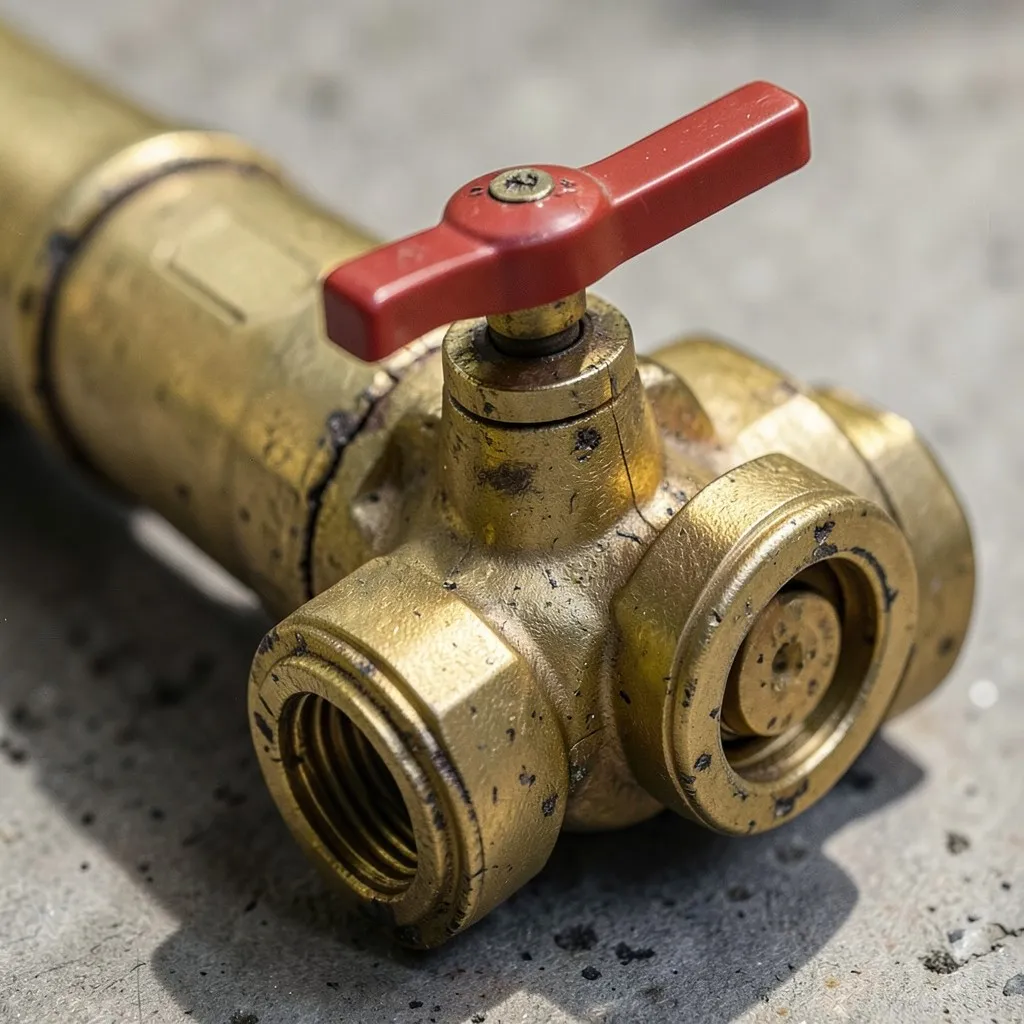
A ball valve is a type of shutoff valve that uses a rotating ball with a hole (bore) through its center to control flow. When the handle is parallel to the pipe, the hole aligns with the pipe and water flows freely. Turn the handle 90 degrees — perpendicular to the pipe — and the solid side of the ball blocks the flow completely. Ball valves are the most widely used shutoff valve in residential and commercial plumbing today.
Why are ball valves preferred?
- Speed: one quarter-turn fully opens or closes — critical in emergencies.
- Reliability: far less prone to corrosion seizing than gate valves; the ball and seat resist mineral deposits better than threaded stems.
- Low pressure drop: a full-port ball valve's bore matches the pipe diameter, so flow restriction is minimal.
- Long service life: quality brass ball valves last 25–50 years without maintenance.
Full-port or standard-port — which do you need?
A full-port (full-bore) ball valve has a ball opening that matches the inside diameter of the pipe — no restriction to flow. A standard-port (reduced-bore) valve has a smaller opening, which slightly reduces flow rate and increases pressure drop. For main shutoffs and supply lines, full-port is standard. Standard-port is acceptable for low-flow applications like irrigation branches.
Where are ball valves used?
- Main water shutoff at the meter or foundation entry
- Isolation valves at water heaters, washing machines, ice makers
- Zone valves on radiant heating systems
- Gas shutoffs (gas-rated ball valves only — never use a water ball valve on gas)
How do ball valves commonly fail?
Ball valves rarely fail catastrophically but can develop stem leaks (a drip around the handle stem) over time. This is usually fixed by tightening the packing nut or replacing the packing. A ball valve that won't fully shut off typically has a worn seat — replace the valve rather than repair it.
What does a ball valve cost?
A quality brass full-port ball valve is an inexpensive part for typical ¾" or 1" sizes. A plumber installing one as a new main shutoff prices the job including parts and water shutoff at the street.
Researching the term is one thing — hiring for it is another. See whole-home repipe services for scope, timelines, and what drives the price, or call (888) 530-4445 to talk to a local plumber about the job.
For the full picture — materials, process, timelines and what drives the cost — read Whole-Home Repipe: The Complete Guide.
What related terms should you know?
What sources back this up?
Need a plumber for whole-home repipe?
Calls are connected to independent licensed local plumbers in our partner's network for whole-home repipe. Ask for the license number and a written estimate before any work begins.