
Ejector Pump
A sewage pump that grinds and pumps waste from a below-grade bathroom (basement toilet, sink, or shower) up to the level of the main drain line.
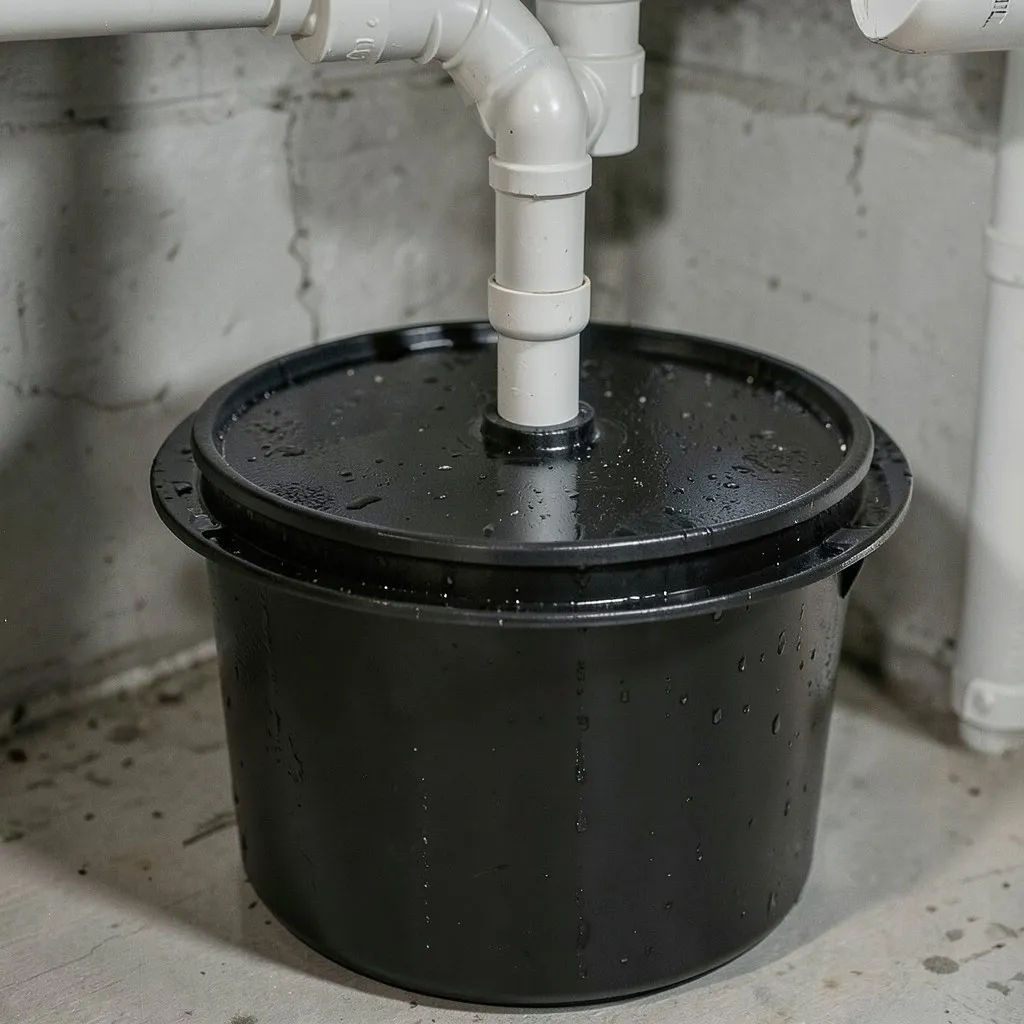
An ejector pump (also called a sewage ejector, grinder pump, or sewage pump) is a submersible pump installed in a sealed basin below a basement bathroom or utility sink. Because gravity alone can't drain below-grade fixtures up to the main drain line (which exits through the foundation above basement floor level), the ejector pump collects the waste in the basin and pumps it upward through a discharge pipe to where it can flow by gravity to the sewer.
How does an ejector pump work?
Waste from the basement toilet, sink, shower, or laundry drains into a sealed fiberglass or polyethylene basin (pit) buried in the basement floor. When the waste level reaches the activation float, the pump turns on and grinds (in grinder pump versions) or pumps the waste through a 2-inch or 3-inch discharge pipe, typically up through the wall and connecting to the building's main drain 3–10 feet above the basement floor. A check valve on the discharge line prevents backflow when the pump shuts off.
Ejector pump or grinder pump — what's the difference?
An ejector pump handles typical residential waste (toilet paper, human waste, soap) and is standard for basement bathrooms. A grinder pump has a cutting mechanism that macerates waste before pumping — used when the discharge must travel longer distances or vertically, or when solids heavier than toilet paper (food waste) may enter the system.
What maintenance does an ejector pump need?
- Inspect the basin lid seal annually — a broken seal allows sewer gas into the basement
- Test the float by pouring a bucket of water into the basin to trigger the pump
- Never flush wipes, feminine hygiene products, or FOG into a basement bathroom connected to an ejector pump — these clog the pump and void warranties
- Pump replacement: $300–$700 for the pump; $400–$900 installed
Researching the term is one thing — hiring for it is another. See sump pump repair services for scope, timelines, and what drives the price, or call (888) 530-4445 for a no-cost estimate.
What related terms should you know?
What sources back this up?
Need a verified plumber for sump pump repair?
AlertPlumber matches you with a licensed plumber for sump pump repair. Written estimate before any work begins.