
Plumbing Fittings
Connectors used to join, redirect, or terminate pipes in a plumbing system. Types include couplings, elbows, tees, reducers, and caps — available in matching materials for each pipe type.
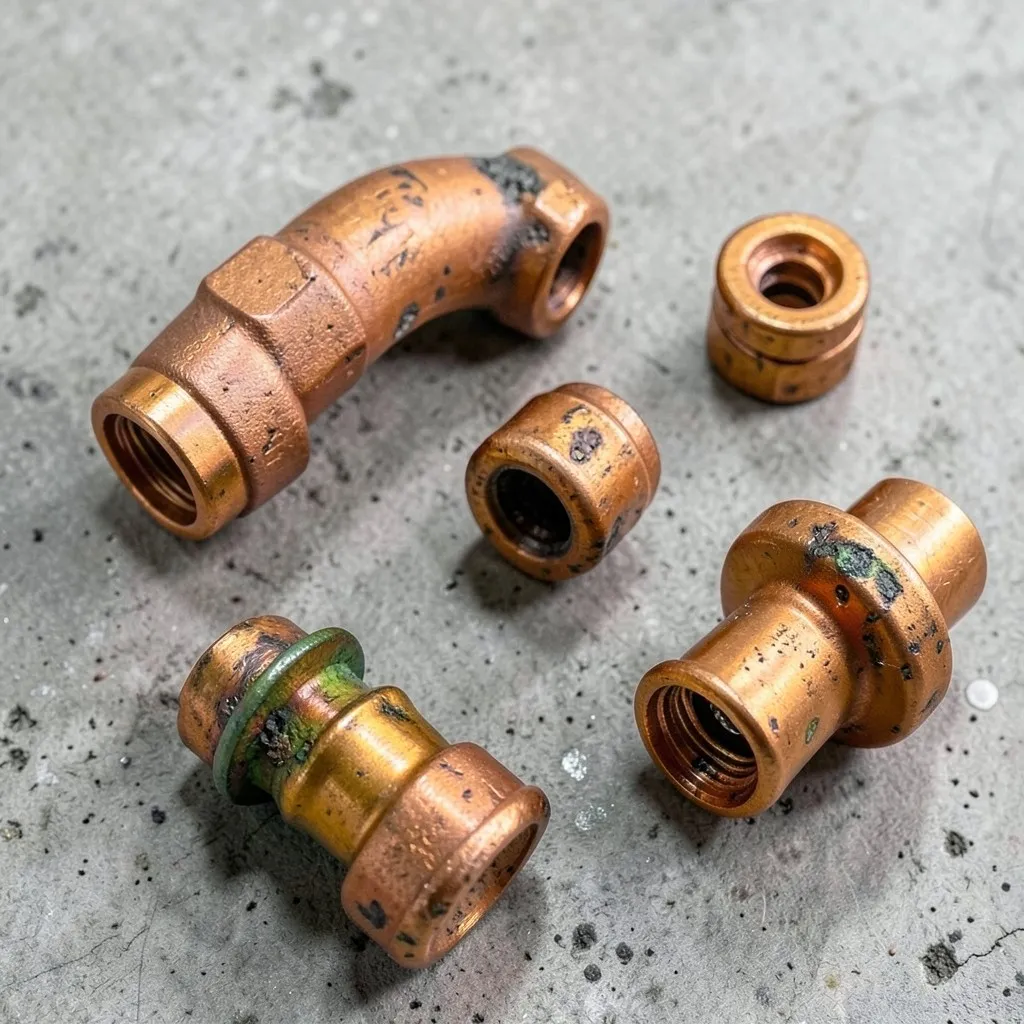
Plumbing fittings are the connectors that join pipe segments together, change direction, split flow, change pipe size, or terminate a run. Every joint in a plumbing system uses a fitting — a typical 2-bathroom home has hundreds of them.
What are the common types of plumbing fittings?
- Coupling — joins two pipes of the same diameter end-to-end
- Elbow (90° or 45°) — changes pipe direction; 90° elbows are the most common
- Tee — splits one pipe into two (or joins two runs into one); used at every branch point
- Reducer / bushing — connects pipes of different diameters
- Cap / plug — terminates a pipe end; used during rough-in and for capping unused ports
- Union — allows a pipe segment to be disconnected without cutting; used near appliances for serviceability
- Wye (Y-fitting) — branches at 45° rather than 90°; preferred in DWV systems to maintain drainage slope
Do fittings need to match the pipe material?
- PEX pipes use crimp, clamp, or expansion fittings (brass or poly)
- PVC and ABS use solvent-weld fittings in matching material
- Copper uses sweat-soldered (95/5 solder) fittings or push-fit connectors
- Galvanized and black iron use threaded fittings with pipe dope or PTFE tape
Dielectric fittings are a special case — used where copper and galvanized steel meet to prevent galvanic corrosion (electrolytic reaction between dissimilar metals). Dielectric unions or dielectric nipples contain a plastic isolator that breaks the electrical connection between metals.
Push-fit fittings (like SharkBite) are designed to connect pipes made of different materials without soldering or crimping — the fitting grips the pipe with internal teeth and an O-ring seal. They're popular for repairs and remodels where speed matters.
Researching the term is one thing — hiring for it is another. See whole-home repipe services for scope, timelines, and what drives the price, or call (888) 530-4445 for a no-cost estimate.
For the full picture — materials, process, timelines and what drives the cost — read Whole-Home Repipe: The Complete Guide.
What related terms should you know?
What sources back this up?
Need a verified plumber for whole-home repipe?
AlertPlumber matches you with a licensed plumber for whole-home repipe. Written estimate before any work begins.