
Shower Pan
The waterproofed floor of a shower that collects water and directs it to the drain. Shower pan failures cause water damage inside walls and subfloors — often invisible until significant damage has occurred.
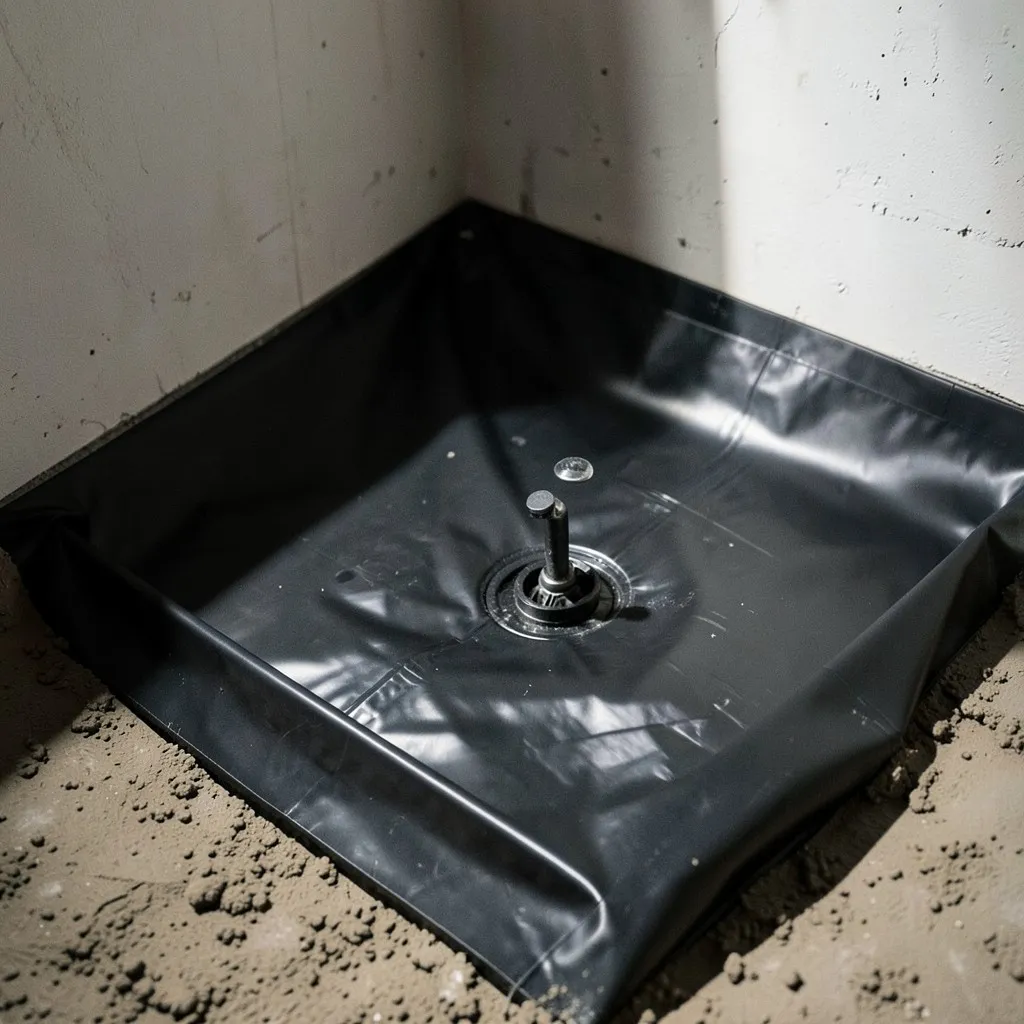
A shower pan (also called a shower base or shower floor) is the waterproofed floor structure of a shower enclosure that collects all water from the shower and directs it to the drain. It forms the critical water barrier between the shower and the subfloor below — and a failed shower pan is one of the most common sources of silent, progressive structural water damage in homes.
What types of shower pans are there?
- Prefabricated acrylic or fiberglass: the most common in new construction and budget remodels. A molded single piece with the drain hole pre-positioned. Fast to install, easy to clean, but difficult to repair when cracked.
- Pre-sloped foam pan (tile-ready): a foam substrate with a pre-sloped surface and integrated waterproofing, installed as the base for a custom tile shower floor. More flexible in size and shape than prefab pans.
- Traditional mud-bed (mortar pan): a concrete mortar base hand-packed over a rubber membrane liner, then tiled. The gold standard for durability — properly installed mud beds last 30+ years. Requires skilled labor.
- PVC or CPE liner pan: a flexible rubber or plastic membrane folded and bonded at corners, installed under a mortar bed, used in traditional custom tile showers. The liner extends up the walls 3–4 inches above the curb.
What are the signs of shower pan failure?
- Water stains, soft spots, or mold on the ceiling of a room below the shower
- Loose or lifting tile on the shower floor
- Musty smell in or around the shower
- Grout lines cracking or deteriorating faster than wall grout
- Soft, spongy feeling when stepping on the shower floor
What is the flood test?
To test a shower pan for leaks, plug the drain and fill the pan with 2 inches of water. Mark the water level with tape and leave for 24 hours. Any drop in level indicates a leak. This test is required by many building inspectors before tile installation.
Researching the term is one thing — hiring for it is another. See slab leak repair services for scope, timelines, and what drives the price, or call (888) 530-4445 for a no-cost estimate.
For the full picture — materials, process, timelines and what drives the cost — read Slab Leak Repair: The Complete Guide.
What related terms should you know?
What sources back this up?
Need a verified plumber for slab leak repair?
AlertPlumber matches you with a licensed plumber for slab leak repair. Written estimate before any work begins.