
Air Admittance Valve
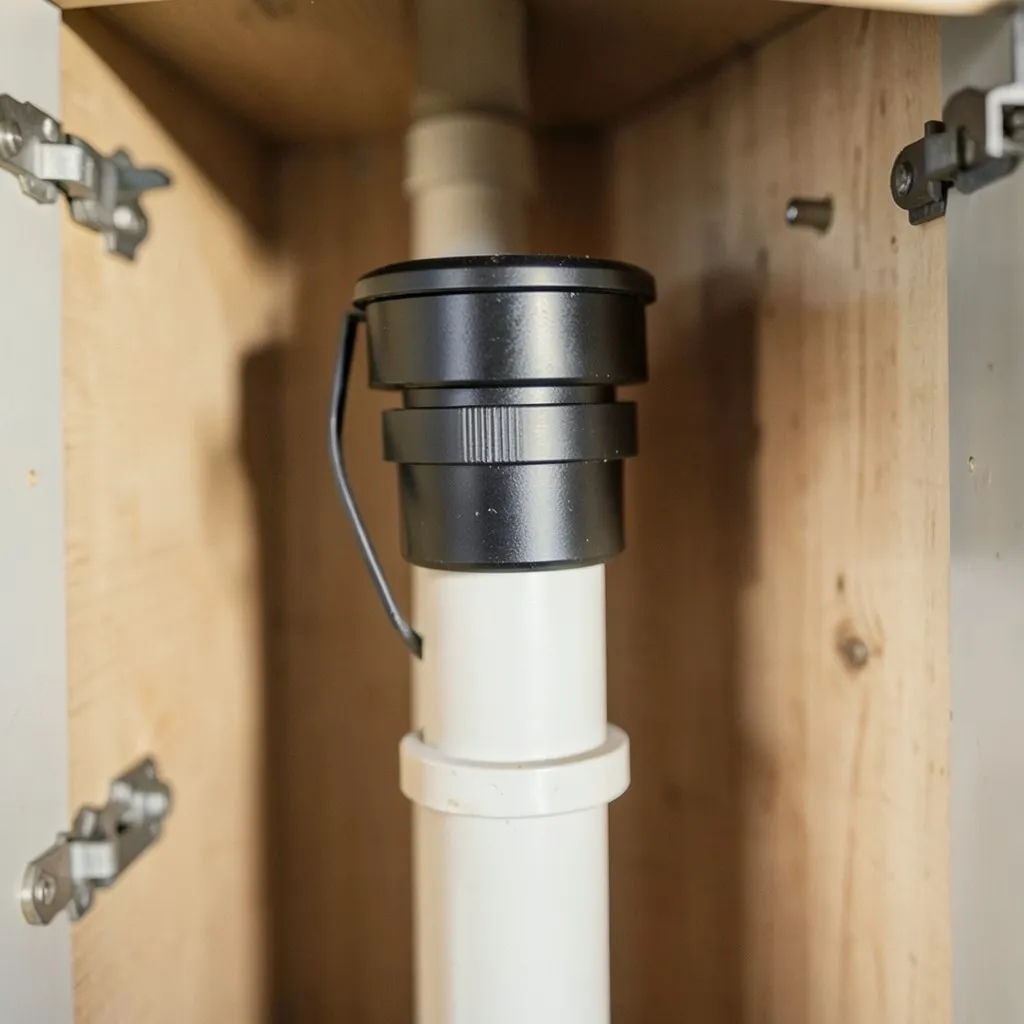
An air admittance valve, abbreviated AAV and sometimes called a Studor vent after the original manufacturer, is a one-way mechanical valve that allows air to enter a drainage system to balance pressure but prevents sewer gas from escaping back out. Inside the housing, a lightweight elastomer disc lifts off its seat under negative pressure, lets atmospheric air rush into the pipe, then drops back down and seals when pressure equalizes. The valve replaces a traditional vent stack in locations where running a 2 inch pipe up through the roof is impractical or impossible.
The classic application is a kitchen island sink. Without a vent on the discharge side, every drain cycle would siphon water out of the P-trap and break the sewer gas seal. Other common uses include basement bar sinks added to a finished space, remodels where a tub or shower is moved away from an existing vent stack, and accessory dwelling unit conversions where roof penetration is restricted. The 2024 IPC § 917 explicitly permits AAVs as an alternative to conventional venting, and the IAPMO UPC permits them under § 912 with similar restrictions. A handful of jurisdictions, notably parts of New York City, still prohibit AAVs in residential construction, so local code verification is mandatory before installation.
Warning signs of AAV failure include:
- Sewer gas odor at the fixture served by the valve, indicating the seal disc is stuck open
- Slow or gurgling drainage despite a clear drain line, indicating the disc is stuck closed
- Visible cracks in the plastic housing or a degraded elastomer seal
- Trap-seal loss at the connected fixture during heavy drainage upstream
- Audible chattering or fluttering of the disc during drain cycles
An AAV must be installed at least four inches above the horizontal drain line it serves, must remain accessible for replacement (never sealed inside a finished wall), and must be kept inside conditioned space because cold temperatures stiffen the disc and cause failure. The valve threads onto a standard 1-1/2 inch or 2 inch sanitary tee with a male adapter and is typically tucked inside a vanity or sink cabinet.
Cost in 2026 runs $40 to $120 for the valve itself depending on size and brand, with branded units from Oatey Sure-Vent and Studor Mini-Vent at the higher end. Professional installation in an accessible cabinet adds $125 to $250 in labor, for a total project cost of $165 to $370. AAVs carry a manufacturer life expectancy of twenty to thirty years, but replacement should be considered any time persistent odor or drainage symptoms appear and the trap itself has been verified intact. AAVs are not a substitute for a building's primary roof vent, which serves the entire drain-waste-vent system; they only vent a single fixture or branch.
Researching the term is one thing — hiring for it is another. See drain cleaning services for scope, timelines, and what drives the price, or call (484) 603-3302 for a no-cost estimate.
Related terms
Sources
Drain Cleaning — verified plumbers available
AlertPlumber matches you with a licensed plumber for drain cleaning. Written estimate before any work begins.