
Emergency Water Heater Repair in Milwaukee, Wisconsin
Fixes no-hot-water, leaking tank, pilot light, and thermostat issues. AlertPlumber matches you with a verified WI plumber serving Milwaukee.
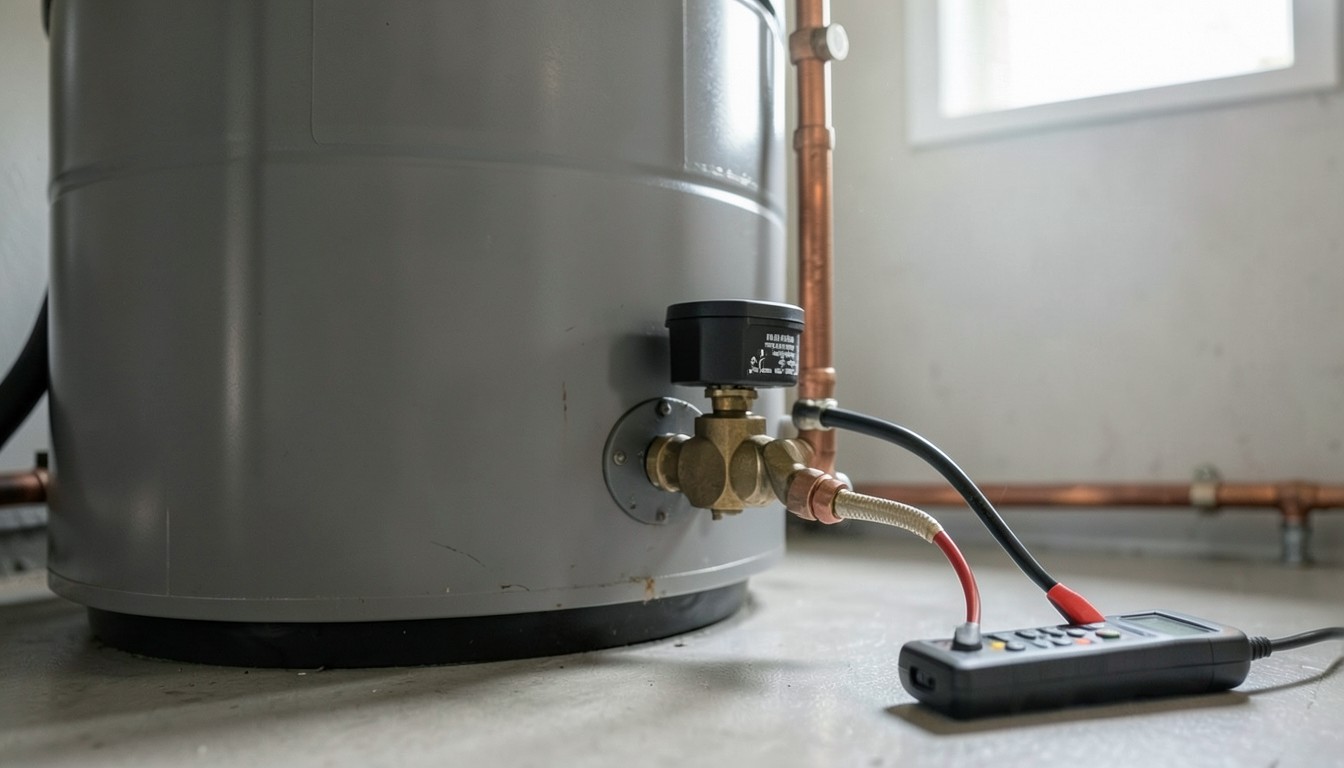
Local plumbing data for Milwaukee, WI
Climate angle. Pre-WWII Polish Flats + Bay View housing stock with 100-year-old cast-iron + lead service lines. Lake Michigan soft water (~7 gpg). Burst-pipe season Nov-Mar (avg 140 freeze days). Active LSL replacement program.
Water Heater Repair cost calculator — Milwaukee
Pre-filled for water heater repair in Milwaukee. Adjust the ZIP for a neighboring area, or change the service to compare. Calculator pulls from the city's scraped permit-fee + state plumber-density data.
Water Heater Repair in Milwaukee — frequently asked
How much does water heater repair cost in Milwaukee?
Milwaukee water heater repair pricing typically runs $190–$540 for single-fault component work — thermocouple, upper or lower heating element, T&P relief valve, dip tube, or gas control valve — and $1,500–$2,950 for a full 40–50 gallon atmospheric-vent gas or electric tank replacement installed in a Bay View or Riverwest brick basement. The $100 Milwaukee Department of Neighborhood Services (DNS) plumbing permit bundles into any tank-replacement quote and is non-negotiable for full swaps. Lake Michigan source water at 7 grains/gallon moderate hardness (per USGS hardness classification) drives faster sediment baking on the tank bottom than soft-water markets, so the average Milwaukee gas tank starts triggering replacement quotes at 8–10 years instead of the 12–15 year national norm. Heat-pump WHR conversions run $2,400–$4,200 installed before the Wisconsin Focus on Energy rebate, which can offset $300–$750 depending on tier. A 130-day-per-year freeze cycle on continental-winter Milwaukee homes also stresses sediment expansion — the verified WI DSPS Master Plumber notes age, BTU rating, vent type, and We Energies gas vs electric configuration on the written quote so homeowners can compare repair-versus-replace economics on Polish-German immigrant brick basement installs versus Brookfield West garage installs.
My Milwaukee water heater stopped producing hot water — what symptoms point to which fix?
No hot water on a Milwaukee gas tank usually traces to (1) extinguished pilot light or failed thermocouple ($190–$295 repair, most common in unconditioned Bay View basements with 130 freeze days of cold-air infiltration), (2) failed gas control valve ($340–$540), or (3) sediment-buried burner from 7 gpg Lake Michigan hardness. On an electric tank, no hot water typically means (1) tripped high-limit reset, (2) failed upper or lower element ($245–$420 per element including labor), or (3) failed thermostat. Lukewarm-only output on either fuel type points to a single failed lower element on electrics, or a partially blocked dip tube on gas units after 8+ years of sediment cycling. Knocking, rumbling, or kettle-boiling noises in a Walker's Point 1900s basement install almost always mean calcium-carbonate sediment baked onto the tank bottom from the Milwaukee Water Works distribution system. The verified Milwaukee plumber matched through AlertPlumber runs a 10-minute diagnostic — pilot test, multimeter on elements, T&P valve check, anode rod inspection — before quoting parts. Tank perforation leaks from the bottom seam mean replacement is the only fix; side or top-plumbing leaks are usually component repairs.
Why does Milwaukee water heater repair differ from other Great Lakes cities?
Milwaukee combines three Great Lakes Midwest factors that shape WHR specifically: Lake Michigan source water at 7 grains/gallon moderate hardness (slightly milder than Detroit-area Lake Huron but harder than soft-water Pacific Coast markets), a 130-freeze-day continental winter heating-load that cycles tanks harder than coastal climates, and a dense pre-1920 Polish-German immigrant housing stock with brick-foundation basements where 1880s–1910s atmospheric-vent gas installs sit on cracked concrete floors with B-vent runs through coal-chute openings. The Bay View, Riverwest, and Walker's Point neighborhoods routinely show 50–60-gallon tanks crammed into 6-foot ceiling-height basements where draft and combustion air are non-trivial. Wauwatosa, West Allis, and Brookfield post-war 1950s–70s tract homes have purpose-built utility rooms with proper draft hoods. 1990s+ Mequon and Brookfield West outer-ring construction typically uses sealed-combustion power-vent or condensing units in conditioned garages. The median Milwaukee home is roughly 70 years old, which means most tanks operate in unfinished basements without floor drains — pan and condensate-routing become part of the WHR scope. NOAA NWS Milwaukee (KMKX) documents the freeze-cycle data driving these stress patterns.
Tank vs tankless vs heat-pump in Milwaukee — which fits a 70-year-old home?
The choice on a 70-year-median Milwaukee home turns on We Energies fuel-cost economics and Wisconsin Focus on Energy rebate eligibility. Standard 40–50 gallon atmospheric-vent gas tanks ($1,500–$2,300 installed) remain the default for Bay View and Riverwest brick basements with existing B-vent chases — no electrical upgrade required, easiest swap on We Energies natural-gas service. Tankless gas ($3,400–$5,200 installed) needs a 3/4-inch gas-line upsize and stainless concentric venting, which is straightforward in Wauwatosa post-war utility rooms but trickier in 1880s coal-chute basements. Heat-pump WHR ($2,400–$4,200 installed before rebate) is the fastest-growing category on We Energies' combined gas+electric service because the Wisconsin Focus on Energy rebate program offsets $300–$750 of the install and the heat-pump pulls heat from the basement air — a feature in 130-freeze-day Milwaukee winters where conditioned-basement waste heat is otherwise vented. DOE Energy Saver documents heat-pump WHR efficiency at 2–3x electric resistance. The verified WI DSPS Master Plumber sizes the unit to actual GPM demand, not just gallon capacity.
Will my Wisconsin HO-3 homeowners insurance cover Milwaukee water heater damage?
Standard Wisconsin HO-3 policies cover sudden-and-accidental discharge water damage — a Bay View basement tank that ruptures overnight and floods a finished rec room — but exclude the cost of the failed tank itself and exclude gradual seepage the homeowner should have caught earlier. The 130-freeze-day Milwaukee winter creates a specific coverage scenario: a tank exposed to a partially heated basement during a power-loss freeze event can rupture from internal water expansion when the supply line thaws. HO-3 typically covers the ensuing water damage but the freeze-burst tank replacement falls under the carrier's mechanical-breakdown or service-line endorsement, which is optional in most Wisconsin policies. Document the failure with photos before the verified plumber begins remediation; submit the WI DSPS Master Plumber's written report with the carrier-specific claim form. Wisconsin's adoption of the 2015 IRC plus state-amended Uniform Dwelling Code (UDC) requires thermal-expansion tank installation on closed-loop systems with backflow preventers — Milwaukee Water Works installations after 2010 nearly all qualify, and the verified plumber confirms whether the existing setup needs an expansion tank as part of any swap quote. Carrier reviews of pre-2010 installs sometimes deny claims if no expansion tank is present, so this is a real cost driver on older Polish-German basement installs.
How often should I replace the anode rod on Milwaukee's 7 gpg Lake Michigan water?
The sacrificial magnesium or aluminum anode rod inside the tank corrodes preferentially to protect the steel tank lining. On Milwaukee Water Works distribution at 7 grains/gallon moderate hardness from Lake Michigan source, the anode is typically half-consumed by year 3 and fully consumed by year 5–6 on a standard residential 40–50 gallon tank. Replacing the rod at year 3 ($175–$285 service call including labor and rod) on a Wauwatosa post-war or Mequon outer-ring install can extend total tank life by 4–6 years versus letting it run to failure. The economics are sharpest on heat-pump WHR units where replacement cost is higher and Focus on Energy rebate dollars are already invested. On 1880s–1910s Bay View and Walker's Point basements, ceiling clearance can prevent vertical rod removal — a flexible segmented rod ($60–$95 part) solves the access problem and is standard on the verified plumber's truck. EPA SDWA regulates Milwaukee Water Works source quality, and the 2021 lead-service-line replacement program means some pre-1950 service laterals are getting upgraded — homeowners with a recent service-line swap should ask the plumber to inspect the anode condition during the next maintenance visit.
How long does a typical Milwaukee water heater repair take?
Single-component repairs on a verified Milwaukee plumber dispatch typically resolve same-day in 1–3 hours of on-site work. A thermocouple swap on a Bay View atmospheric-vent gas tank runs 45–75 minutes once the plumber confirms gas pressure and pilot-orifice cleanliness. Element replacement on a Wauwatosa electric tank takes 60–90 minutes including drain, swap, refill, and electrical verification. Gas control valve replacement runs 90–120 minutes due to gas-line bleeding and combustion testing. T&P valve and expansion tank work is typically under 60 minutes. A full tank replacement — drain old, disconnect, haul out, set new, reconnect water and gas or electric, vent verification, fill, leak test, We Energies meter check on gas — runs 3–5 hours on a typical Wauwatosa install but can stretch to 6–8 hours on a 1880s Walker's Point basement with code-bringup work (B-vent rebuild, sediment-trap install, expansion tank addition, drip-pan plumbing). The verified WI DSPS Master Plumber confirms scope and ETA on the callback before rolling the truck. Heat-pump WHR conversions add 1–2 hours for condensate-line routing and 240V circuit verification.
Bay View 1880s basement vs Wauwatosa post-war ring vs Mequon new construction — what changes?
Three distinct WHR profiles define Milwaukee-area service. Bay View, Riverwest, and Walker's Point Polish-German immigrant brick basements (1880s–1910s) typically host 40–50 gallon atmospheric-vent gas tanks under 6'8" ceilings on cracked concrete floors with B-vent chases through coal-chute openings — code-bringup on a swap often adds combustion-air intake, sediment trap, and drip pan ($350–$650 over baseline). Wauwatosa, West Allis, and Brookfield post-war 1950s–70s tract homes (single-story ranches and Cape Cods) feature purpose-built utility rooms with proper draft hoods and floor drains — swaps run cleanest here, with most installs completing in 3–4 hours. 1990s+ ring suburbs like Mequon, Brookfield West, and Hartland frequently use sealed-combustion power-vent or condensing tankless units in conditioned attached garages — these support direct heat-pump WHR conversion with the simplest condensate routing and qualify cleanly for Focus on Energy rebate tiers. The 70-year median build means the Wauwatosa post-war profile is the modal Milwaukee install, but the verified plumber prices each scope individually. A flat quote without a basement walkthrough is a red flag on any pre-1940 Bay View address.
What permit and credential rules apply to Milwaukee water heater work?
Component-level repairs (thermocouple, element, thermostat, T&P valve, anode rod, dip tube) do not require a permit in the City of Milwaukee. A full tank or tankless replacement DOES require a $100 plumbing/mechanical permit pulled through the Milwaukee Department of Neighborhood Services (DNS), and the work must be performed by — or under the direct supervision of — a Wisconsin DSPS-credentialed Master Plumber per Wisconsin Department of Safety and Professional Services. The verified plumber pulls the permit, schedules the DNS inspector, and includes the $100 permit fee on the written quote. Wisconsin's adoption of the Uniform Dwelling Code (UDC) and IPC governs venting, T&P discharge routing, expansion-tank requirements on closed-loop systems, and the 42-inch frost-line considerations for any exterior gas-line work. Homeowners should never accept "we can skip the permit" pricing — it voids manufacturer warranty, voids the homeowners insurance coverage on subsequent failure, and creates a disclosure problem at resale. The DSPS public lookup lets any Milwaukee homeowner verify the credentialed plumber's status before authorizing work, and AlertPlumber routes only to plumbers in active good standing on the DSPS roster.
Are heat-pump water heater conversions worth it on We Energies service in Milwaukee?
Heat-pump WHR conversion economics on We Energies combined gas-and-electric service in Milwaukee turn on three numbers: install cost ($2,400–$4,200 before rebate), Wisconsin Focus on Energy rebate offset ($300–$750 depending on tier and unit efficiency), and operational savings versus standard electric resistance or atmospheric-vent gas. The Focus on Energy heat-pump WHR rebate is the largest residential rebate available in Wisconsin and stacks with federal Inflation Reduction Act tax credits documented at DOE rebate guidance. Operational savings on We Energies electric rates run 50–70% versus standard electric resistance and 15–30% versus atmospheric-vent gas at current Wisconsin natural-gas prices. The unit pulls heat from basement air, which is a small dehumidification benefit in summer and a small heating-load addition in winter — net-positive in Milwaukee's 130-freeze-day climate where unconditioned basements run cool year-round. The verified WI DSPS Master Plumber confirms 240V circuit availability, condensate-routing options, and ambient-air volume (heat-pump WHR needs roughly 700 cubic feet of unrestricted space). Mequon and Brookfield West conditioned garages are the easiest installs; Bay View 1880s basements need ducting kits ($175–$340 added) when ambient volume is tight. Local context. Milwaukee Water Works serves roughly 590,000 Milwaukee residents at 7 grains/gallon moderate hardness from Lake Michigan source; median home is approximately 70 years old; 130 freeze days per year drive winter sediment-cycle stress; $100 DNS plumbing permit applies to full tank replacement; verified WI DSPS Master Plumber holds active state credentials; 42-inch UDC frost-line governs exterior gas-line work; Focus on Energy rebates apply to qualifying heat-pump WHR conversions. AlertPlumber routes verified plumbers across Bay View, Riverwest, Walker's Point, Wauwatosa, West Allis, Brookfield, Mequon, and adjacent Milwaukee-area service zones.
Request a water heater repair callback in Milwaukee
ZIP, phone, kind of work. AlertPlumber routes to a verified plumber for a free over-phone estimate.