
Emergency Slab Leak Repair in Seattle, Washington
Detects and repairs leaks in pipes beneath the concrete slab foundation. AlertPlumber matches you with a verified WA plumber serving Seattle.
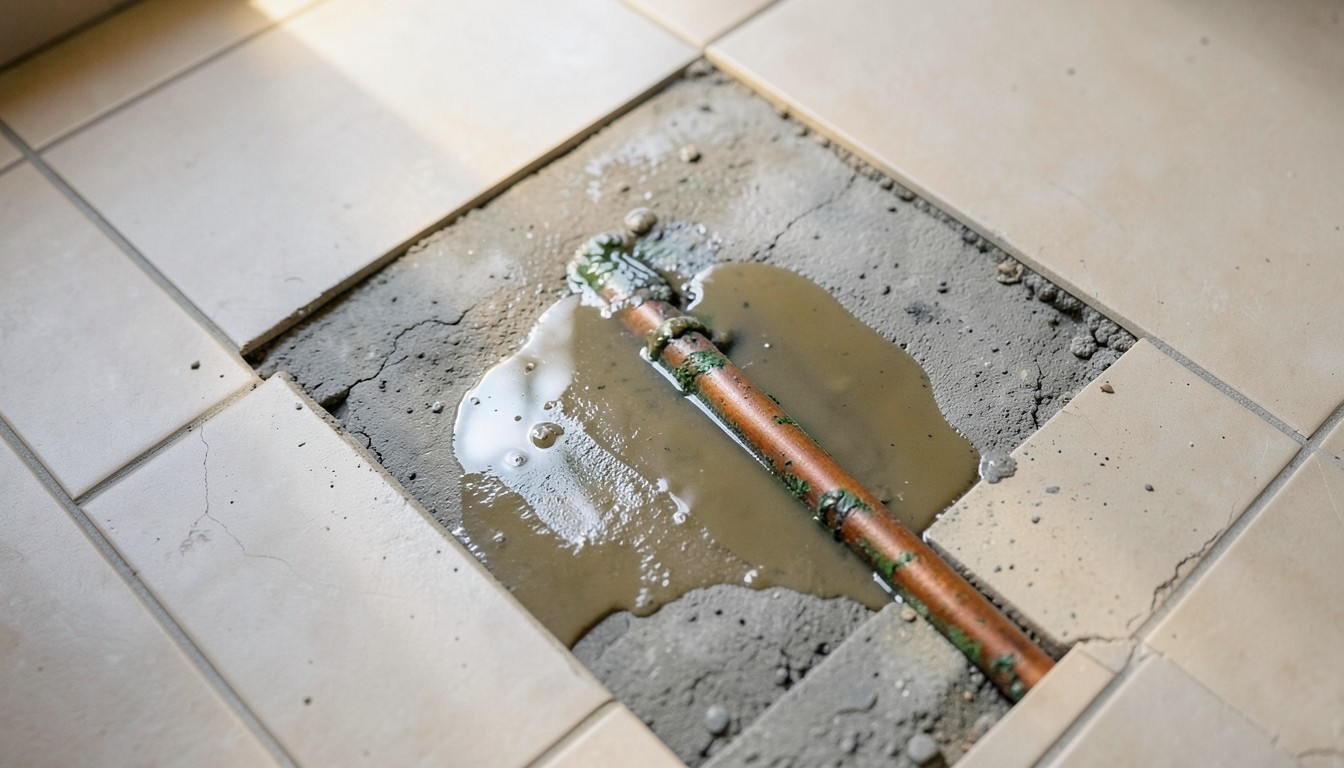
Local plumbing data for Seattle, WA
Climate angle. Mild marine climate keeps freeze events brief but persistent dampness drives leak-detection + sump-pump demand. 1950s–60s housing stock has aging galvanized supply lines + cast-iron drains; roots from cedar/fir invade sewer laterals.
Slab Leak Repair cost calculator — Seattle
Pre-filled for slab leak repair in Seattle. Adjust the ZIP for a neighboring area, or change the service to compare. Calculator pulls from the city's scraped permit-fee + state plumber-density data.
Slab Leak Repair in Seattle — frequently asked
How much does slab leak repair cost in Seattle?
Seattle slab leak repair runs $1,800-$4,000 for a spot repair, $2,800-$5,800 for a reroute, and $8,200-$14,000 for a full repipe. Seattle SDCI charges a $165 permit fee for slab work. Seattle labor rates trend high because Washington is a union plumber market with 9,860 active state-credentialed plumbers and the rare Seattle slab-leak case often involves hydronic radiant-heat coil work that requires both plumbing and HVAC skills. For a typical Bellevue or Renton ranch with a confirmed potable-supply slab leak, expect $2,500-$4,500 all-in. Hydronic-coil failures (which most Seattle "slab leaks" turn out to be) can run $5,000-$15,000 to convert to above-slab heat.
Are slab leaks common in Seattle?
No — Seattle slab leaks are rare. Most Seattle homes have basements or crawlspaces with accessible plumbing, and the soft 1.8 gpg water (among the softest in the country per USGS) means in-slab copper rarely develops the pinhole corrosion that drives Phoenix or Houston slab-leak volumes. The Seattle slab homes that do exist are concentrated in suburban Bellevue, Renton, and parts of Kent — typically 1960s-70s ranch tracts that adopted slab-on-grade specifically to install hydronic radiant heating. When a Seattle slab home reports a "slab leak," the matched plumber's first diagnostic question is whether the home has radiant heat — if yes, the failure is almost always in the radiant coils, not the potable supply.
Why are most Seattle 'slab leaks" actually radiant-heat failures?
1960s-70s Bellevue and Renton ranches that adopted slab-on-grade did so primarily to install hydronic radiant heat — copper coils embedded in the slab carrying heated water for warm-floor comfort against Pacific Northwest dampness. Those copper coils are now 55-65 years old and corroding internally despite the soft 1.8 gpg potable supply (the heating loop chemistry is different — it's a closed-loop system that develops dissolved-oxygen corrosion over time). The failure looks identical to a potable-supply slab leak (warm spot, audible flow, water bill spike if the heating loop is fed from the potable supply), but the repair scope is different: either patch the failed coil section or abandon the under-slab radiant entirely and convert to ductless heat pumps or baseboard heat.
Spot repair vs reroute vs repipe — which fits a Seattle home?
For a confirmed potable-supply slab leak in a Bellevue or Renton ranch, spot repair ($1,800-$4,000) is the right answer because Seattle's 1.8 gpg water means the rest of the supply system is in good condition — the failure was localized, not a sign of system-wide pinhole corrosion. Reroute through crawlspace ($2,800-$5,800) where applicable. Full repipe ($8,200-$14,000) is rarely necessary in Seattle proper. For radiant-coil failures (the more common case), the answer is usually radiant abandonment plus heat-pump conversion — different scope, often $5,000-$15,000, sometimes eligible for utility rebates through Puget Sound Energy or Seattle City Light.
Will my Washington homeowners insurance cover the slab leak?
Washington HO-3 policies cover sudden water damage to flooring, drywall, and personal property but exclude the plumbing repair itself. The Washington-specific complication: if the leak is actually in a hydronic radiant coil rather than a potable supply line, some carriers classify it under "heating system" with a different deductible and lower limit. Mold remediation up to a sublimit (typically $5,000-$10,000) is usually covered, which matters in damp Pacific Northwest homes where mold colonizes quickly. The matched plumber documents the leak source carefully — radiant vs potable — so the claim files correctly the first time and avoids reclassification denials.
Does Pacific Northwest soil contribute to slab leaks?
Seattle soil is mostly glacial till — dense, well-drained, and stable. Unlike Atlanta clay or Houston gumbo, Seattle soil does not shrink-swell with seasonal moisture cycles, so mechanical pipe-shear failures are rare. The Seattle environmental factor that does matter is groundwater: 37 inches of annual rainfall keeps the soil moist year-round, which means any slab leak quickly produces saturated soil under the home and rapid mold development above. The 23 freeze days per year per NOAA are not enough to cause freeze-burst events; Seattle is a thermal-stable slab environment with neither the chemical aggression of Phoenix nor the soil dynamics of Atlanta.
How long does slab leak repair take in Seattle?
For a confirmed potable-supply slab leak in a Bellevue ranch, plan on a full day for spot repair: morning detection (acoustic plus pressure isolation since hot-water leaks are less common in soft-water Seattle), midday slab cut, afternoon splice and patch. Hydronic-coil failures (the more common Seattle case) take significantly longer — typically 2-3 days for partial coil bypass, or a full week for under-slab radiant abandonment plus above-slab heat-pump installation. Seattle's lower case volume means matched plumbers may need to schedule detection a day or two out rather than same-day, but actual repair lead time is usually within a week of the call.
Will the plumber damage my flooring during repair?
1960s-70s Bellevue and Renton flooring is typically replaceable carpet, vinyl, or ceramic — none are irreplaceable. For potable-supply slab leaks, AlertPlumber-matched Seattle plumbers default to crawlspace reroute where the home has a crawl section, avoiding any floor cuts. For radiant-coil failures, the better answer is usually under-slab radiant abandonment (no floor cut needed; old coils stay in place capped) plus installation of ductless mini-split heat pumps that mount on walls. The mini-split conversion eliminates future under-slab failure risk and is often eligible for $1,500-$3,000 utility rebates through PSE or Seattle City Light.
Does Seattle building code require permits for slab leak repair?
Yes. Seattle SDCI requires a $165 plumbing permit for supply-line work, and the plumber must hold an active WA state Specialty (06A) or General plumbing license per L&I records — Washington has 9,860 active licensees in the database. For radiant-heat coil work, a separate mechanical permit is required, and ductless heat-pump conversions need both a mechanical permit and an electrical permit. Seattle inspectors verify pre-cover before any slab patch and final at completion. PEX must be NSF-certified and rated for in-slab use; brass fittings must be lead-free per Safe Drinking Water Act. Un-permitted work voids insurance claims.
What detection method works best on a Seattle slab home?
The first Seattle detection question is differentiation: is the leak in the potable supply or in a hydronic radiant coil? Pressure isolation tests both systems separately — if pressure holds on the potable side but drops on the heating loop, the leak is in the radiant. For confirmed potable-supply leaks, acoustic listening is the workhorse method because Seattle's soft water means the leak is usually a localized one-off rather than a corrosion-grade pinhole, and acoustic finds the burst within inches. FLIR thermal works on the rare hot-water leak. Electronic line tracing for branch-line ambiguity. Total detection workup $400-$700, often less in Seattle than Phoenix because the leak count per home is typically just one.
Request a slab leak repair callback in Seattle
ZIP, phone, kind of work. AlertPlumber routes to a verified plumber for a free over-phone estimate.