
Emergency Slab Leak Repair in San Jose, California
Detects and repairs leaks in pipes beneath the concrete slab foundation. AlertPlumber matches you with a verified CA plumber serving San Jose.
Local plumbing data for San Jose, CA
Climate angle. Silicon Valley housing stock from 1960s-80s tract construction with copper-in-slab supply common. Hard well-derived water in some neighborhoods (~10 gpg) accelerates pinhole corrosion. Earthquake retrofits drive seismic-strap + flexible-supply work.
Slab Leak Repair cost calculator — San Jose
Pre-filled for slab leak repair in San Jose. Adjust the ZIP for a neighboring area, or change the service to compare. Calculator pulls from the city's scraped permit-fee + state plumber-density data.
Slab Leak Repair in San Jose — frequently asked
How much does slab leak repair cost in San Jose?
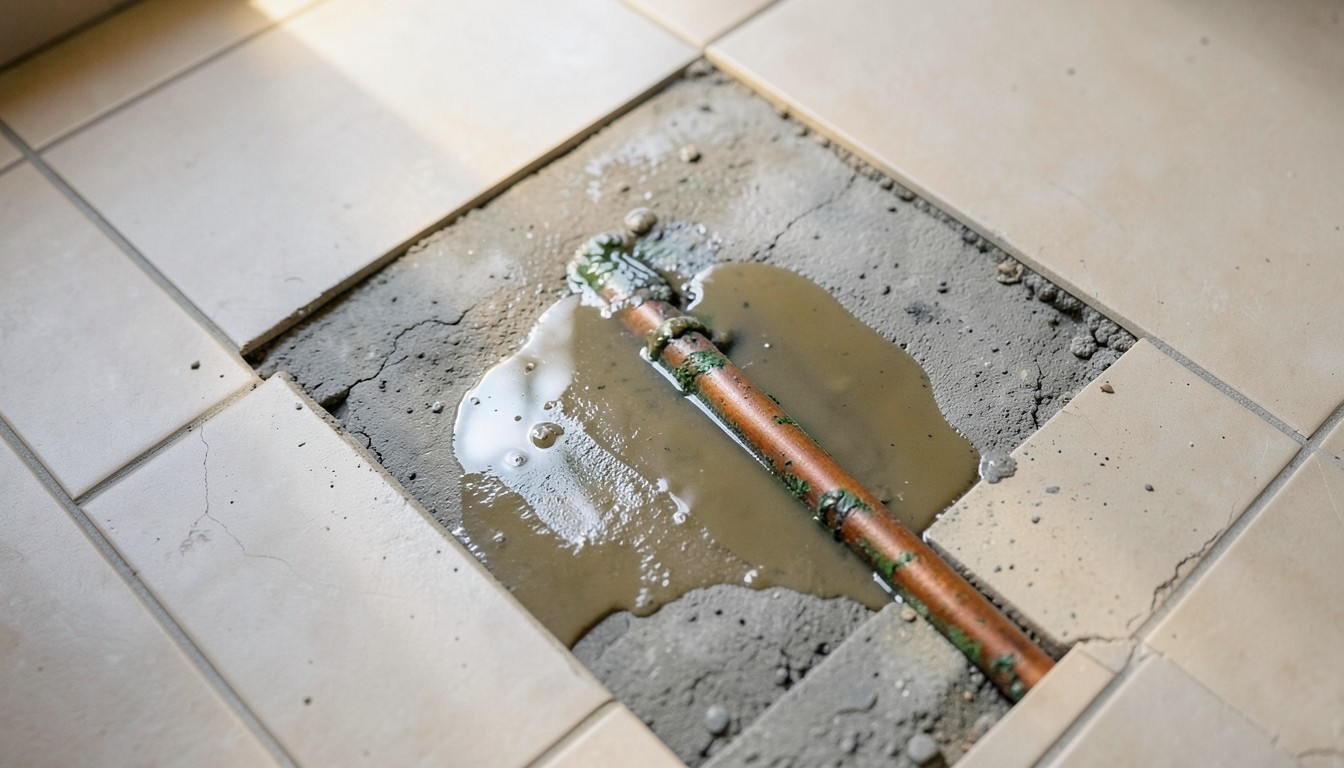
San Jose slab leak pricing in 2026 lands in three tiers tied to scope, with a Silicon Valley labor premium baked in. Spot repair runs $1,500–$3,400 when a single pinhole is isolated — the matched plumber jackhammers a 2'×2' window through the slab-on-grade pour common across Cambrian Park / Almaden Valley tract, splices Type L copper or transitions to PEX-A, then patches concrete. Reroute through walls or attic runs $2,400–$5,600 when the failed branch can be abandoned in place and a new line run overhead — the preferred move on Willow Glen / Rose Garden 1920s-40s craftsman where slab-cuts under refinished hardwood get expensive fast. Full PEX-A repipe runs $4,800–$14,000 for a typical 3-bath home and is the durable answer once a second leak surfaces. The $235 San Jose Public Works permit plus the $190 plan-check fee applies to any supply-line scope — the verified, California-credentialed plumber pulls the permit and itemizes both fees on the written quote, no separate handling charge. Source: San Jose PBCE 2024 fee schedule.
How do I know if I have a slab leak in my San Jose home?
Six diagnostic markers worth a $260–$495 detection workup before the leak undermines the slab-on-grade pour:
- Warm spot on the tile or LVP floor — hot-side pinhole leaks dominate the failure pattern when San Jose Water Company / SJWC blended supply at 6–8 gpg from Santa Clara Valley Water District hits an aging Type M copper line
- SJWC bill spike of $35–$110/month with no usage shift, at the $8.90 per 1k-gallon residential rate
- Meter low-flow indicator spinning with every fixture closed
- Faint hissing near the water heater closet in pre-dawn quiet hours
- Hairline grout cracks radiating from a single tile in a Cambrian or Almaden Valley tract bath
- Mildew smell at the slab edge where carpet meets baseboard in an Evergreen or Berryessa east-side hillside home
Why are slab leaks common in San Jose homes built before 1995?
Three Silicon Valley-specific drivers stack the odds against pre-1995 copper-in-slab supply. Cambrian Park / Almaden Valley 1950s-70s post-war tract was Silicon Valley's first wave of slab-on-grade subdivisions, and Type M copper run directly through the pour was the default — that stock now sits 50–70 years deep in the corrosion curve. San Jose Water Company / SJWC blends groundwater with imported Sierra and Hetch Hetchy supply, landing at 6–8 grains-per-gallon moderate hardness; the chemistry is gentler than Phoenix or San Diego but still aggressive enough on hot-side Type M past the 30-year mark per Copper Development Association field data. San Andreas Fault and the Calaveras Fault (Hayward Fault's southern extension) bracket the valley — even sub-magnitude microseismic flexes joints and elbows that copper soldered into a 1965 slab was never engineered to absorb. Stack a 1971 median build, slab-on-grade prevalence higher than any East Bay city, and Silicon Valley alluvial soil that shifts incrementally with each rainy season, and most pre-1995 Willow Glen / Cambrian / Almaden stock sits squarely in the pinhole-failure window. Source: USGS Earthquake Hazards Program.
Spot repair, reroute, or full repipe — which fits my San Jose home?
Three decision tiers, each with a Silicon Valley test. Spot repair ($1,500–$3,400) is the right call on a first-time leak in an otherwise sound copper line — typical for an Evergreen or Berryessa 1980s tract home where the rest of the supply system is still mid-life. Reroute ($2,400–$5,600) wins when one branch (kitchen feed, master-bath group) has failed and overhead access through walls or a vented attic is feasible — the standard play in Willow Glen / Rose Garden craftsman where preserving original quartersawn oak floors makes a slab-cut financially painful. Full PEX-A repipe ($4,800–$14,000) is the durable answer once 2+ leaks surface in 24 months — per Copper Development Association, that cadence signals the whole copper system has reached end-of-life. On Cambrian Park slab-on-grade tract specifically, repipe pencils out faster than in basement-equipped East Bay stock because every spot repair requires a fresh slab-cut — there's no crawlspace bypass. The matched plumber walks the home, scopes pipe routes, and recommends the tier on the callback.
Does California HO-3 + earthquake-rider cover San Jose slab leak work?
California HO-3 covers detection when the leak is "sudden and accidental" — not gradual seepage from a corroded line that finally let go. The base policy typically pays tear-out and access (slab-cut, wall opening, hardwood removal in Willow Glen craftsman) but excludes the pipe-repair cost itself, treated as wear-and-tear. The earthquake rider matters in San Jose specifically: San Andreas Fault and Calaveras Fault microseismic activity can fingerprint a sudden joint failure as quake-related rather than corrosion-related, which shifts the claim posture. State Farm, Farmers, USAA, and CSAA Insurance Group all reimburse San Jose-area detection invoices when paired with a moisture-mapping report and a written plumber diagnosis. For Cambrian / Almaden Valley pre-1995 stock, document the 6–8 gpg SJWC chemistry, Type M copper-in-slab era, and any USGS-logged seismic event within 30 days of the leak — that combination strengthens the "sudden" framing materially. Verbal diagnosis at the door alone gets denied. Submit the plumber's written report on company letterhead with photos of the failed section.
How long does San Jose slab leak repair take?
Realistic San Jose timelines, building in Silicon Valley scheduling realities. Detection workup: 60–135 minutes — slightly longer than a basement-equipped East Bay home because every diagnostic step on slab-on-grade Cambrian or Almaden tract has to thread thermal imaging, acoustic listening, and pressure-isolation across uninterrupted pour. Spot repair (jackhammer + splice + patch): 4–7 hours, with the longer end common when shoring tile or LVP floor finish takes priority. Reroute through walls or attic: 1–2 days — the standard move in Willow Glen / Rose Garden craftsman to skip cutting refinished hardwood. Full PEX-A repipe of a 3-bath Almaden Valley tract home: 2–4 days, longer than equivalent Oakland scope because slab-on-grade prevents any crawlspace shortcut. Concrete cure: 24–48 hours before tile, LVP, or hardwood reinstall can resume. The matched plumber pulls the $235 San Jose permit before scheduling, books the inspection on the callback, and delivers a written timeline.
Why do Willow Glen / Rose Garden craftsman homes need a different slab-leak playbook?
Willow Glen and Rose Garden 1920s-40s craftsman stock is the diagonal opposite of Cambrian or Almaden tract — and the repair playbook flips accordingly. These homes predate slab-on-grade construction; most have raised perimeter foundations with crawlspace access under quartersawn oak, fir, or maple flooring. The "slab leak" framing often doesn't apply at all — what looks like a slab leak in a Rose Garden 1932 craftsman is usually a crawlspace supply-line failure on galvanized pipe being phased out, or a mid-century copper retrofit run under the original subfloor. The repair playbook: scope crawlspace access first, identify any galvanized that survived from the original build, and price a partial copper-or-PEX-A re-run through the crawl rather than any concrete work. Preservation matters: original 1930s-era oak floors carry $40–$80/sqft replacement cost on the open Silicon Valley market, which makes overhead reroute the default move when crawlspace access is tight. The verified plumber prices the crawl scope, not a slab-cut, on Willow Glen / Rose Garden addresses.
What about Santana Row / North San Jose tech-boom homes — do they get slab leaks?
Rarely, and the reason is structural. Santana Row, North San Jose, and the wider 1990s+ Silicon Valley tech-boom infill wave were built with PEX-A from the start — California adopted residential PEX permissibility in the late 1990s, and Silicon Valley developers pivoted hard once the material's earthquake-flex and corrosion-immunity advantages got priced into insurance underwriting. PEX-A doesn't pinhole-corrode the way Type M copper does in 6–8 gpg SJWC water, and the tube is engineered to absorb sub-magnitude San Andreas / Calaveras microseismic flex without joint fatigue. Per PEX Association 2026 manufacturer warranties run 25 years on PEX-A installed to spec. What does fail in tech-boom infill: appliance supply lines (dishwasher, ice maker, washing machine), recirculation-pump fittings on tankless water heater installs, and outdoor irrigation manifolds — none of which are slab leaks. If you're in a 1995+ Santana Row condo or a 2003 North San Jose townhome and the symptoms point under the slab, get the pressure-isolation test first; the failure is more likely above-slab than below.
Are AlertPlumber-matched plumbers verified for San Jose slab leak work?
The eLocal partner network requires every plumber routed through AlertPlumber for San Jose slab leak work to maintain active California state-credentialed status. The CA Contractors State License Board, 2024 Q4 lists 19,840 active CSLB C-36 plumbing classifications statewide — California's roster is the largest in the country, but slab leak work specifically requires both the C-36 credential and documented experience with concrete cutting + supply-line repipe. San Jose-specific verification adds two more checks: (1) familiarity with the $235 + $190 plan-check San Jose Public Works permit workflow, and (2) experience pulling slab-cut inspections on Cambrian / Almaden / Evergreen tract stock where the inspector wants visual confirmation before pour. Confirm any specific plumber's CSLB number directly with the state board before authorizing work — credentials lapse, and a written quote should always cite an active C-36 number on the company letterhead.
When does full PEX-A repipe pencil out in San Jose?
Three triggers move San Jose homes from spot-repair territory to full-repipe economics. (1) 2+ slab leaks in 24 months — per Copper Development Association field data, that cadence means the entire Type M copper system is end-of-life. (2) Past 30 years on Type M copper with 6–8 gpg SJWC + Santa Clara Valley Water District blended supply — Cambrian Park / Almaden Valley tract from the 1950s-70s wave hits both criteria. (3) Detection finds multiple at-risk hot-side branches on the system-wide pressure-isolation test. San Jose method: PEX-A run overhead through walls and attic — never re-poured back into the slab. Per PEX Association, PEX-A 2026 carries a 25-year manufacturer warranty installed to spec, and the material's earthquake-flex tolerance maps directly onto San Andreas / Calaveras Fault adjacency. Why repipe pencils faster in San Jose than Oakland: slab-on-grade Silicon Valley tract has no crawlspace bypass, so every spot repair requires a fresh slab-cut — the math flips toward repipe after the second incident. With 1,013,240 San Jose homes at a 1971 median build and <5 freeze days a year, the limiting factor isn't weather; it's the stacked corrosion + microseismic load on copper that was poured into concrete during Nixon's first term.
Request a slab leak repair callback in San Jose
ZIP, phone, kind of work. AlertPlumber routes to a verified plumber for a free over-phone estimate.