
Emergency Slab Leak Repair in Sacramento, California
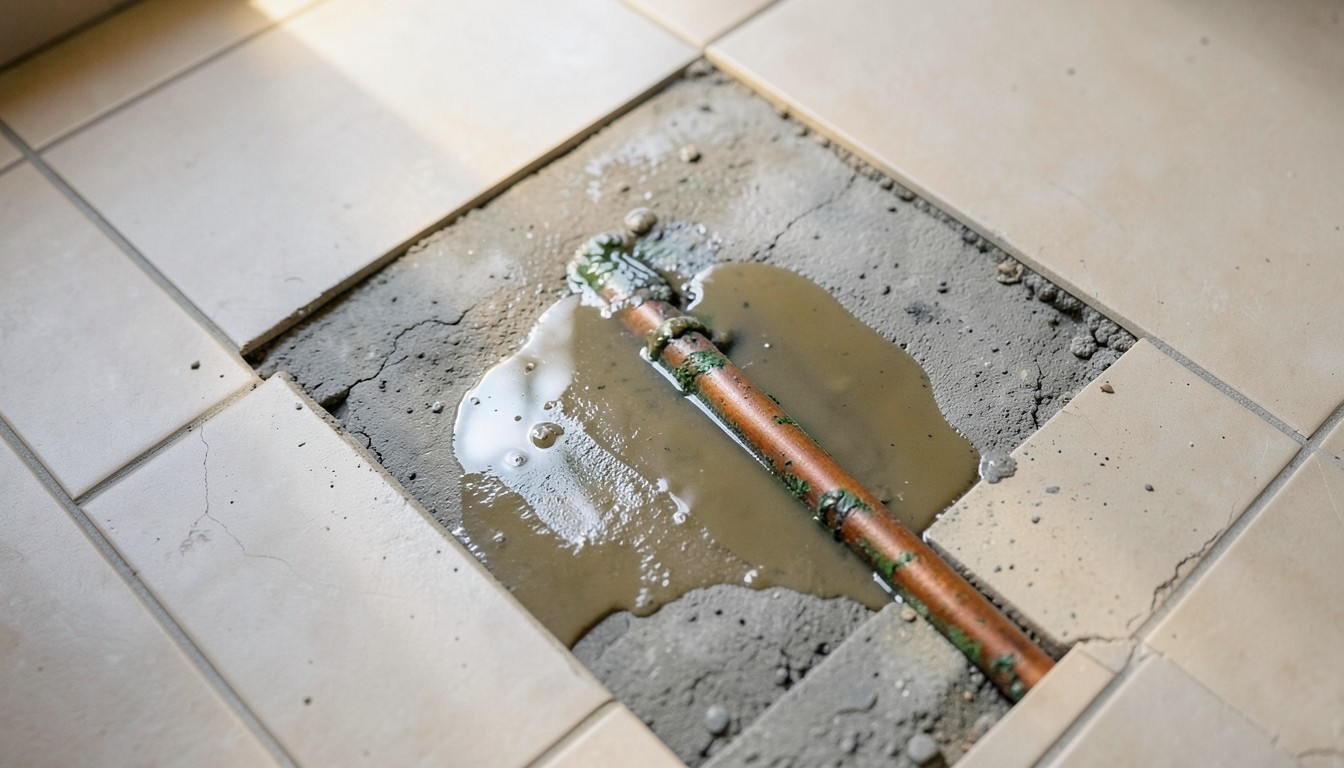
Detects and repairs leaks in pipes beneath the concrete slab foundation. AlertPlumber matches you with a verified CA plumber serving Sacramento.
Local plumbing data for Sacramento, CA
Climate angle. Central Valley heat (100F+ summer) accelerates copper supply-line corrosion in 1970s-80s tracts. Hard well-source water in some districts (~12 gpg) drives softener + scale-flush demand. Freeze events rare but irrigation lines burst in occasional Dec-Jan cold snaps.
Slab Leak Repair cost calculator — Sacramento
Pre-filled for slab leak repair in Sacramento. Adjust the ZIP for a neighboring area, or change the service to compare. Calculator pulls from the city's scraped permit-fee + state plumber-density data.
Slab Leak Repair in Sacramento — frequently asked
How much does slab leak repair cost in Sacramento?
Sacramento slab leak pricing breaks across three repair scopes that map to different housing-stock realities. Spot repair runs $1,500–$3,400 — that's the jackhammer-the-slab, splice-in-copper-or-PEX, patch-the-concrete workflow most often used on a Land Park or East Sacramento bungalow when a single hot-side galvanized failure surfaces. Reroute through walls or attic runs $2,400–$5,600 and is the common path on Arden-Arcade and South Sacramento 1950s-70s ranches where Type-M-copper-in-slab is end-of-life on one branch. Full PEX-A repipe runs $4,800–$14,000 — durable-fix territory once two leaks have surfaced. The City of Sacramento Community Development permit fee is $155 and applies to any supply-line work touching the slab. The California-credentialed plumber pulls the permit and lists the fee on the written estimate before any concrete is opened. Pricing assumes single-story access; two-story Curtis Park homes with limited attic clearance run 10-15% over.
How do I detect a slab leak under Tule fog vs summer heat in Sacramento?
Detection symptoms shift with the Sacramento Valley climate calendar. Winter Tule-fog mornings (Dec-Feb) mute the warm-spot signal — slab and ambient floor temps run 55-62F so a hot-side pinhole still creates a localized 8-12F anomaly that FLIR catches at dawn before HVAC cycles run. Summer (Jun-Sep, 100F+ peaks) flips the dynamic: ambient slab temps already run 78-85F, so warm spots from hot-line leaks blur into background and acoustic ground-microphone listening becomes the primary tool. Year-round symptoms hold steady:
- Water-bill spike of $45–$140/month with no usage change
- City of Sacramento Department of Utilities meter low-flow indicator moves with all fixtures off
- Faint hissing near the water heater closet at 2 a.m.
- Hairline cracks in grout above the slab — common over delta-clay shear zones
- Mildew smell in baseboards on East Sacramento oak-canopy lots after irrigation cycles
Why are Sacramento slab leaks tied to delta-clay soil, Land Park galvanized, and Arden-Arcade copper?
Sacramento's slab-leak failure curve runs on three parallel tracks. Track one is delta-clay soil — the Sacramento-American River floodplain deposits clay with mild shear-mode movement (less aggressive than expansive Texas clay but still 0.4-0.8 inches of seasonal vertical play), enough to fatigue rigid copper joints over 40-60 years. Track two is Land Park, Curtis Park, and East Sacramento 1920s-40s craftsman bungalows — these used galvanized steel supply lines that are now 80-100 years old, well past the 50-70 year galvanized service life the EPA Safe Drinking Water Act infrastructure literature documents. Track three is Arden-Arcade, South Sacramento, and Greenhaven 1950s-70s ranch tracts — Type M copper run through the slab at 5-8 gpg moderate hardness. Per Copper Development Association, Type M at moderate hardness still hits the 30-50 year pinhole window when paired with dual-source dosing (Sacramento River + American River + groundwater wells via the City of Sacramento Department of Utilities) that varies pH and chloramine seasonally. 50-year median build age puts most stock in-window now.
Spot repair, reroute, or full repipe — which fits my Sacramento home?
Spot repair ($1,500–$3,400) is the right call for a single first-time leak in copper that's otherwise sound — common on a Greenhaven or Pocket-Greenhaven 1970s ranch where one branch failed but the rest of the system tests clean at 80 psi. Reroute ($2,400–$5,600) fits when the failure clusters on one branch (kitchen, primary bath group) and overhead access through walls and attic is feasible — typical East Sacramento bungalow path since attic access is generous on those 1.5-story builds. Full PEX-A repipe ($4,800–$14,000) is the right call when two or more slab leaks have surfaced in 24 months OR when a Land Park craftsman still has original galvanized supply throughout. Per Copper Development Association, that two-leak pattern means the entire system has aged out — patching one more spot just buys 6-18 months. The matched California-credentialed plumber walks the pipe route before quoting.
Does California HO-3 insurance cover Sacramento slab leak detection?
Most California HO-3 policies covering Sacramento County properties pay the detection fee when the underlying leak qualifies as "sudden and accidental" — not gradual seepage that's been wetting the slab for months. Coverage typically includes tear-out and access (slab cut, drywall removal in a Land Park bungalow, tile demo in an Arden-Arcade ranch) but excludes the cost of repairing the failed pipe itself (carriers classify pipe failure as wear-and-tear). State Farm, Farmers, AAA, and USAA all reimburse Sacramento-area detection invoices when paired with a written moisture-mapping report and FLIR/acoustic findings. Submit the plumber's signed report with the claim — verbal diagnosis alone is usually denied. For pre-1995 Curtis Park or East Sacramento homes, document the original galvanized-or-Type-M construction era to support the "sudden failure of an aging system" framing claims adjusters accept. California Earthquake Authority policies are separate and don't cover slab-leak repair regardless of cause.
How long does Sacramento slab leak repair take from detection to finish?
Detection workup runs 75–135 minutes — pressure-isolation test plus FLIR plus acoustic on a 1,500-2,200 sq ft Sacramento single-story. Spot repair (jackhammer, splice, concrete patch) takes 5–7 hours wall-to-wall on a Greenhaven or Natomas-adjacent ranch. Reroute through walls and attic runs 1.5–2.5 days on an East Sacramento bungalow with reasonable attic clearance. Full PEX-A repipe of a typical Sacramento 3-bath, 2,000 sq ft home runs 2.5–4 days; Land Park 2-story craftsman with plaster walls runs 4-5 days due to access work. Concrete cure on slab patches needs 24–48 hours before tile or finish flooring resumes — Tule-fog winter mornings can stretch cure to 60 hours when relative humidity holds at 90%+ and the slab can't off-gas moisture. The matched plumber sequences whole-house water shutoff to 4–9 hours per day so the household isn't dry overnight.
Land Park bungalow vs Arden-Arcade tract — which preservation approach fits?
Land Park, Curtis Park, and East Sacramento 1920s-40s craftsman bungalows demand a preservation-first repair approach: original lath-and-plaster walls, period oak baseboards, and inlaid hardwood floors over the slab edge mean tear-out costs can exceed the pipe work itself. The standard play is overhead PEX-A reroute through the attic, dropping into wall cavities with minimum-cut access panels (4x6 inches) — keeping the original plaster and trim intact preserves both the home's historic character and resale value in the Land Park district. Arden-Arcade, South Sacramento, and Greenhaven 1950s-70s ranch tracts are different math: drywall walls, vinyl or laminate over slab, and tract-uniform construction mean cut-and-patch is straightforward and inexpensive. There, in-slab spot repair often pencils out fine on a single first-time failure. For both districts, the City of Sacramento Community Development permit ($155) covers the supply-line work and final inspection. Document the home's construction era for the matched plumber up front.
Why do Natomas and Elk Grove PEX-rich infill homes rarely have slab leaks?
Natomas, Elk Grove, North Natomas, and Roseville-adjacent 1990s+ infill construction was built with PEX-A from day one — the slab leaks that plague Land Park galvanized and Arden-Arcade copper-in-slab simply don't exist on these homes. Per PEX Association, PEX-A handles delta-clay shear movement (0.4-0.8 inches seasonal) without joint fatigue because the material flexes; copper rigid-joints crack instead. PEX-A is also chloramine-tolerant, which matters with the City of Sacramento Department of Utilities seasonal source-mixing between Sacramento River, American River, and groundwater wells. When a Natomas homeowner does see a "slab leak" symptom, it's usually one of three things instead: an irrigation lateral failure under landscaped beds, a water-heater pan overflow misread as slab moisture, or a manabloc-manifold connector issue at the central distribution point. Detection cost is the same $265–$510, but the fix is rarely concrete-cutting work — the matched California-credentialed plumber confirms the actual failure source before any slab is opened.
What does the Sacramento permit + CSLB credentialing path look like?
Slab leak supply-line work in the City of Sacramento requires a $155 City of Sacramento Community Development Department permit — pulled by the plumber, not the homeowner — plus active California state credentials. California CSLB, 2024 Q4 lists 19,840 active C-36 plumbing credentials statewide; Sacramento County captures roughly 1,400-1,600 of those. Slab leak repair specifically requires the C-36 PLUS demonstrated experience with concrete cutting, supply-line repipe, and post-repair pressure verification — verify any specific plumber's CSLB number directly on the state board lookup before authorizing work. The eLocal partner network requires every plumber routed through AlertPlumber for Sacramento slab leak work to maintain active C-36 status. Final inspection by the City of Sacramento Community Development inspector confirms pressure test, code-compliant materials, and proper concrete patch before the permit closes. Pulling the permit also matters for HO-3 claim documentation — unpermitted slab work is a common denial trigger with California carriers.
When does full PEX-A repipe pencil out for a Sacramento home?
Full PEX-A repipe is the durable answer when one of three conditions holds: (1) two or more slab leaks have surfaced in the last 24 months, (2) the home is past 30 years on Type M copper at 5-8 gpg moderate hardness or original galvanized supply (Land Park / Curtis Park / East Sacramento pre-1945), OR (3) detection finds multiple at-risk hot-side branches via system-wide pressure isolation. PEX-A run overhead through walls and attic — never back through the slab — is the standard Sacramento repipe method, and it sidesteps both delta-clay shear movement and seasonal source-water chemistry shifts from the City of Sacramento Department of Utilities. Per PEX Association, PEX-A in 2026 carries a 25-year manufacturer warranty when installed per spec. Local context. 525,000 Sacramento residents, 50-year median home age, 23 freeze days per year, Tule-fog winters and 100F+ summers, dual Sacramento-River + American-River + groundwater-well source mix at 5-8 gpg moderate hardness, and delta-clay shear-mode soil all combine to put copper-in-slab supply systems squarely in the 30–50 year pinhole-failure window. The City of Sacramento Department of Utilities source profile drives the failure curve.
Request a slab leak repair callback in Sacramento
ZIP, phone, kind of work. AlertPlumber routes to a verified plumber for a free over-phone estimate.