
Emergency Slab Leak Repair in Phoenix, Arizona
Detects and repairs leaks in pipes beneath the concrete slab foundation. AlertPlumber matches you with a verified AZ plumber serving Phoenix.
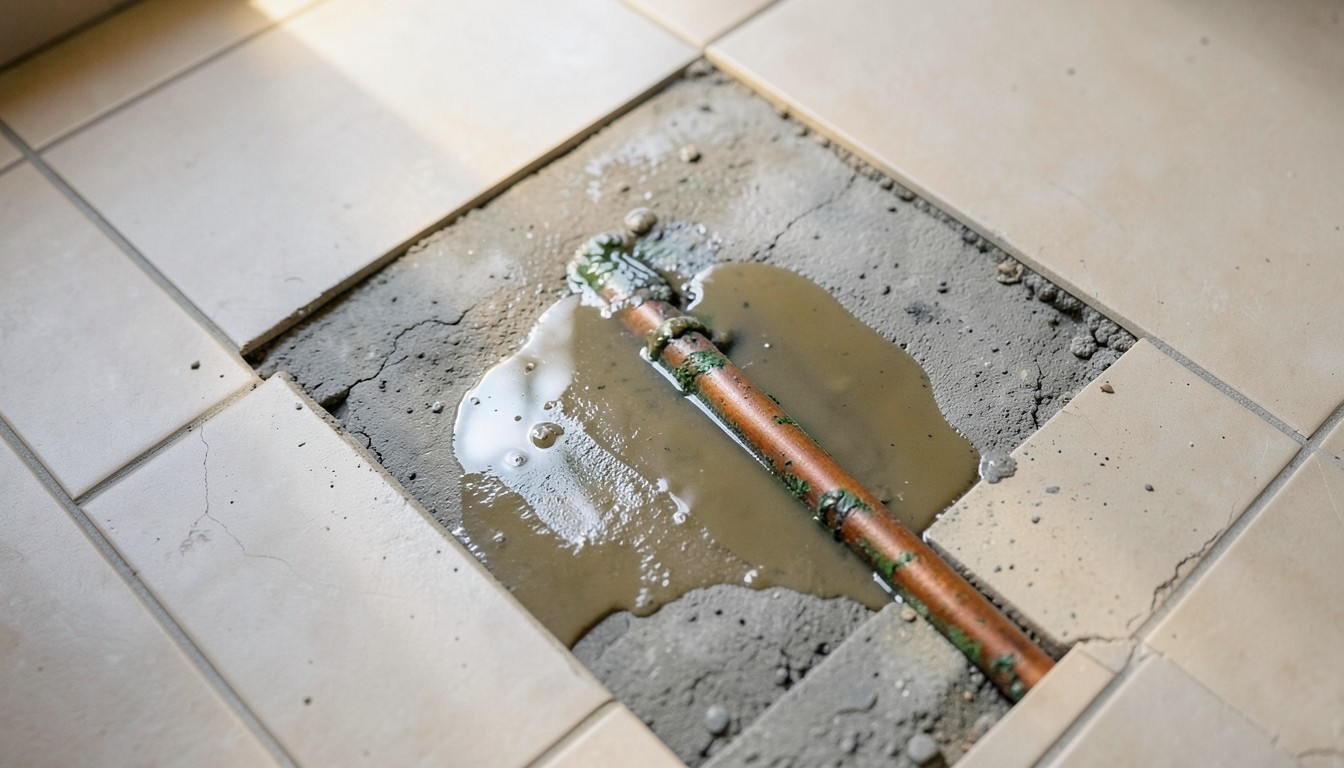
Local plumbing data for Phoenix, AZ
Climate angle. Slab leak season runs year-round; aging copper in 1970s–80s tracts is the #1 driver. Hard water (~17 gpg) accelerates fixture wear.
Slab Leak Repair cost calculator — Phoenix
Pre-filled for slab leak repair in Phoenix. Adjust the ZIP for a neighboring area, or change the service to compare. Calculator pulls from the city's scraped permit-fee + state plumber-density data.
Slab Leak Repair in Phoenix — frequently asked
How much does slab leak repair cost in Phoenix?
Phoenix slab leak repair runs $1,400-$3,200 for a single spot repair (jackhammer through the slab, splice in new copper or PEX), $2,200-$5,200 for a reroute through the attic, and $7,200-$12,500 for a full PEX repipe. The Phoenix Development Services permit is $185, plus a separate inspection fee for slab work. Phoenix labor rates trend slightly above the national median because the city has the highest slab-leak case volume in the country and detection-equipment-trained plumbers command a premium. AlertPlumber matches against the 3,247 active AZ ROC C-37 contractors so the on-site quote reflects actual current Maricopa County market rates rather than a national average.
How do I know if I have a slab leak in my Phoenix home?
The single most diagnostic Phoenix symptom is a warm spot on the floor — Phoenix slab leaks overwhelmingly hit the hot-water side first because heated water accelerates internal copper corrosion in 17 gpg hard water. Walk barefoot through tile rooms; the warm patch is unmistakable. Second-line symptoms: a water bill spike of $40-$120/month with no change in household use, the meter dial spinning with every fixture off, or a faint hiss audible at floor vents. In Sun Lakes, Ahwatukee, and 1970s-80s Scottsdale ranches, these symptoms after 30+ years of in-slab copper service are statistically certain — not a question of if, only when.
Why is Phoenix the slab-leak capital of the United States?
Three factors stack: housing vintage (median Phoenix build year 1983, with massive 1970s-80s tract construction in Sun Lakes, Ahwatukee, and Scottsdale that universally used in-slab copper supply lines per builder-standard practice), water hardness (17 gpg measured by Salt River Project — among the hardest municipal water in the country), and time (those 1970s-80s installs are now 35-55 years old, deep in copper's statistical end-of-life). Hard water electrochemically pits copper from the inside; hot-water lines fail first because heat accelerates the reaction. Pinhole leaks became a near-weekly per-neighborhood event starting around 2018 as the first wave of tracts crossed the 30-year corrosion threshold.
Spot repair vs reroute vs repipe — which is right for my Phoenix home?
For a 1970s-80s Phoenix tract home with original Type M copper, the answer depends on leak count. First-ever leak: spot repair at $1,400-$3,200 buys you 2-5 years before the next one surfaces. Two confirmed leaks in a 24-month window: reroute the failed leg through the attic ($2,200-$5,200) — the standard Phoenix fix because attic routing is easy in single-story tract homes. Three or more leaks, or any leak in 35+ year original copper: full PEX repipe at $7,200-$12,500 is the durable answer. Repeated spot repairs at $2,500 each often equal the cost of a single repipe by repair #3.
Will my Phoenix homeowners insurance cover the slab leak repair?
Standard HO-3 policies cover sudden, accidental water damage to flooring, drywall, and personal property — but typically NOT the plumbing repair itself, which is excluded as wear-and-tear. Many Phoenix carriers also include slab-tear-out allowances of $500-$2,500. The denial trap: if the leak was running for months, the carrier may invoke the "constant or repeated seepage" exclusion. Phoenix homeowners with two prior slab-leak claims often face non-renewal; some Sun Lakes and Ahwatukee residents have been steered to the AZ FAIR Plan after their second claim. The matched plumber documents the leak as sudden discovery to support the damage claim, even where the repair itself is not covered.
Does Phoenix soil expansion contribute to slab leaks?
Phoenix soil is heavily caliche (calcium-carbonate hardpan) over expansive clay in many neighborhoods, and seasonal moisture cycling does shift slabs by a few millimeters per year. However, the dominant Phoenix slab-leak failure mode is internal copper corrosion (chemical), not mechanical pipe shear from soil movement (the Atlanta or Houston pattern). Caliche actually stabilizes pipes against shear — it is the 17 gpg hard water cooking copper from the inside that causes most Maricopa County failures. The exception: West Valley homes built on alluvial soils near the Salt and Agua Fria river basins do see occasional shear-mode failures combined with corrosion.
How long does slab leak repair take in Phoenix?
Same-day spot repair is realistic for a single localized leak in a single-story Phoenix tract home: detection in the morning (acoustic plus FLIR thermal), jackhammer access by midday, splice and pressure-test by afternoon, slab patch poured the same day. Total water-off time typically 4-6 hours. Attic reroutes in Sun Lakes or Ahwatukee ranches typically take 1-2 days because of the longer pipe runs and drywall opening. Full repipes run 3-5 days for a 2,000 sq ft home. Phoenix's high-volume slab-leak market means most matched plumbers carry detection equipment and PEX inventory on the truck, eliminating second-trip delays.
Will the plumber damage my Saltillo tile or travertine flooring?
Saltillo, travertine, and decorative concrete are common in Phoenix and Scottsdale, and replacement tile or matching the cure-color of original concrete is often impossible. This is why the standard Phoenix recommendation for under-tile leaks is reroute through the attic rather than spot repair through the slab — the routing is straightforward in a single-story home and avoids destroying irreplaceable flooring. If the failed line happens to run under a hallway with replaceable tile, spot repair is fine. If it runs under a Saltillo great room or a hand-carved travertine entry, AlertPlumber-matched plumbers default to reroute and recover the cost difference through avoided flooring restoration.
Does Phoenix building code require permits for slab leak repair?
Yes. Phoenix Development Services requires a $185 plumbing permit for any slab cut or supply-line repipe, with a separate post-cover inspection before the slab patch is poured. The work must be performed by an AZ ROC-C-37-credentialed contractor (3,247 active in the state per the registrar database), and PEX must be NSF/ANSI 14 certified for potable use. Un-permitted slab work creates two material problems: it voids most homeowners insurance claims for any future water damage from the same line, and it shows up as an open-permit issue on title searches when the home is sold. Pulling the permit is a non-negotiable line item in any honest Phoenix quote.
What detection method works best on a Phoenix slab home?
For 1970s-80s Phoenix tract homes with copper-in-slab, the effective sequence is: pressure isolation test first (~$100, identifies hot vs cold leg), then FLIR thermal imaging on the hot side because hot-water leaks dominate Phoenix and produce a clear thermal signature through tile or thin carpet (~$200), then acoustic listening to triangulate within inches (~$200), and electronic line tracing if the leak is near a branch tee (~$100). Total detection workup runs $400-$700 and should be itemized separately from the repair quote. Phoenix's case volume means most matched plumbers carry full detection kits on the truck — be cautious of any quote skipping detection in favor of a "we'll find it when we cut" approach.
Request a slab leak repair callback in Phoenix
ZIP, phone, kind of work. AlertPlumber routes to a verified plumber for a free over-phone estimate.