
Emergency Slab Leak Repair in Long Beach, California
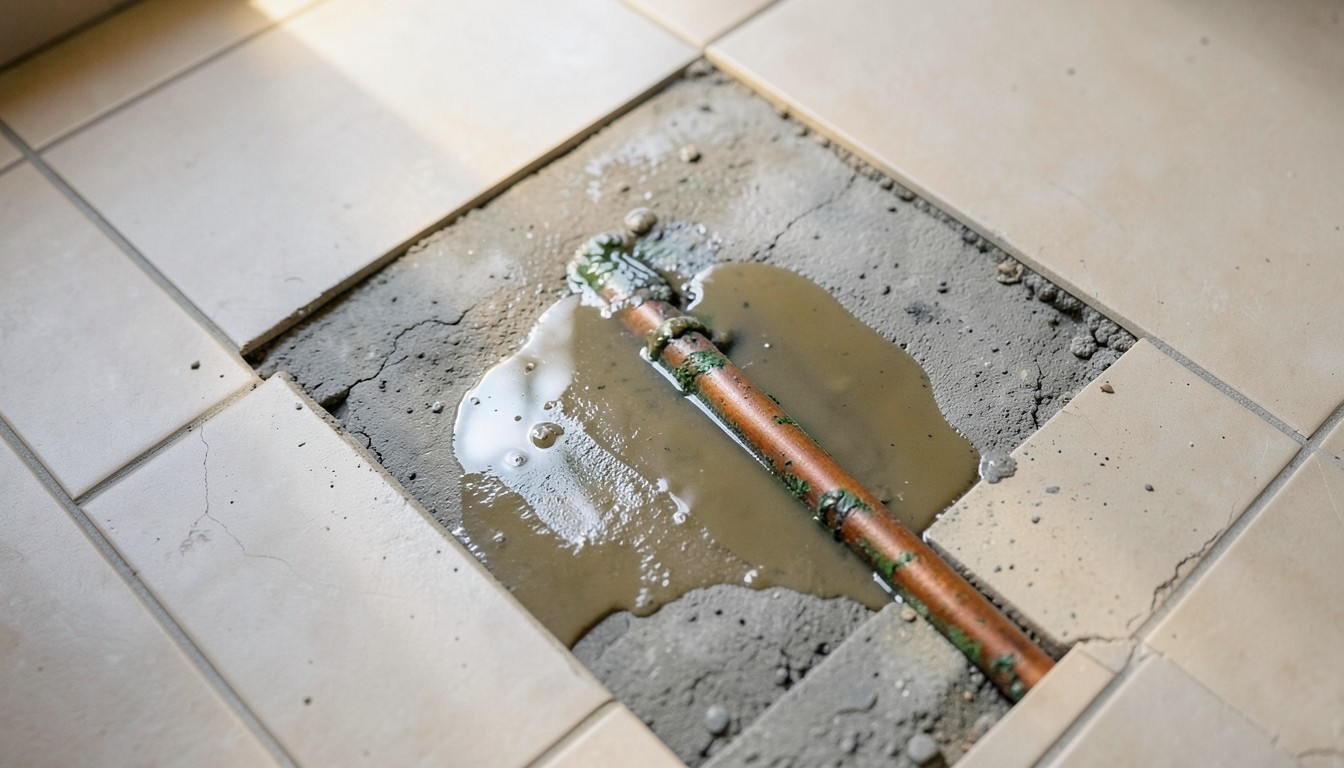
Detects and repairs leaks in pipes beneath the concrete slab foundation. AlertPlumber matches you with a verified CA plumber serving Long Beach.
Local plumbing data for Long Beach, CA
Climate angle. Coastal salt-air corrosion accelerates fitting wear; 1950s-70s post-war housing with galvanized + early-copper supply at peak failure age. Subsidence from historical oil extraction cracks some North Long Beach laterals. Mild climate; no freeze risk.
Slab Leak Repair cost calculator — Long Beach
Pre-filled for slab leak repair in Long Beach. Adjust the ZIP for a neighboring area, or change the service to compare. Calculator pulls from the city's scraped permit-fee + state plumber-density data.
Slab Leak Repair in Long Beach — frequently asked
How much does slab leak repair cost in Long Beach?
Long Beach slab leak repair runs $1,500–$3,400 for a single spot repair (saw-cut the slab, splice in new copper or PEX), $2,400–$5,600 for an attic-or-wall reroute, and $7,800–$14,200 for a full PEX-A repipe — pricing reflects California labor rates and the careful work-arounds Long Beach homes demand across mixed eras of construction. The Long Beach Development Services plumbing permit is $185 plus a separate inspection fee. AlertPlumber matches against the 19,840 active CSLB C-36-credentialed plumbers statewide so the over-phone estimate reflects current Los Angeles County coastal market rates rather than an inland or national average. Belmont Shore beach-bungalow stock from the 1920s-40s and Naples Island canal-front craftsmans typically push toward the upper end of each range because finish-work salvage on irreplaceable original tile and plaster adds careful demolition time. East Long Beach 1960s-70s tract slab homes price closer to the median because the pipe routing is straightforward.
How do I know if I have a slab leak in my Long Beach home?
The signal set varies by housing era. Bixby Knolls 1930s-50s ranches, Belmont Shore beach bungalows, and Naples Island canal homes show plaster-wall stains at the base of an interior wall, a faint mildew odor near a slab-edge bathroom, and zero-flow meter creep with every fixture off. East Long Beach 1960s-70s tract slab homes show the classic Sun-Belt-style pattern: a warm spot on the floor (hot-side copper-in-slab pinhole), a $40–$110/month water bill spike with no usage change, and a low-flow dial indicator that ticks at 2 a.m. when the household is asleep. At 9 gpg moderately hard water, hot-side leaks slightly outnumber cold-side. Faint hairline cracks in slab-set tile near a fixture group, or warping of an engineered-wood floor over the slab, also show up. Any one symptom warrants a $260–$495 detection workup before damage compounds.
Why is Long Beach slab-leak pathology so composite?
Long Beach is unusual because four overlapping factors stack in different combinations across neighborhoods. (1) Pacific salt-aerosol corrosion reaches inland roughly 2 miles per EPA marine-air guidance, attacking above-slab fittings, hose bibs, and exposed copper at slab-edge penetrations. (2) Wilmington oil-field subsidence legacy: historic mid-20th-century oil extraction caused real ground settlement in parts of the harbor district and adjacent zones; modern remediation halted active subsidence, but slabs poured during the active period sit on differentially-settled ground. (3) Mixed housing eras: Belmont Shore, Naples Island, and California Heights pre-war stock (1920s-40s) sit alongside Bixby Knolls 1930s-50s ranches, East Long Beach 1960s-70s tract slab subdivisions, and 1980s+ infill — each era has its own dominant failure mode. (4) Long Beach Water Department blended supply (Colorado River + Metropolitan Water District + local groundwater, 9 gpg moderately hard) corrodes Type M copper in slab over 30+ years per Copper Development Association. Median Long Beach build year of 1959 puts the bulk of the housing stock in the failure window now.
Spot repair, reroute, or full repipe — which fits my Long Beach home?
The right answer depends heavily on the home's era. Belmont Shore beach bungalow or Naples Island craftsman with a single-leak event: reroute through wall chase or attic is almost always preferred to protect irreplaceable original tile and plaster — spot repair through a 1925 hex-tile bathroom floor is rarely worth the irreversible damage. East Long Beach 1960s-70s tract slab home with a first-ever leak in copper-in-slab: spot repair at $1,500–$3,400 buys 2–4 years before the next pinhole. Bixby Knolls ranch with 2+ leaks in 24 months: full PEX-A repipe at $7,800–$14,200 is the durable answer per Copper Development Association field data — that failure pattern means the entire original supply system has aged out. A reroute at $2,400–$5,600 fits well when one branch (kitchen, primary bath group) has failed but the rest of the system is sound and overhead access is feasible.
Does California homeowners insurance cover a Long Beach slab leak?
Standard CA HO-3 policies cover sudden, accidental water damage to flooring, drywall, and personal property — but typically NOT the failed pipe repair itself, which carriers exclude as wear-and-tear. Most carriers do reimburse the access cost (slab cut, plaster opening) when paired with a moisture-mapping report from the credentialed plumber. The Long Beach-specific traps: (a) coastal homeowners often carry a separate California Earthquake Authority rider, which does NOT cover plumbing failures even when subsidence-pattern slab cracking is involved; (b) carriers sometimes invoke the "constant or repeated seepage" exclusion if the leak ran for weeks before discovery; (c) Naples Island canal-adjacent homes face stricter underwriting after any water claim. Submit the plumber's written diagnostic report with the claim — verbal diagnosis alone is routinely denied. The matched plumber documents the discovery date and supply-side origin to support the damage portion of the claim.
How does Pacific coastal salt-aerosol corrosion affect Long Beach plumbing?
EPA marine-air guidance flags the first ~2 miles inland from Pacific coast as an accelerated-corrosion zone, and most of Long Beach sits inside that band. The salt-aerosol effect is strongest on ABOVE-slab exposed fittings: hose bibs, irrigation manifolds, water-heater connections, and the copper stub-outs where supply lines emerge from the slab into the wall. The slab-buried copper itself sees less direct salt exposure, but the slab-edge transition fittings — where in-slab copper joins the above-slab supply — are a genuine Long Beach failure point not seen in inland Sun Belt cities. Belmont Shore, Naples Island, and Alamitos Beach homes within blocks of the water see the fastest fitting wear. The credentialed plumber checks all slab-edge transitions during a detection workup and recommends marine-grade brass or PEX-A connector replacements where above-slab corrosion is visible. This is why Long Beach pathology never matches a simple inland comparison.
How long does Long Beach slab leak repair take?
Detection workup: 70–130 minutes for a typical mixed-era Long Beach home (longer in pre-war Belmont Shore homes where the original supply layout has been modified by previous owners). Spot repair on an East Long Beach tract slab: 5–7 hours including saw-cut, splice, pressure test, and patch. Attic-or-wall reroute on a Bixby Knolls ranch: 1–2 days. Full PEX-A repipe of a 3-bath Long Beach home: 2–4 days depending on era — pre-war bungalow stock takes longer because of plaster and lath repair coordination. Concrete cure on slab patches: 24–48 hours before tile or finish work resumes. Long Beach Development Services post-cover inspection is typically scheduled within 48–72 hours of pipe completion. Naples Island canal-front jobs occasionally schedule around tide-driven access constraints for trucks, which the matched plumber confirms on the callback.
What about Naples Island and Belmont Shore homes with original 1920s tile?
Naples Island canal-front craftsmans and Belmont Shore beach bungalows often have hand-set 1920s-40s ceramic tile, original Batchelder fireplace surrounds, and pencil-line grout patterns that cannot be matched today at any price. For any slab leak under finished living space in these homes, AlertPlumber-matched Long Beach plumbers default to wall-chase or attic reroute rather than slab cut, even when the spot repair would be $1,500 lower-cost on paper — the avoided flooring loss almost always justifies the reroute premium. California Heights historic district homes get the same treatment. Where the failed line runs under a hallway or laundry-room area with replaceable tile, spot repair is reasonable. The matched plumber walks the home with the homeowner before any cut to identify which floor surfaces are irreplaceable, and the over-phone scope conversation captures this preference up front. This judgment is what separates Long Beach pre-war slab work from inland tract repair.
Does Long Beach building code require permits for slab leak repair?
Yes. Long Beach Development Services requires a $185 plumbing permit plus a separate inspection fee for any slab cut or supply-line repipe, and the work must be performed by an active CSLB C-36-credentialed plumbing contractor — CA CSLB, 2024 Q4 lists 19,840 active C-36 plumbers statewide. PEX-A must carry NSF/ANSI 14 potable-water certification per California Plumbing Code. The post-cover inspection happens before the slab patch is poured. Un-permitted slab work creates two material issues for Long Beach homeowners: (1) it voids most CA HO-3 policies' coverage for any future water damage from the same line, and (2) it surfaces as an open-permit flag during title escrow, often triggering buyer renegotiation or a hold on the sale. Pulling the permit is a non-negotiable line item in any reasonable Long Beach quote. The credentialed plumber pulls the permit on the homeowner's behalf and includes the fee in the written estimate.
When is full PEX-A repipe the right answer in Long Beach?
(1) You have had 2+ slab leaks in any 24-month window, (2) the home is past 30 years on Type M copper at 9 gpg moderately hard water, OR (3) detection finds multiple at-risk hot-side branches on the same supply manifold. PEX-A run overhead through wall chases and attic — never re-buried in slab — is the standard Long Beach repipe method. Per PEX Association, PEX-A carries a 25-year manufacturer warranty in 2026 when installed per spec, and the material is non-reactive to the Long Beach Water Department blended Colorado River + Metropolitan Water District + groundwater supply. Local context. 466,742 Long Beach residents in housing with a 1959 median build year, sitting in a 2-mile coastal salt-aerosol band, with composite pathology spanning pre-war beach bungalow, post-war tract, and oil-field subsidence-legacy zones — the mixed-era stock means a single homeowner repipe decision benefits from era-specific advice from the credentialed plumber. The Long Beach Water Department supply chemistry drives the pinhole-failure curve in copper-in-slab homes regardless of neighborhood.
Request a slab leak repair callback in Long Beach
ZIP, phone, kind of work. AlertPlumber routes to a verified plumber for a free over-phone estimate.