
Emergency Slab Leak Repair in Houston, Texas
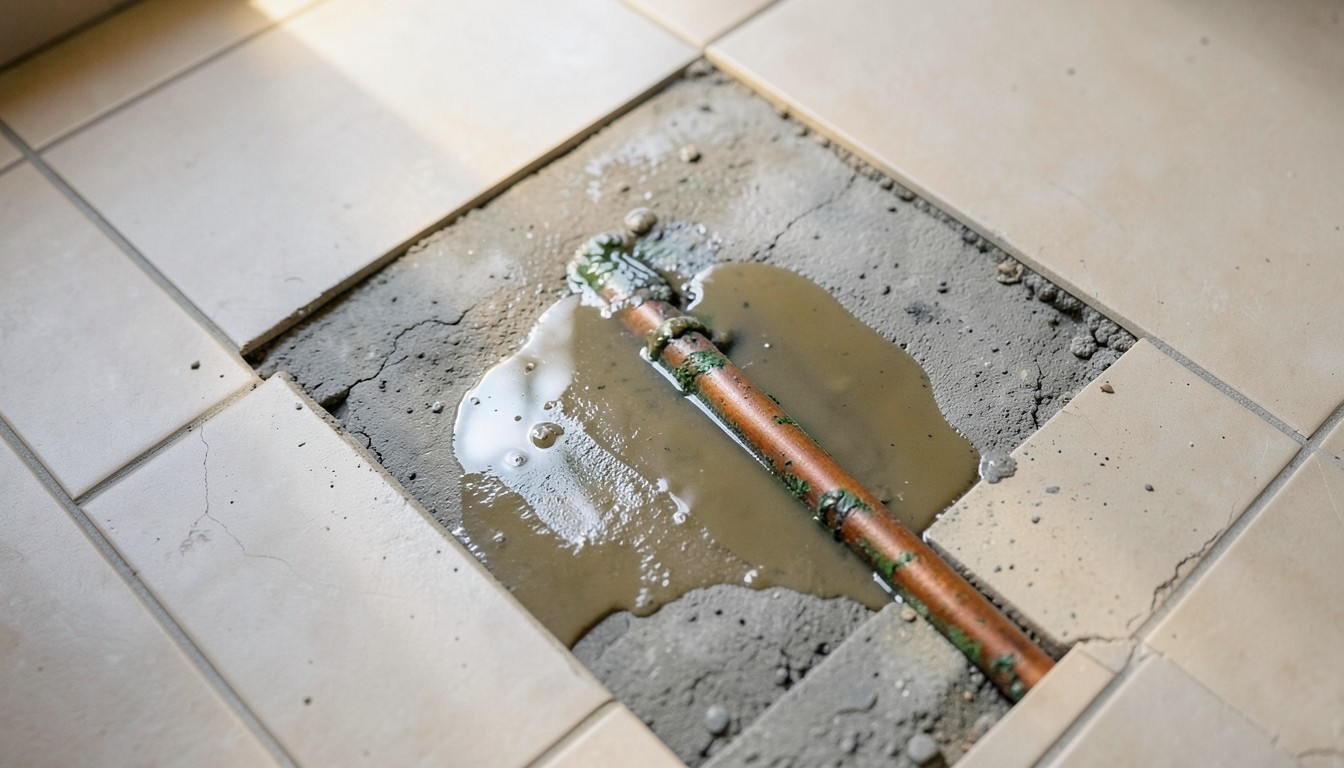
Detects and repairs leaks in pipes beneath the concrete slab foundation. AlertPlumber matches you with a verified TX plumber serving Houston.
Local plumbing data for Houston, TX
Climate angle. Land subsidence (1–3 in./yr in some neighborhoods) cracks sewer laterals + cast-iron drains. Hurricane + flooding events drive sump-pump + sewer-backup spikes Jun–Oct. Slab-leak season runs year-round in 1970s–80s post-tension slab tracts.
Slab Leak Repair cost calculator — Houston
Pre-filled for slab leak repair in Houston. Adjust the ZIP for a neighboring area, or change the service to compare. Calculator pulls from the city's scraped permit-fee + state plumber-density data.
Slab Leak Repair in Houston — frequently asked
How much does slab leak repair cost in Houston?
Houston slab leak repair runs $1,300-$3,000 for a spot repair, $2,200-$5,000 for a reroute, and $6,800-$11,800 for a full PEX repipe. Houston Public Works charges a $135 plumbing permit. Texas has 27,810 TSBPE-verified plumbers in the state database, and the Greater Houston market sees enough slab-leak volume to keep detection equipment standard on most plumber trucks. For a typical Memorial, Spring Branch, or Cypress home with a confirmed slab leak, expect $2,500-$4,500 all-in. Houston's post-tension slab construction adds $1,000-$3,000 to any spot-repair scope when cutting is required because of the engineering review step.
How do I know if I have a slab leak in my Houston home?
Houston slab-leak symptoms blend corrosion-pinhole signs (warm spot on tile, water bill spike $40-$120/month, audible hiss with fixtures off) with subsidence-shear signs (cracks in the slab or in mortar joints near the leak, doors and windows that suddenly stick, visible foundation movement). In Memorial, Spring Branch, Cypress, and Bear Creek 1970s-80s subdivisions, these symptoms after 35-50 years of in-slab copper service combined with 1-3 inches per year of land subsidence are statistically common. Houston's 9 gpg moderately hard water drives chemical corrosion; subsidence and 60% gumbo clay soil drive mechanical shear — both produce slab leaks.
Why does Houston have so many slab leaks?
Three failure mechanisms stack uniquely in Houston. First, 1970s-80s post-tension slab tracts in Memorial, Spring Branch, Cypress, and the West Houston suburbs universally used in-slab copper supply lines. Second, Houston's 9 gpg moderately hard water drives internal pinhole corrosion in 35-50 year-old Type M copper. Third, Greater Houston experiences 1-3 inches per year of land subsidence due to groundwater extraction per USGS data, plus extreme shrink-swell loading from Houston's 60% gumbo-clay soil. The combined chemical (corrosion) plus mechanical (subsidence + clay shear) loading makes Houston one of the highest slab-leak volume markets in the country, with TSBPE's 27,810 verified plumbers supporting a large detection-and-repair industry concentrated in the Greater Houston metro.
Spot repair vs reroute vs repipe — which fits a Houston home?
For a 1970s-80s Memorial or Spring Branch home with a single confirmed slab leak in a non-post-tensioned slab, spot repair ($1,300-$3,000) is reasonable for a first-time event. Reroute through the attic ($2,200-$5,000) is the standard Houston fix for post-tension slab homes because cutting a tensioned slab requires engineering review and adds $1,000-$3,000 in cost — reroute avoids the whole problem. Two confirmed leaks in 24 months in any Houston home: full PEX repipe ($6,800-$11,800) is the durable answer because the underlying loading (corrosion + subsidence + clay) means failures will keep coming as long as the original copper stays in service.
Will my Texas homeowners insurance cover the slab leak?
Texas HO-3 policies generally cover sudden water damage from a slab leak, but Texas has a unique exclusion landscape compared to other states. Many Texas carriers exclude foundation damage entirely or apply a separate higher deductible to foundation-related claims (which can include slab-leak-driven foundation movement). The "constant or repeated seepage" exclusion is invoked aggressively in Houston where subsidence and slab cracking can be cited as evidence of long-standing leak conditions. Texas Department of Insurance allows carrier-specific policy variations, so Houston homeowners should read the slab-leak and foundation language before filing. The matched plumber documents the leak as a recent discovery to support sudden-occurrence claim filing.
Does Houston soil and subsidence cause slab leaks?
Yes — Houston's combination of land subsidence (1-3 inches per year per USGS measurements due to groundwater extraction) plus 60% gumbo clay soil with extreme shrink-swell behavior creates significant mechanical loading on in-slab supply pipes. Subsidence causes differential settlement (one part of the slab drops more than another), bending the slab and shearing pipes at joints. Clay shrink-swell adds seasonal cycling that fatigues the same joints. Combined with 9 gpg hard water driving internal corrosion, Houston in-slab copper faces three independent failure mechanisms — which is why the metro sees frequent multi-leak homes, often clustering within 3-5 years of the first event.
How long does slab leak repair take in Houston?
Same-day spot repair is realistic for a single localized leak in a non-post-tensioned slab. Detection in the morning, slab cut by midday, splice and pressure-test by afternoon. Post-tension slab repair adds a day for engineering scan and cable mapping before any cutting — total project time stretches to 2 days minimum. Attic reroutes (the common Memorial/Spring Branch fix) typically run 1-2 days. Full PEX repipes run 3-5 days for a 2,000 sq ft single-story. Houston's high volume from the post-tension tract market means most AlertPlumber-matched plumbers carry detection equipment, post-tension scanners, and PEX inventory — eliminating second-trip delays.
Will the plumber damage my flooring during repair?
1970s-80s Houston flooring is typically replaceable ceramic tile, vinyl, or carpet. The bigger issue in Memorial and West Houston homes is post-tension slab construction — cutting a tensioned slab releases stored cable energy and is dangerous if not done correctly, which is why Houston plumbers default to attic reroute over spot repair when post-tension is confirmed. Reroute avoids any flooring damage entirely. For non-post-tensioned slab homes, spot repair cuts are typically 2x2 ft and easy to patch, with tile-matching the bigger restoration cost. Houston tile-supply houses serving the tract-housing restoration market can usually match 1970s-80s patterns close enough.
Does Houston building code require permits for slab leak repair?
Yes. Houston Public Works requires a $135 plumbing permit for any supply-line work, and post-tension slab cutting requires structural engineering review documented as part of the permit. The plumber must hold an active TSBPE license — Texas has 27,810 active state-credentialed plumbers per the TSBPE database. Suburban municipalities (Sugar Land, Pearland, Cinco Ranch, The Woodlands) have their own permit processes with similar fee ranges. PEX must be NSF/ANSI 14 certified, brass fittings must be lead-free per Safe Drinking Water Act, and post-cover inspection is required before slab patch. Un-permitted work voids insurance claims and creates resale-disclosure problems on title.
What detection method works best on a Houston slab home?
Houston detection often requires all four methods plus a post-tension scanner because the failure modes stack (corrosion + subsidence shear + clay shear). Pressure isolation confirms leak existence and identifies the leg. FLIR thermal works on hot-water pinholes (the dominant Houston failure mode). Acoustic listening triangulates within inches and works on both corrosion and shear failures. Electronic line tracing confirms the leak point is on the suspected pipe. For post-tension slab homes, an additional GPR or x-ray scan maps cable locations before any cutting — this $200-$400 add-on is non-negotiable for safety. Total Houston detection workup $500-$900 including post-tension scanning.
Request a slab leak repair callback in Houston
ZIP, phone, kind of work. AlertPlumber routes to a verified plumber for a free over-phone estimate.