
Emergency Slab Leak Repair in Fort Worth, Texas
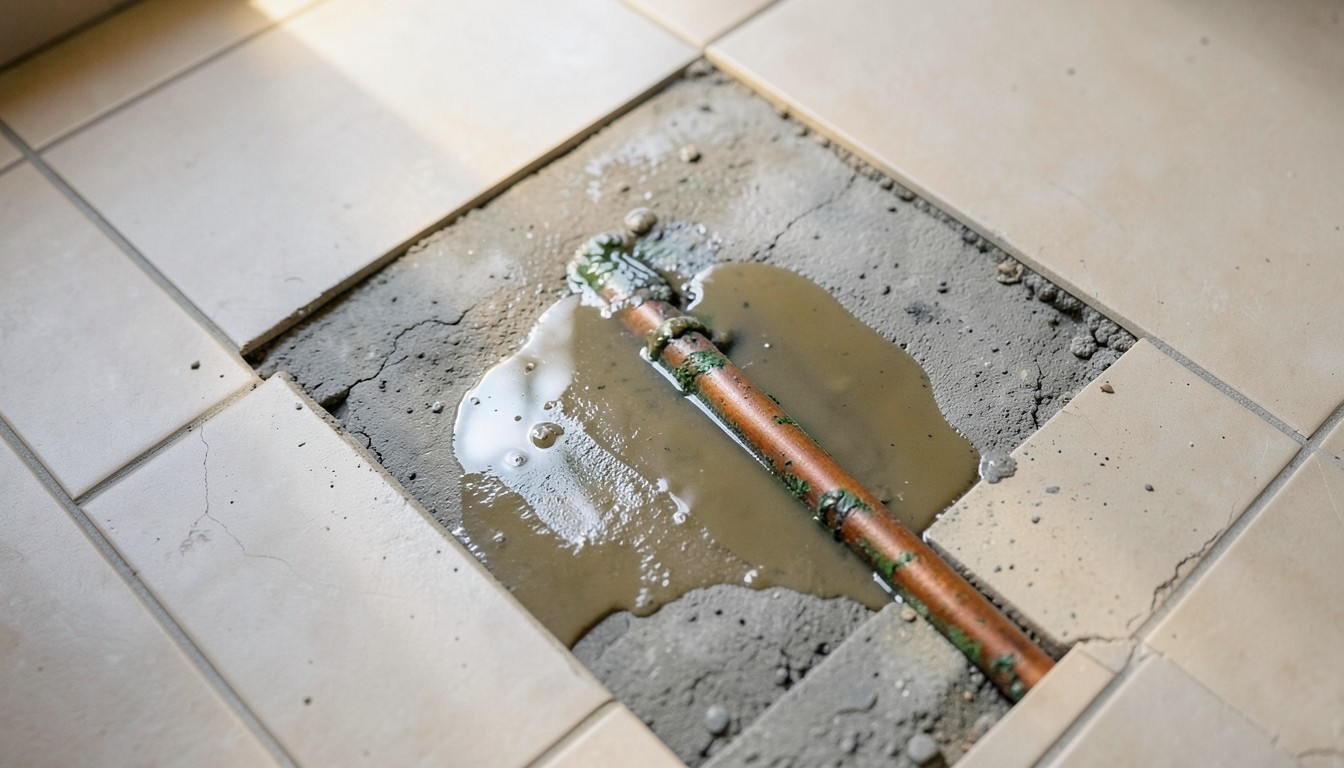
Detects and repairs leaks in pipes beneath the concrete slab foundation. AlertPlumber matches you with a verified TX plumber serving Fort Worth.
Local plumbing data for Fort Worth, TX
Climate angle. North TX expansive-clay soil shares Dallas slab-movement pathology - aging copper supply slab leaks dominate 1980s-90s tract neighborhoods. Hard water (~11 gpg) + post-Feb-2021 freeze-burst aftermath still surfacing. Brief but severe winter freeze events.
Slab Leak Repair cost calculator — Fort Worth
Pre-filled for slab leak repair in Fort Worth. Adjust the ZIP for a neighboring area, or change the service to compare. Calculator pulls from the city's scraped permit-fee + state plumber-density data.
Slab Leak Repair in Fort Worth — frequently asked
How much does slab leak repair cost in Fort Worth, and what drives the spread between TCU/Fairmount craftsman and Alliance Town Center tract pricing?
Fort Worth slab leak repair runs $1,400–$3,200 for a single spot repair (saw-cut the slab, splice in Type L copper or PEX-A), $2,400–$5,400 for a branch reroute through walls or the attic, and $4,800–$14,000 for a full PEX-A repipe. Fort Worth Water Department charges a $135 city plumbing permit on any supply-line work pulled inside city limits, and the state-credentialed plumber rolls that line item into the written quote up front. Pricing diverges sharply by submarket. TCU / Fairmount craftsman bungalows and tudors from the 1900s–1930s carry pier-and-beam-converted-to-slab additions where the original Type M copper meets newer post-tension concrete — that splice band is where most spot repairs land, and access through the original cypress subfloor is non-trivial. Westover Hills luxury 1950s–70s ranches push toward the upper end because the slab footprint is larger (3,500–6,000 sq ft) and lath-and-plaster wall reroutes need a finish-carpenter follow-up. Alliance Town Center and Far North Fort Worth tract slabs from the 1990s–2010s were already PEX-A from the start, so a "slab leak" out there is almost always a fitting failure at a manifold or a stub-up — narrower scope, lower number. Stock Yards historic-district properties get a separate quote because of preservation overlays.
How do I know if I have a slab leak in my Fort Worth home — what symptoms split a TCU bungalow from a Westover Hills ranch from an Alliance tract slab?
Symptom triage in Fort Worth shifts by housing era.
- TCU / Fairmount 1900s–30s craftsman + tudor: warm-spot drift on the original-fir or oak floor near a converted-bath addition, faint hissing under the kitchen pier-to-slab transition, mineral-stain bloom on the slab edge where the pier wall meets concrete
- West 7th / Cultural District 1920s–40s mixed: water-bill creep of $40–$130 a month, hot-water recovery slowing because hot-side copper is bleeding into clay backfill
- Westover Hills luxury 1950s–70s ranch: hairline cracks radiating from a single tile in the master bath, warm zones in the den slab where the original Type M trunk runs, irrigation meter spinning at 2 a.m. with the controller off
- Alliance Town Center / Far North FW 1990s–2010s tract: PEX-A almost never pinholes — instead look for fitting drips at manifolds, slab edges damp at the foundation form, or pressure-regulator failure feeding 90+ psi into the home
- Stock Yards historic: any moisture migration onto cedar-plank flooring is a same-day call
Why are slab leaks common in Fort Worth homes — how do oil-boom 1900s stock, DFW expansive clay, 11-gpg Fort Worth Water, and 1990s+ tract slab combine?
Fort Worth has four overlapping failure drivers that don't show up together anywhere else in DFW. (1) Oil-and-gas-industry housing patterns: the 1900s–1920s Texas oil-discovery boom seeded TCU/Fairmount and the near-Stock-Yards neighborhoods with a deep historic-stock layer that was retrofitted onto slab additions through the 1950s–70s — Type M copper splice bands run through those additions on hot-side trunks. (2) DFW expansive-clay shrink-swell: the Trinity River and West Fork floodplain soils swell after a wet spring and shrink hard during a 100°F+ summer drought, putting shear stress on supply lines bedded in the slab. Per USGS regional soil mapping, the same Eagle Ford / Woodbine clays that affect Arlington and Dallas underlie Fort Worth — the pathology is shared but the historic-stock mix is older. (3) 11-gpg hard water from Fort Worth Water Department (Trinity River + West Fork blend) accelerates internal copper pinholing on the hot-water side per Copper Development Association. (4) Far North Fort Worth / Alliance 1990s+ tract slab-on-grade was PEX-A from the start — those homes leak at fittings, not pipe walls. The 1976 median build year puts a large share of the supply stock past the 30–50 year copper-failure window.
Spot repair, reroute, or full repipe — which fits my Fort Worth home given oil-boom historic stock, Westover Hills luxury, and Alliance tract PEX-A?
Decision framework keyed to Fort Worth submarket. Spot repair ($1,400–$3,200): right call for a first-time pinhole on an Alliance Town Center or Far North FW tract home where the rest of the PEX-A manifold is sound, OR for a single splice-band failure in a TCU/Fairmount addition where the broader pier-and-beam original is untouched. Branch reroute ($2,400–$5,400): right call for West 7th / Cultural District or Westover Hills homes with a single failed branch (kitchen trunk, master-bath group) where attic or wall access is feasible without breaching plaster ceilings — the matched plumber routes PEX-A overhead and abandons the slab line in place. Full PEX-A repipe ($4,800–$14,000): right call for any pre-1980 Fort Worth home with two or more slab leaks inside 24 months, especially TCU/Fairmount craftsman and Westover Hills ranches still on Type M copper at 11 gpg. Per Copper Development Association field data, that recurrence pattern means the entire trunk has reached end-of-life. Stock Yards historic properties almost always go to overhead reroute because slab-cut permitting through the preservation overlay adds weeks.
Does Texas HO-3 cover Fort Worth slab leak detection — and how does the post-Feb-2021 underwriting reset affect a claim?
Most Texas HO-3 policies cover the slab leak detection invoice when the failure is "sudden and accidental" and the policyholder files within the carrier's notice window. Texas carriers typically pay tear-out and access (saw-cut, slab patch, drywall opening) but exclude the failed pipe itself as wear-and-tear. The post-February-2021 underwriting reset matters for Fort Worth specifically: after Winter Storm Uri produced 70–120 hours below freezing across DFW per NOAA NWS Dallas/Fort Worth, Texas carriers tightened slab leak language — many added freeze-burst sub-limits, shortened the discovery window to 14 or 30 days, and now require photographic documentation of the leak source before approving access costs. State Farm, Farmers, USAA, and Texas Farm Bureau all routinely reimburse Fort Worth detection workups when the file includes a moisture-mapping report, a thermal scan, and the state-credentialed plumber's written diagnosis. Verbal diagnoses get denied. Submit the report inside the policy notice window — running past it is the most common Fort Worth-area denial reason.
How long does a Fort Worth slab leak repair take — from detection through concrete cure?
Realistic Fort Worth timeline. Detection workup: 70–140 minutes for pressure-isolation, FLIR thermal pass across the floor, acoustic ground-microphone triangulation, and electronic line-trace before any cut. Spot repair: 4–7 hours including saw-cut, splice, hydrostatic re-test, and concrete patch — longer on TCU/Fairmount homes where the addition slab meets pier-and-beam at an unusual elevation. Branch reroute through walls/attic: 1–2 working days for a typical West 7th or Westover Hills layout, longer if lath-and-plaster repair is in scope. Full PEX-A repipe of a 3-bath Fort Worth home: 2–3 days for trunk-and-branch overhead, plus drywall and texture follow-up. Concrete cure on patches: 24–48 hours before tile, hardwood, or finish work can resume on the patched zone. Stock Yards historic-overlay homes add 1–3 weeks for preservation review before any saw-cut. Far North FW / Alliance tract spot repairs at fitting-level usually wrap inside a single day.
How does a Fort Worth plumber handle slab leak repair on TCU / Fairmount craftsman or tudor stock from the 1900s–30s?
TCU and Fairmount sit in two of Fort Worth's oldest residential cores, with 1900s–1930s craftsman bungalows and tudor revivals that were originally pier-and-beam and saw 1950s–80s slab additions for kitchens, baths, and family rooms. The state-credentialed plumber starts with a layout review — original cypress or fir subfloor still carries the cold-water trunk, while the slab addition carries the hot-side feed where most pinholes show up. Concrete cutting follows the Fort Worth amendment to the Uniform Plumbing Code and uses ground-penetrating radar to clear post-tension cables on any addition slab from 1980+. Reroute through the original attic is usually preferred over slab cuts in these neighborhoods because Fairmount carries a National-Register-eligible historic-district designation in parts and homeowners want to minimize visible patches. PEX-A overhead is run with insulated sleeves through the unconditioned attic to handle the 32 freeze days per year that the NOAA NWS Dallas/Fort Worth office reports for Tarrant County. Original fixtures and clawfoot connections get adapter fittings rather than replacement.
What's different about slab leak work on Stock Yards historic-district properties or Westover Hills luxury ranches?
Two Fort Worth submarkets that don't behave like the rest of the city. Fort Worth Stock Yards historic district: the National Historic Landmark overlay covers a defined boundary north of downtown and any plumbing work that requires a slab cut, exterior wall penetration, or visible patch goes through Fort Worth Historic Preservation review before a permit is issued. The state-credentialed plumber pulls the standard $135 city permit and adds a preservation review packet — typical lead time is 1–3 weeks. Reroute through interior walls or overhead is strongly preferred. Westover Hills luxury 1950s–70s ranch: Westover Hills is a separate municipality inside Fort Worth's footprint with its own permitting desk and code enforcement. Slabs are larger (3,500–6,000 sq ft) and were poured with heavier rebar than tract construction, so saw-cuts take longer. The original Type M copper trunks run hot-side along the long axis of the home, which is exactly where 11-gpg Fort Worth Water has pinholed pipes after 50+ years per Copper Development Association. Full PEX-A repipe overhead is the dominant pattern out there now.
What does the Fort Worth permit + Texas TSBPE credential check actually cover for slab leak work?
Fort Worth Water Department issues the residential plumbing permit through the city development-services counter, with a $135 base fee for supply-line work that includes a slab cut, splice, reroute, or repipe. The permit ties to the property and follows the home through resale disclosure. The plumber doing the work must hold an active Texas state plumbing credential issued by the Texas State Board of Plumbing Examiners — TSBPE lists 27,810 active credentials statewide as of 2024. Slab leak repair specifically requires a Master Plumber or a Journeyman working under one, plus practical experience with concrete cutting, post-tension awareness, and supply-line splicing per EPA Safe Drinking Water Act material standards (lead-free brass, NSF/ANSI 61 fittings). The eLocal partner network routes AlertPlumber requests only to TSBPE-credentialed contractors. Homeowners can verify any specific plumber on the TSBPE public roster before authorizing work — credential lookup is free and takes under a minute. Far North FW / Alliance and Stock Yards both fall under the same $135 city permit.
When does a full PEX-A repipe pencil out in Fort Worth — across TCU/Fairmount, Westover Hills, and Alliance Town Center?
Three repipe-trigger conditions for Fort Worth specifically. (1) Two or more slab leaks inside 24 months on any pre-1995 home — TCU/Fairmount, West 7th, Westover Hills, or near-Stock-Yards stock. Per Copper Development Association data, a second pinhole inside 36 months at 11 gpg means the rest of the trunk is on the same failure curve. (2) Type M copper still in service past 50 years on the hot-water side at Fort Worth Water Department's 11-gpg blend from the Trinity River + West Fork source — common in 1900s–70s historic stock. (3) Detection finds multiple at-risk branches during a system-wide pressure-isolation workup. PEX-A run overhead through the attic — never back through the slab — is the standard Fort Worth repipe method, with insulated sleeves through unconditioned attic space because Tarrant County averages 32 freeze days per year. Per PEX Association, PEX-A in 2026 carries a 25-year manufacturer warranty installed per spec. Alliance Town Center / Far North FW homes from the 1990s–2010s rarely need a full repipe — they were PEX-A from day one and only need fitting replacement.
Request a slab leak repair callback in Fort Worth
ZIP, phone, kind of work. AlertPlumber routes to a verified plumber for a free over-phone estimate.