
Emergency Slab Leak Repair in Denver, Colorado
Detects and repairs leaks in pipes beneath the concrete slab foundation. AlertPlumber matches you with a verified CO plumber serving Denver.
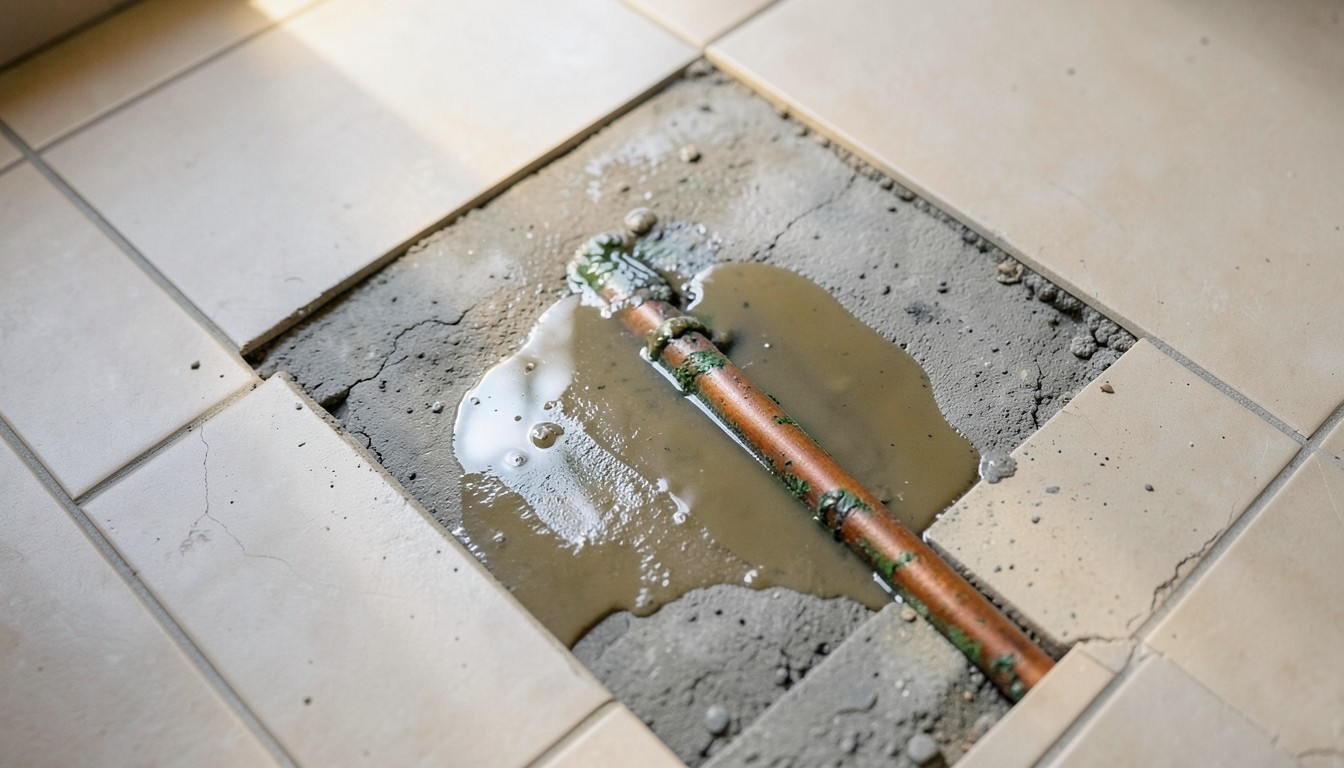
Local plumbing data for Denver, CO
Climate angle. High-altitude freeze-thaw cycles fracture supply lines (140+ days below freezing). Bentonite clay soil shifts crack sewer laterals across older Capitol Hill + Park Hill neighborhoods. Frequent winter freeze-burst + irrigation backflow events.
Slab Leak Repair cost calculator — Denver
Pre-filled for slab leak repair in Denver. Adjust the ZIP for a neighboring area, or change the service to compare. Calculator pulls from the city's scraped permit-fee + state plumber-density data.
Slab Leak Repair in Denver — frequently asked
How much does slab leak repair cost in Denver?
Denver slab leak costs: $1,400–$3,200 for a single spot repair (jackhammer the slab, splice in new copper or PEX), $2,200–$5,200 for a reroute through walls or attic, and $4,500–$13,000 for a full PEX repipe — the durable fix when more than one leak has surfaced. The $155 Denver city permit fee applies to any supply-line work. The state-credentialed Colorado plumber pulls the permit and includes the fee in the written quote.
How do I know if I have a slab leak in my Denver home?
Top diagnostic symptoms in Denver:
- Warm spot on the floor (hot-water-line slab leaks dominate at 5.5 gpg hardness)
- Water bill spike of $40–$120/month with no usage change
- Meter low-flow indicator moves with all fixtures off
- Faint hissing sound near water heater closet at 2 a.m.
- Hairline cracks in tile or grout above the slab
Why are slab leaks common in Denver homes built before 1995?
High-altitude freeze-thaw cycles fracture supply lines (140+ days below freezing). Bentonite clay soil shifts crack sewer laterals across older Capitol Hill + Park Hill neighborhoods. Frequent winter freeze-burst + irrigation backflow events. Denver homes from that era often used Type M copper supply lines run through the slab — once standard practice, now a known failure mode. Hard water at 5.5 gpg accelerates internal pinhole corrosion, especially on the hot-water side where heat compounds the chemistry. Median Denver home age of 53 years puts most of the at-risk stock squarely in the 30–50 year copper-failure window per Copper Development Association. Concrete cure time on patches in Denver runs 24–48 hours before tile/finish work resumes. The Colorado-credentialed plumber sequences the work to minimize whole-house water shutoff — usually 4–8 hours total for spot repair.
What detection methods does a Denver plumber use?
The standard Denver workflow: (1) static pressure-isolation test on the supply manifold to confirm a leak exists and isolate hot vs cold side, (2) FLIR thermal imaging across the floor surface to localize the warm anomaly (works best on hot-side leaks, common at 5.5 gpg), (3) acoustic ground-microphone listening to triangulate within 12–18 inches, (4) electronic line-tracing to map the pipe route before any concrete is opened. Skipping the pressure test is the #1 reason a "found" leak turns out to be the wrong location.
Spot repair, reroute, or full repipe — which fits my Denver home?
Spot repair ($1,400–$3,200): right call for a single first-time leak in a copper line that's otherwise sound. Reroute ($2,200–$5,200): right call when the failure is on a single branch (kitchen line, bath group) and overhead access through walls/attic is feasible. Full PEX repipe ($4,500–$13,000): right call when 2+ slab leaks have surfaced in 24 months — per Copper Development Association, that pattern means the entire copper system is at end-of-life.
Does Colorado homeowners insurance cover Denver slab leak detection?
Most Colorado HO-3 policies cover the DETECTION fee when the underlying leak is "sudden and accidental" — not gradual seepage. They typically cover tear-out and access (slab cut, wall opening) but exclude the cost of repairing the failed pipe (treated as wear-and-tear). State Farm, Farmers, and USAA all reimburse Denver-area detection invoices when paired with a moisture-mapping report. Submit the plumber's written report with the claim — verbal diagnosis alone is usually denied.
Are AlertPlumber-matched plumbers verified for slab leak work in CO?
The eLocal partner network requires every plumber routed through AlertPlumber for slab leak work in Denver to maintain active Colorado state-credentialed status. Colorado DORA Plumbing Program, 2024 lists 9,820 active CO DORA statewide. Slab leak repair requires both the plumbing credential AND specialty experience with concrete cutting + supply-line repipe — confirm any specific plumber's credentials with the state board before authorizing work. Colorado HO-3 policies cover detection fees + tear-out access for sudden leaks but exclude pipe-repair cost (treated as wear-and-tear). For Denver properties built before 1995, document the 5.5-gpg water + copper-in-slab construction era for strongest claim case.
How long does Denver slab leak repair take?
Detection workup: 60–120 minutes. Spot repair (jackhammer + splice + concrete patch): 4–6 hours. Reroute through walls/attic: 1–2 days. Full PEX repipe of a typical Denver 3-bath home: 2–3 days. Concrete cure on patches: 24–48 hours before tile/finish work can resume. The matched plumber gives a firm timeline on the callback after reviewing your home's pipe routing and access points.
Should I get a system-wide pressure test on my Denver home?
Yes if your Denver home is in the 1960–1995 copper-in-slab era and you've already had one slab leak repaired. A system-wide static pressure test ($150–$280) isolates each branch (hot, cold, irrigation) and holds 80 psi for 15 minutes — any pressure drop signals an additional weak point that hasn't surfaced yet. Per Copper Development Association field data, homes with one detected slab leak have a 35–50% probability of a second pinhole within 36 months.
When is full PEX repipe the right answer in Denver?
Full repipe is the durable answer when: (1) you've had 2+ slab leaks in 24 months, (2) the home is past 30 years on Type M copper at 5.5 gpg hardness, OR (3) detection finds multiple at-risk hot-side branches. PEX-A run overhead through walls and attic — never back through the slab — is the standard Denver repipe method. Per PEX Association, PEX-A in 2026 carries a 25-year manufacturer warranty when installed per spec. Local context. High-altitude freeze-thaw cycles fracture supply lines (140+ days below freezing). Bentonite clay soil shifts crack sewer laterals across older Capitol Hill + Park Hill neighborhoods. Frequent winter freeze-burst + irrigation backflow events. 715,522 Denver homes with 53-year median age and 5.5-gpg water put copper-in-slab supply systems squarely in the 30–50 year pinhole-failure window. The Denver Water water profile drives the failure curve.
Request a slab leak repair callback in Denver
ZIP, phone, kind of work. AlertPlumber routes to a verified plumber for a free over-phone estimate.