
Emergency Slab Leak Repair in Cleveland, Ohio
Detects and repairs leaks in pipes beneath the concrete slab foundation. AlertPlumber matches you with a verified OH plumber serving Cleveland.
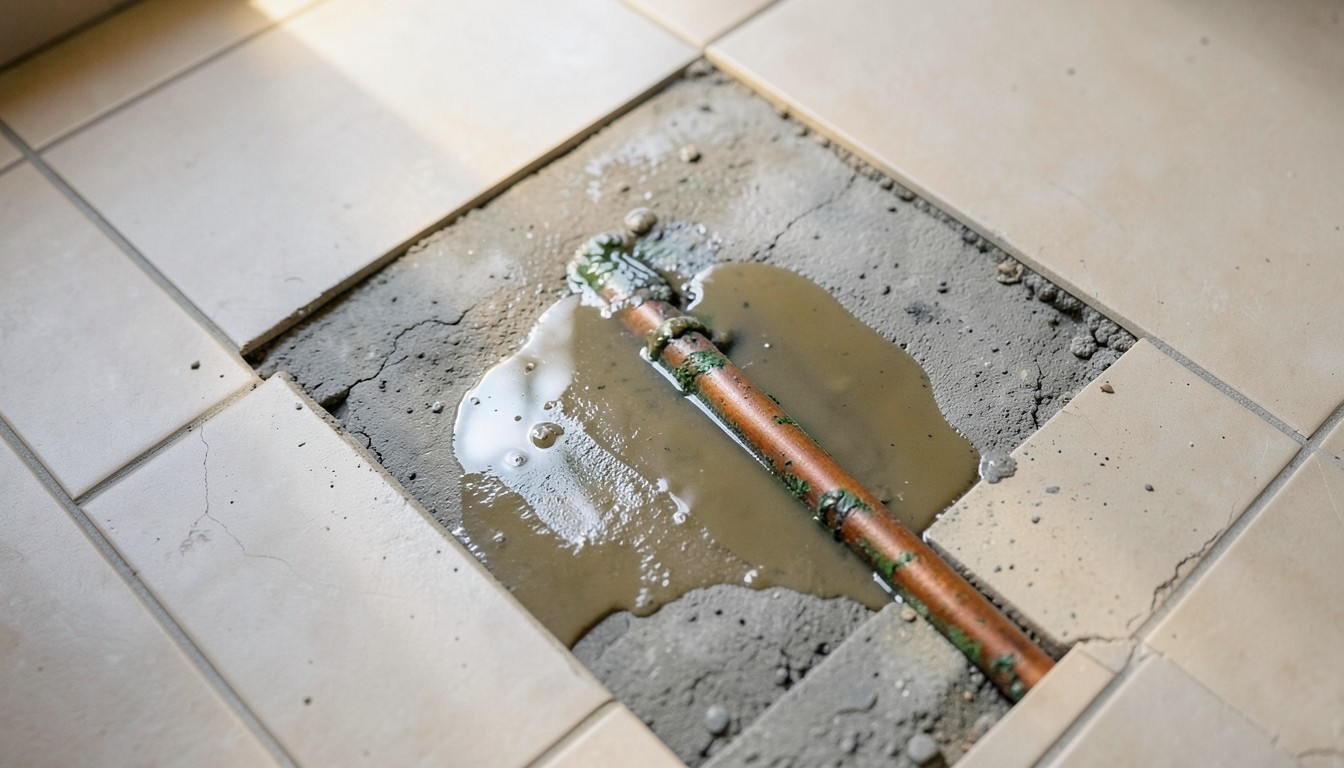
Local plumbing data for Cleveland, OH
Climate angle. Pre-WWII industrial-era housing with cast-iron + lead service lines. Lake Erie soft water (~6 gpg). Burst-pipe season Nov-Mar (avg 130 freeze days). Population decline + housing-vacancy patterns drive sewer-line root invasion in unmaintained laterals.
Slab Leak Repair cost calculator — Cleveland
Pre-filled for slab leak repair in Cleveland. Adjust the ZIP for a neighboring area, or change the service to compare. Calculator pulls from the city's scraped permit-fee + state plumber-density data.
Slab Leak Repair in Cleveland — frequently asked
How much does slab leak repair cost in Cleveland?
Cleveland slab work runs $1,500-$3,400 for a true spot repair (rare in this market), $2,400-$5,400 for a basement-ceiling reroute on a 1950s Cleveland Heights ranch, and $7,500-$13,500 for whole-home PEX-A on the small pocket of South Euclid or Mayfield Heights slab-on-grade ranches that actually exist here. The Cleveland Building & Housing permit is $95 plus a separate post-cover inspection. The bigger story for most callers: nine out of ten "slab leak" calls in this metro turn out to be rim-joist freeze burst at the basement sill, a basement-floor radiant coil failure in a 1955-1965 Cleveland Heights or Shaker Heights heated-slab addition, or a frozen lateral at the lake-side meter — none of which are slab repair scopes. The matched OH OCILB plumber confirms which failure mode you actually have before any concrete is touched, and over-the-phone estimating is a no-cost step before dispatch.
Are slab leaks even common in Cleveland?
No, and this is the single most-misdiagnosed call type in Northeast Ohio. Cleveland's 36-48 inch frost-line code and 130 freeze days per year per NOAA NWS Cleveland mean basement foundations dominate: Tremont, Ohio City, Slavic Village, University Circle, Lakewood, Cleveland Heights — all basement stock, no slab. The narrow exception is a band of 1960s-1970s ranch tracts in South Euclid, Mayfield Heights, and parts of Parma where heated slab-on-grade made sense in suburban subdivisions. When a Cleveland caller reports a "slab leak", the matched plumber's first three questions are: do you have a basement, do you have radiant heat in the basement floor, and where in the home is the wet spot. Those three answers redirect roughly 80-90% of these calls toward a different repair scope before a single saw cut is made, and that triage is no-cost over the phone.
Are most Cleveland "slab leaks" really freeze-burst or radiant-coil failures?
Yes, and lake-effect winter is the driver. Lake Erie pulls cold air across the city for 130+ freeze days per year, and the failure modes that get mistaken for slab leaks are: (1) rim-joist freeze burst at the basement sill plate where supply lines turn up from the meter, common across pre-1940 Tremont, Ohio City, and Slavic Village brick row stock with marginal sill insulation, (2) basement-floor radiant coil failure in 1950s-1960s Cleveland Heights and Shaker Heights tract additions where in-floor copper coils were poured into basement slabs as primary or supplemental heat, and (3) frozen or cracked lateral service lines on pre-1940 lots where the original supply was set above the modern 48-inch code depth. Each of these reads like a slab leak because water is appearing at floor level — but the repair scope and cost are very different from slab work, and the matched plumber confirms which one you have before quoting.
How do I tell a basement-foundation leak from a real slab leak in Cleveland?
The basement test is the fastest sort. Walk the basement and look at the rim joist and sill plate where supply lines enter the home — staining, frost, or active drip there points to rim-joist freeze burst, a 4-6 hour repair. Check whether your basement floor was poured with copper radiant coils (typical in 1950s-1960s Cleveland Heights, Shaker Heights, parts of South Euclid suburban additions) — radiant-coil failures present as a warm wet patch on the basement floor itself, and the repair is isolating and bypassing the failed coil rather than slab repair. Look at the meter pit at the curb in pre-1940 Tremont, Ohio City, or Slavic Village stock — a saturated lawn near the meter or a meter low-flow indicator that runs with all fixtures off points to a frozen-cracked lateral. Only when none of those three appear, AND the wet spot is in a 1960s-1970s South Euclid or Mayfield Heights ranch with confirmed slab-on-grade construction, is a true slab leak the working diagnosis.
Does Ohio homeowners insurance cover Cleveland freeze-burst water damage?
Standard Ohio HO-3 policies generally cover sudden water damage from a rim-joist freeze burst or radiant-coil rupture as long as the home was reasonably maintained against freezing — heat on, the home not vacant-winterized without a shut-off, and reasonable insulation. Ohio carriers including State Farm, Erie, Westfield, and Nationwide commonly reimburse access and tear-out when paired with a written plumber moisture-mapping report. The denial pattern unique to Cleveland: if heat was off during a January-February lake-effect cold snap and the burst occurred at an uninsulated rim joist, carriers often invoke the "freezing of plumbing" exclusion that requires reasonable steps to maintain heat. Document thermostat setting, furnace status, and the date the home was last heated before filing. Coverage of the failed pipe itself (versus collateral water damage) is typically excluded as wear-and-tear regardless of cause.
Why is Lake Erie water 7-8 gpg different from Sun Belt corrosion patterns?
Cleveland Water draws from Lake Erie at roughly 7-8 gpg moderately hard per USGS Hardness Map — fundamentally different chemistry from 17 gpg Phoenix or 16 gpg Tucson groundwater. The Sun Belt's aggressive scale and high-mineral well water drives copper pinhole corrosion in 12-25 years; Cleveland's lake-source moderately hard supply produces slow pinhole formation over 40-60 years on Type L copper, when it occurs at all. The practical result: copper pinhole leaks are real but rare in this market, and when they do appear they are concentrated in the small slab-on-grade pocket of 1960s-1970s suburban ranches where Type M copper was run through heated slabs. Lake Erie chemistry per EPA Great Lakes and Copper Development Association field data is one of the more forgiving municipal supplies in the country for in-place copper.
How long does a Cleveland repair take for the typical failure mode?
Rim-joist freeze burst at the basement sill: 3-6 hours from arrival to dry-out, including pipe section replacement, sill insulation upgrade, and basic cleanup. Basement-floor radiant coil isolation and bypass on a Cleveland Heights 1955-1965 ranch: 1-2 days depending on whether the coil is bypassed entirely or repaired in place. Frozen lateral service line on a pre-1940 Tremont or Slavic Village lot: 4-8 hours if the break is on the homeowner-side past the meter, longer if the city-side responsibility before the meter requires Cleveland Water Department coordination. True slab spot repair on the small South Euclid or Mayfield Heights slab-on-grade pocket: a full day with concrete cut, splice, and patch. Lake-effect cold-snap weeks (typically late January through mid-February) stretch matched-plumber response from 24-48 hours to 3-5 days as the basement-rim-joist call volume peaks across the metro.
Will the plumber damage hardwood or original tile in pre-1940 Cleveland stock?
Tremont 1880s-1920s working-class brick row, Ohio City pre-Civil-War and 1840s-1900s historic blocks, Slavic Village 1900s tenement-style brick, and University Circle 1900s-1930s mansion district all carry irreplaceable original hardwood, encaustic floor tile, hex tile, plaster ceilings, and milled-trim work that homeowners rightly want preserved. Because the actual failure mode is almost always at the basement rim joist or in a basement radiant coil rather than under a finished living-space slab, the matched plumber works from the basement side and the historic flooring above is never disturbed. On the rare suburban slab-on-grade ranch where a true in-slab repair is needed, basement reroute is unavailable by definition and the cut is made in the least-disruptive corner of the slab, with tile or LVP lift coordinated with the homeowner before any saw work begins.
Does Cleveland require permits and OCILB credentialing for this work?
Yes. The Cleveland Department of Building & Housing requires a $95 plumbing permit for any supply-line repair, repipe, or radiant-coil isolation, and the plumber pulling the permit must hold an active OH OCILB Specialty Plumbing credential per the Ohio Department of Commerce, OCILB 2024 registry, which currently lists 9,480 active OH OCILB statewide. Unpermitted supply-line work creates a material misrepresentation that carriers cite to deny related water-damage claims, and a future home sale disclosure becomes problematic. Every plumber routed through AlertPlumber for Cleveland slab and freeze-burst work is verified credentialed and pulls the Building & Housing permit as a standard step in the written quote. The post-cover inspection typically schedules within 48-72 hours of pipe completion.
When is full PEX repipe actually needed in a Cleveland home?
Rarely, and the threshold is much higher than Sun Belt markets. Full PEX-A repipe ($7,500-$13,500) is the right call only when: (1) the home is in the small South Euclid, Mayfield Heights, or Parma 1960s-1970s slab-on-grade pocket AND has had 2+ confirmed in-slab pinhole leaks in 24 months, (2) a basement-foundation home has documented galvanized-steel branch lines from the 1920s-1940s that are restricting flow and rusting from the inside (a different pathology, but the same repipe scope), or (3) a 1950s-1960s Cleveland Heights ranch has a failed basement radiant coil AND aging copper branch lines, where overhead PEX-A reroute makes more sense than coil repair plus copper patching. For the vast majority of basement-foundation Cleveland homes with one rim-joist freeze event, a $1,500-$3,000 sill repair plus insulation upgrade is the durable answer — repipe is a six-figure-mortgage decision that should not be triggered by a single freeze burst.
Request a slab leak repair callback in Cleveland
ZIP, phone, kind of work. AlertPlumber routes to a verified plumber for a free over-phone estimate.