
Emergency Sewer Line Repair in Austin, Texas
Repairs broken or root-invaded sewer lines via spot repair, lining, or trenchless methods. AlertPlumber matches you with a verified TX plumber serving Austin.
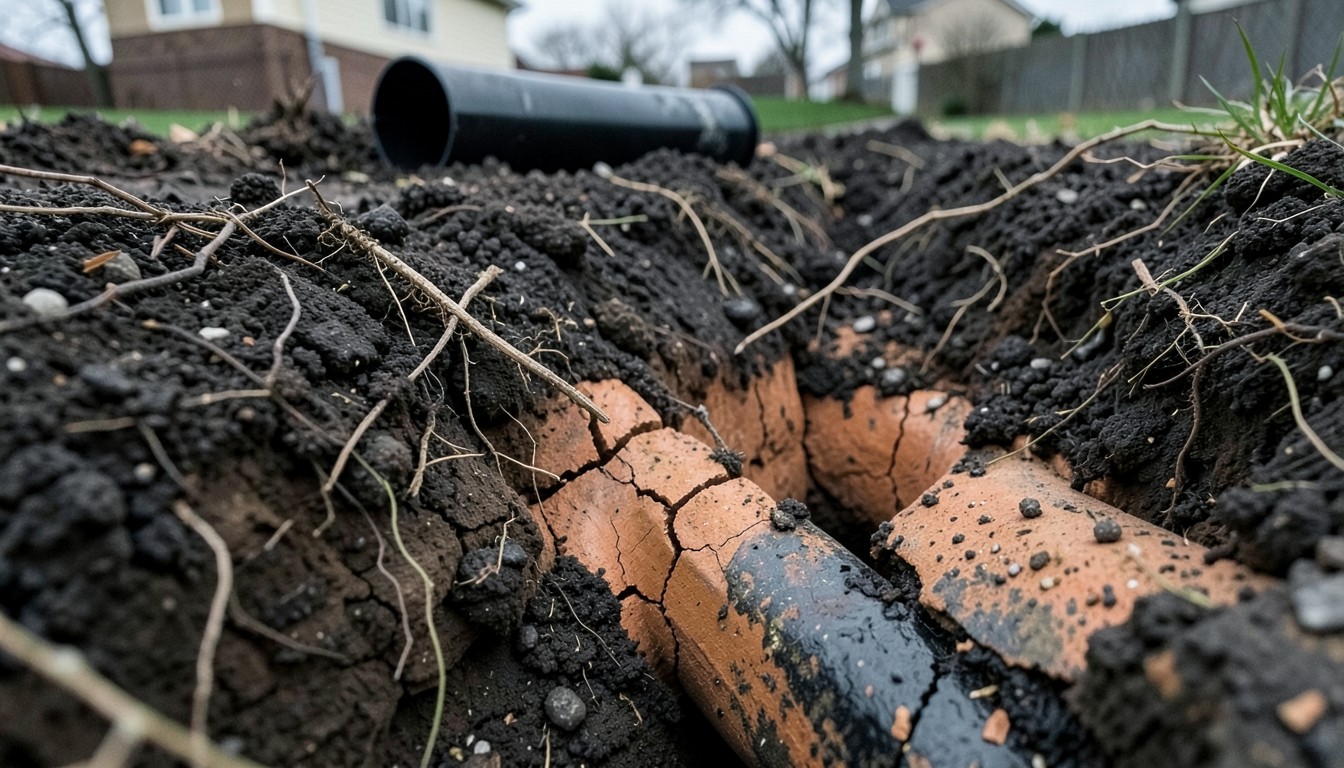
Local plumbing data for Austin, TX
Climate angle. Tech-boom 1990s-2010s tract growth means PEX-dominant supply + lower repair-per-capita than legacy markets. Hill Country limestone hard water (~12 gpg) drives softener demand. Brief Feb 2021-style freeze events catch unwrapped exterior lines.
Sewer Line Repair cost calculator — Austin
Pre-filled for sewer line repair in Austin. Adjust the ZIP for a neighboring area, or change the service to compare. Calculator pulls from the city's scraped permit-fee + state plumber-density data.
Sewer Line Repair in Austin — frequently asked
How much does sewer line repair cost in Austin?
Austin sewer scope spans five distinct repair paths, each with a Hill Country limestone-bedrock cost premium that varies sharply by neighborhood. Point repair (excavate one joint, splice 4-8 ft of PVC) runs $1,900–$4,800 in east-Austin alluvial soils, climbing to $3,400–$7,200 in Westlake Hills and Rollingwood where rock-saw or hoe-ram excavation through limestone bedrock adds 35–60% to dig time. CIPP cured-in-place lining per ASTM F1216: $5,800–$13,500 for a 50-ft lateral, largely terrain-neutral since it's pulled through the existing pipe. Trenchless pipe-bursting (PB): $7,200–$15,800 for a 50-ft run; the entry/exit pits still need limestone excavation in Hill Country zones. Full open-trench replacement: $8,500–$22,000 in Austin proper, $12,000–$28,000+ in luxury Westlake Hills rock-cut scopes. Lateral cleanout install (code-required two-way at the property line): $850–$2,400. The $165 Austin Development Services permit applies to any work breaking the wastewater main. Pre-job sewer-camera inspection: $185–$425.
What symptoms mean my Austin lateral is failing?
The Austin failure-symptom cluster splits along housing-stock age. 1930s–1950s pre-PVC pockets (Travis Heights, Hyde Park, Zilker, Clarksville, Rosedale, parts of Old West Austin) show the classic clay-tile pathology: gurgling toilets when the washer drains, multi-fixture slow-drain, sewer odor in the yard after Hill Country thunderstorms (groundwater infiltration through cracked clay joints), sinkhole-style depressions tracing the lateral path, and recurring root-intrusion clogs that snake-clear and return within 90 days. 1990s+ PVC-dominant stock (Mueller, The Gulch, SoBro infill, Circle C, Steiner Ranch, Avery Ranch) shows different symptoms: belly/sag from soil settlement on Blackland Prairie clay-shrink/swell soils, joint separation at fittings, or rare debris obstructions — root intrusion is far less common because PVC joints are gasketed not mortared. Two or more symptoms warrant a $185–$425 camera scope before a Saturday-night sewage backup forces an emergency-rate excavation. The matched plumber documents condition with NASSCO PACP-coded video per NASSCO standards.
Why does Austin terrain need specialized sewer-line work?
Austin sits on three sewer-relevant geological transitions that drive method selection. First, the Balcones Fault Zone divides the city: west of MoPac (Westlake Hills, Rollingwood, parts of West Lake Hills) is Hill Country limestone bedrock, often within 18–36 inches of the surface, which means open-trench work requires hoe-ram, rock saw, or hydraulic hammer — equipment fees of $850–$1,800/day on top of the standard excavator. East of I-35 (East Austin, Govalle, Mueller, Montopolis) sits on softer alluvial Colorado River-terrace soils where conventional excavation works at standard rates. Second, the 1995 median build year means most Austin laterals are PVC schedule 40 — newer than Sun Belt comparators (Mesa 1986, Tucson 1977, San Antonio 1985), so root-intrusion failure rates are correspondingly lower per USGS regional data. Third, the 1930s–1950s pre-PVC pocket in Travis Heights, Hyde Park, and Zilker has clay-tile laterals heavily invaded by live oak, cedar elm, and pecan canopy roots. The matched Austin Water-area plumber matches method to neighborhood substrate.
Open-trench vs trenchless pipe-bursting in Austin limestone?
The Hill Country limestone-bedrock layer flips the standard trenchless cost-benefit calculation in Westlake Hills and Rollingwood. Open-trench replacement through limestone runs 35–60% over baseline because rock excavation requires hoe-ram or rock-saw equipment plus extended labor hours — a 50-ft lateral that takes 3 days in east-Austin alluvial dirt can take 5–6 days in Westlake limestone. Trenchless pipe-bursting (PB) dramatically narrows the gap because only the entry and exit pits need rock excavation; the lateral itself is pulled through the existing pipe path with a hydraulic burster splitting the host pipe and dragging new HDPE behind. In limestone-bedrock zones, PB is often the rational choice even when open-trench would be cheaper in alluvial soils. CIPP cured-in-place lining per ASTM F1216 is fully terrain-neutral — it's pulled through the existing host pipe, no excavation required beyond the cleanout access. The pre-job sewer-camera scope determines which path the host pipe will accept; collapsed sections, severe bellies, and Orangeburg fiber-conduit pre-1972 require open-trench replacement regardless of substrate.
Will Texas HO-3 cover sewer-line repair in Austin?
Standard Texas HO-3 policies do NOT cover sewer-lateral replacement — TDI classifies it as maintenance/wear-and-tear and explicitly excludes it from base coverage. The standard policy DOES cover wastewater-backup damage to the home interior (drywall, flooring, contents, mold remediation) only IF you carry a sewer-backup endorsement (sometimes called "water backup of sewers or drains"). For Austin homes built before 2000 — particularly the 1930s–1950s clay-lateral stock in Travis Heights, Hyde Park, Zilker, and Old West Austin — this endorsement is effectively mandatory. Typical Texas pricing: $55–$140/year for $5,000–$10,000 of coverage; some carriers offer $25,000 tiers for an additional $40–$80/year. Document any condition deterioration with the matched plumber's NASSCO-coded camera footage, dated invoice, and itemized repair scope to support the strongest backup-damage claim. Per Texas Department of Insurance, carriers cannot deny a backup claim solely because the lateral was old, only because the loss falls outside the policy form.
How long does sewer-line repair take in Austin?
Time-on-site varies by method and neighborhood substrate. Point repair: 1 day in alluvial east-Austin, 2 days in Westlake Hills limestone where the dig stretches into a second shift. CIPP lining: 1 day install plus 18–28 hours ambient cure (longer in Austin's December–February cool stretch with 23–25 freeze days/year per NOAA NWS Austin/San Antonio); steam-cure adds equipment cost but trims cure to 4–6 hours. Pipe-bursting: 2 days for a typical 50-ft Austin lateral including pit excavation, pull, tie-in, and backfill. Full open-trench replacement: 3–4 days in alluvial soils, 5–7 days in Hill Country limestone bedrock zones. Add 24–72 hours upfront for the Austin Development Services permit and a 4–24 hour buffer for the inspection window after backfill. 811 (Texas811) utility-locate marking is required 48–72 hours before any excavation — federal mandate, no exceptions, no fee.
What permits and credentials apply to Austin sewer work?
Austin sewer-lateral work requires a city plumbing permit issued by Austin Development Services ($165 for residential lateral repair/replacement, plus inspection fees), with work performed under Texas-adopted International Plumbing Code Chapter 7 lateral standards. The plumber pulls the permit on your behalf and must hold an active Texas state credential — TX TSBPE lists 27,810 active state-credentialed plumbers across Texas (2024 board roster). Sewer-lateral work specifically requires the Master Plumber or Responsible Master Plumber tier because the lateral connects to the Austin Water main — shared infrastructure beyond the homeowner's property line. Texas811 notification 48–72 hours pre-excavation is federally mandated under EPA NPDES ground-disturbance protocols. Verify any matched plumber via the TSBPE online lookup before authorizing excavation. The eLocal partner network requires every plumber routed through AlertPlumber for Austin sewer work to maintain active TSBPE credentialing.
When is my Austin lateral old enough to need full replacement?
The tipping point splits sharply by Austin's two housing-stock cohorts. 1930s–1950s pre-PVC pocket (Travis Heights, Hyde Park, Zilker, Clarksville, Old West Austin, Rosedale, Hancock): clay tile or cast iron, 65–95 years in service, near or past the 50–80 year clay-lateral functional lifespan per USGS infrastructure-aging data. Once 30%+ of the lateral length shows root intrusion, channeling, or joint offset on a NASSCO PACP-coded camera scope, full replacement (open-trench or pipe-bursting) is more cost-rational than incremental point repairs. 1995+ PVC-dominant stock (Mueller, The Gulch, SoBro, Circle C, Steiner Ranch, Avery Ranch, Bouldin Creek infill): PVC schedule 40 has 100-year design life per Plastic Pipe Institute; failures here are typically point-repair candidates (belly, joint separation, rare debris) rather than full-replacement candidates. The matched plumber's camera scope is the decision instrument — a method recommendation without scoped video is guessing.
Can roots from my live oak or pecan damage my Austin lateral?
Yes, in the older 1930s–1950s clay-lateral pocket. South Austin's mature canopy — live oak, cedar elm, pecan, post oak, and Arizona ash — drives the bulk of root-intrusion sewer calls in Travis Heights, Zilker, Hyde Park, Clarksville, and Rosedale. Roots enter clay-tile and cast-iron laterals at deteriorated joints, then expand into root masses that catch toilet paper and wastewater solids. Remediation tiers: mechanical root cutting with a sewer auger ($350–$650, every 12–18 months for at-risk laterals), RootX or copper-sulfate root foaming ($475–$850, controls regrowth 12–24 months), or structural CIPP lining per ASTM F1216 ($5,800–$13,500) which seals the joints permanently and is typically the most cost-rational path for laterals with chronic root intrusion plus enough wall integrity to host a liner. Newer 1995+ PVC laterals in Mueller, The Gulch, and Circle C are largely root-resistant because gasketed PVC joints don't admit root hairs the way mortared clay-tile joints do. Confirm root-source vs. root-symptom with a NASSCO PACP-coded camera scope before authorizing chemical or structural treatment.
When is full replacement smarter than CIPP lining in Austin?
CIPP cured-in-place lining per ASTM F1216 requires a structurally sound host pipe — the liner is a structural sleeve, not a rebuild. CIPP fails in five Austin-specific scenarios. One: Orangeburg fiber-conduit pipe (1948–1972 vintage, found in some Hyde Park and Rosedale homes) — Orangeburg is bituminized fiber that crushes under load; it cannot host a liner. Two: severely collapsed clay tile in 1930s Travis Heights / Zilker pre-PVC stock where the host pipe has lost ovality. Three: belly/sag sections greater than 2 inches over 10 ft — CIPP follows the host pipe's grade, so a bellied host produces a bellied liner that still pools wastewater. Four: separated joints with offset greater than 1/4 inch, where the liner can't bridge the gap. Five: damaged sections in Hill Country limestone-bedrock zones where soil shift has fractured the pipe radially. In all five, full replacement (open-trench in alluvial soils, pipe-bursting through limestone) is the remediation path. The pre-job NASSCO PACP-coded camera scope is the diagnostic instrument — any matched Austin plumber quoting CIPP without a documented scope is skipping the decision step.
Request a sewer line repair callback in Austin
ZIP, phone, kind of work. AlertPlumber routes to a verified plumber for a free over-phone estimate.