
Emergency Leak Detection in Houston, Texas
Locates hidden water and gas leaks using acoustic and thermal equipment. AlertPlumber matches you with a verified TX plumber serving Houston.
Local plumbing data for Houston, TX
Climate angle. Land subsidence (1–3 in./yr in some neighborhoods) cracks sewer laterals + cast-iron drains. Hurricane + flooding events drive sump-pump + sewer-backup spikes Jun–Oct. Slab-leak season runs year-round in 1970s–80s post-tension slab tracts.
Leak Detection cost calculator — Houston
Pre-filled for leak detection in Houston. Adjust the ZIP for a neighboring area, or change the service to compare. Calculator pulls from the city's scraped permit-fee + state plumber-density data.
Leak Detection in Houston — frequently asked
What's the cost of leak detection in Houston?
Houston leak detection runs $235-$475 flat, with the price reflecting the metro's mix of slab pathology, attic-routed supply convention, and the persistent diagnostic challenge of identifying slow leaks that started during a flood event and weren't discovered until weeks later. The fee covers FLIR thermal scanning, acoustic listening, static pressure isolation, and yard-side investigation when subsidence is suspected (Houston experiences 1-3 inches per year of land subsidence in some sectors, which stresses buried supply and sewer laterals). The City of Houston plumbing-repair permit is $135, applied separately. AlertPlumber matches calls to one of approximately 27,810 TSBPE-verified plumbers across Texas.
How does a Houston homeowner know there's a hidden leak?
Houston's pathology — 1977 median build, slab construction, hurricane exposure, ongoing land subsidence — produces these signals:
- A warm spot on tile or concrete floor (in-slab hot-water leak, very common in Houston)
- Brown stains or sagging in the attic ceiling (attic supply line failure)
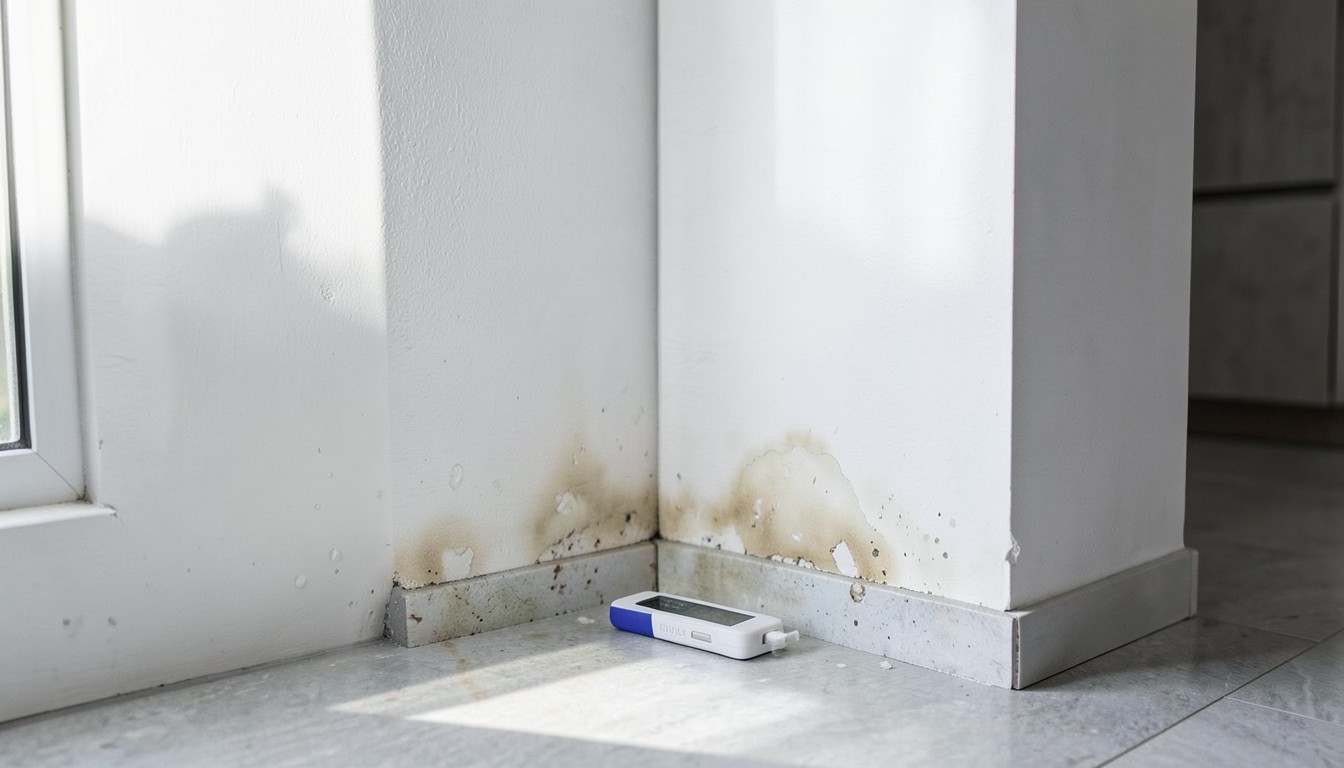
- Damp drywall near the floor along an exterior wall, especially on the side of the house away from where any recent flooding entered — could be a slow leak that started during the flood and has been weeping since
- Cracks in the slab visible at the perimeter — subsidence-driven movement may have stressed supply laterals
- Water bill jump on the monthly City of Houston Water billing cycle
What detection tools do Houston plumbers use?
The Houston workflow handles slab, attic, subsidence, and post-flood pathology: (1) static pressure isolation on the main to confirm a supply leak exists, (2) FLIR thermal scanning across slab and attic surfaces, (3) acoustic ground-mic listening to triangulate, (4) sewer-camera inspection of laterals if subsidence is suspected — Houston's 1-3 inches per year of subsidence in some sectors stresses buried pipe over decades and produces lateral cracks that are invisible from above, and (5) post-flood-specific moisture mapping that distinguishes residual flood moisture (decreasing over weeks) from active leak moisture (constant or increasing). The post-flood diagnostic step is more important in Houston than in any other metro because of repeat hurricane impact.
Will Texas homeowners insurance cover Houston leak detection?
Most TX HO-3 policies pay for detection when the underlying cause is sudden — a slab pinhole pop, an attic line freeze-burst, a water-heater connection rupture. Houston-specific complication: post-hurricane leaks are often initially classified by carriers as flood damage (excluded under HO-3, only covered by separate NFIP policy) when in fact a discrete pipe failure occurred during the storm. Documentation matters intensely here — a written plumber diagnostic citing a discrete failure event, with photos and meter data, is the difference between $0 and full reimbursement. State Farm, Allstate, USAA, and Texas Farm Bureau all reimburse Houston detection invoices ($235-$475) when the report cites a sudden failure cause unrelated to flood ingress.
Why does the water bill jump when there's a hidden leak?
City of Houston Water meters every connection and bills monthly with sewer linked to metered water consumption. A typical hidden leak releases 90-200 gallons per day on a 1/2-inch supply at 60 psi, adding 2,700-6,000 gallons monthly — roughly $35-$85 on the combined water and wastewater bill. Houston's wastewater rate runs near 1:1 with metered water, so the impact effectively doubles. Houston also has a high baseline of irrigation use due to summer heat, which can mask a small leak in the bill noise; the 20% threshold for triggering a detection scan is most reliable when measured against the same month in the prior year rather than month-over-month within a single year.
Can a Houston homeowner DIY-find the leak first?
Confirming a leak exists: shut every fixture, the irrigation valve, and the pool autofill, then watch the City of Houston Water meter for 15 minutes. Any low-flow indicator motion confirms a leak. You can also walk barefoot across tile looking for warm spots and inspect the attic with a flashlight for stains or damp insulation. What you cannot DIY is distinguishing residual hurricane-flood moisture (decreasing over weeks) from an active slow leak that started during the flood (constant or increasing) — that diagnostic requires repeat moisture mapping over multiple visits, which a verified plumber handles. The TSBPE lists about 27,810 active plumbers in Texas; the diagnostic skill is the core value of the visit.
What's the most common leak pattern in Houston homes?
Four patterns split most of the volume in Houston. First, in-slab copper hot-water pinholes — Sun Belt copper-in-slab pathology with Houston's 9 gpg moderately hard water as the corrosion driver. Second, attic supply-line failures — Texas builders' attic-routing convention applies in Houston too, and aging plus the rare hard freeze (Uri 2021 was a major event) produce attic ruptures. Third, subsidence-cracked supply and sewer laterals — Houston's documented 1-3 inches per year of land subsidence in some sectors stresses buried pipe over decades. Fourth, post-flood slow leaks — Hurricane Harvey, Beryl, and earlier events caused fixture and supply damage that weeps for weeks before being discovered, often masked by the visible flood remediation work.
How well does FLIR thermal imaging work in Houston?
For in-slab hot-line leaks in Houston, FLIR localizes within 12-18 inches about 85-92% of the time — same range as Phoenix and Dallas. For attic supply leaks, FLIR is highly effective in summer (130-150°F attic ambient makes a cold-water leak read as sharp contrast) and less so in winter. For subsidence-related lateral cracks, FLIR is generally not the right tool — sewer-camera inspection is the diagnostic of record because the failure is in buried drain or supply pipe well below thermal-imaging range. A skilled Houston tech matches the tool to the suspected failure mode rather than reaching for the camera reflexively, especially when the symptom suggests subsidence or post-flood involvement.
Is a system-wide pressure test worth doing in a Houston home?
For Houston homes with one confirmed slab or attic leak, a system-wide pressure test ($175-$310) is informative because failure clustering is common — Houston water hardness drives copper pinhole formation in groups, and subsidence stresses buried pipe in patterns. The test isolates each branch and holds 80 psi for 15 minutes per branch. For homes that have experienced major flood events (Harvey, Beryl), the pressure test is also a useful post-flood condition assessment regardless of any current symptom — flood-related pipe damage often manifests as small leaks weeks or months later, and pre-emptive testing catches them before they cause secondary damage. Permit fees ($135) apply to repair only.
Are AlertPlumber-matched Houston plumbers actually verified by TSBPE?
The eLocal network's verification process applies to every Houston-area plumber routed by AlertPlumber — they confirm active Texas State Board of Plumbing Examiners license — Master Plumber, Journeyman, or Tradesman with appropriate supervision — verified against the TSBPE database (27,810 active verified plumbers statewide). Leak detection and all repair work fall within the TSBPE licensed scope; no separate detection-specific license exists in Texas. AlertPlumber re-verifies license status at routing time, so an expired or suspended license cannot accept the lead. The contractor's name and TSBPE license number are provided on the live callback for independent verification on the TSBPE public license-search portal. Master Plumber RMP designation is flagged for any work requiring permit signoff with the City of Houston.
Request a leak detection callback in Houston
ZIP, phone, kind of work. AlertPlumber routes to a verified plumber for a free over-phone estimate.