
Emergency Leak Detection in Austin, Texas
Locates hidden water and gas leaks using acoustic and thermal equipment. AlertPlumber matches you with a verified TX plumber serving Austin.
Local plumbing data for Austin, TX
Climate angle. Tech-boom 1990s-2010s tract growth means PEX-dominant supply + lower repair-per-capita than legacy markets. Hill Country limestone hard water (~12 gpg) drives softener demand. Brief Feb 2021-style freeze events catch unwrapped exterior lines.
Leak Detection cost calculator — Austin
Pre-filled for leak detection in Austin. Adjust the ZIP for a neighboring area, or change the service to compare. Calculator pulls from the city's scraped permit-fee + state plumber-density data.
Leak Detection in Austin — frequently asked
How much does professional leak detection cost in Austin?
A non-destructive leak detection workup in Austin typically runs $250–$485 flat, billed before any repair quote. The price covers FLIR thermal scanning, acoustic listening on the supply manifold, and a static pressure-isolation test. The detection fee is usually credited toward the repair if you book the same plumber. Repair itself is separate — single slab spot repair runs $1,400–$3,200, hidden-wall leak repair $385–$985.
How do I know if I have a hidden leak in my Austin home?
The most diagnostic symptoms:
- Water bill jumps 20%+ with no change in household usage
- Meter low-flow indicator moves with every fixture off
- Warm spot on the floor (hot-water leak under slab — common at 12 gpg hardness)
- Faint hissing sound near floor vents at 2 a.m.
- Hairline cracks in tile or grout
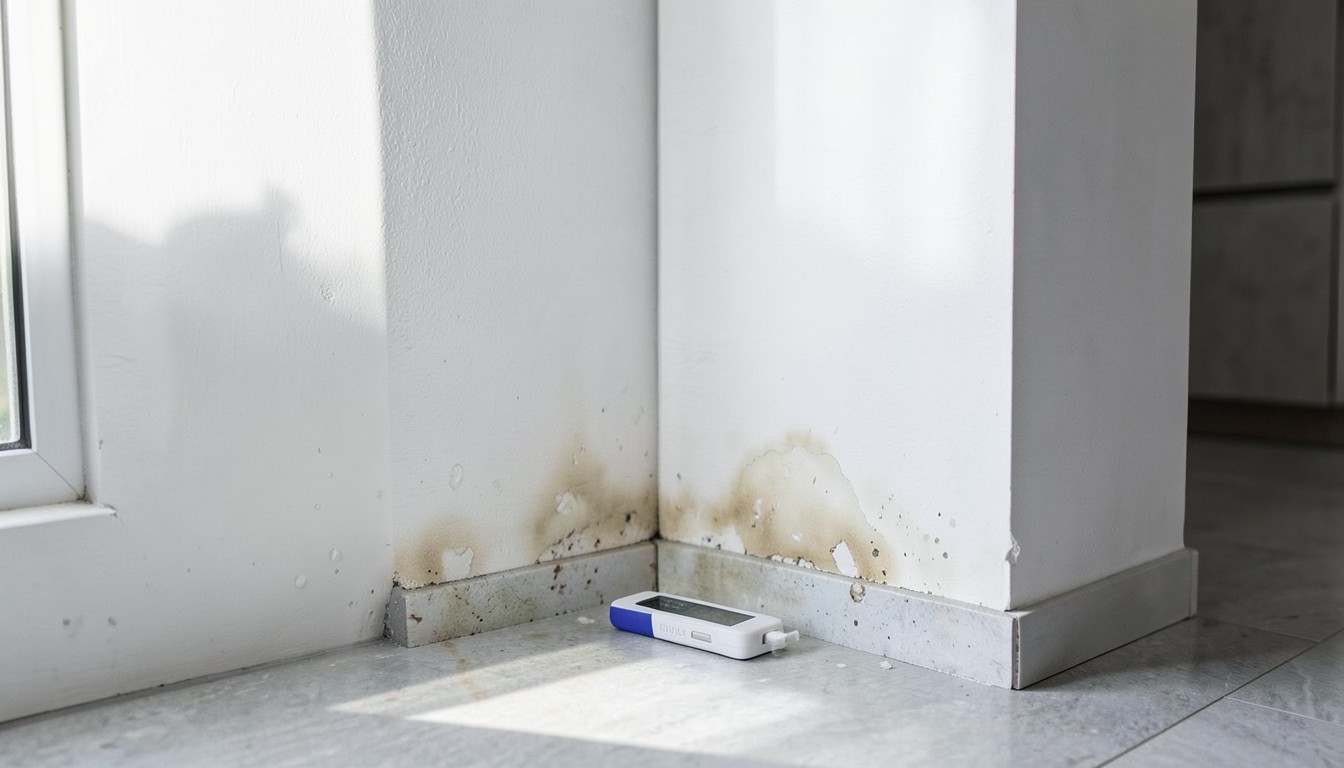
- Mold or mildew smell near baseboards
What detection methods does a Austin plumber actually use?
The standard sequence: (1) static pressure-isolation test on the supply manifold confirms a leak exists and isolates hot vs cold side, (2) FLIR thermal imaging localizes warm anomalies on slab, walls, or ceiling, (3) acoustic ground-microphone listening triangulates within 12–18 inches, (4) electronic line-tracing maps the pipe route before any cut. Austin's 12-gpg water + 30-year median home age determines which method runs first. Austin water rates at $8.65 per 1k gallons mean a hidden pinhole can add $35–$80/month to your bill at 12-gpg hardness. Median home age 30 years means 974,447-resident Austin properties from the 1960–1995 era carry elevated slab-leak risk.
Will Texas homeowners insurance cover Austin leak detection?
Most Texas HO-3 policies cover the DETECTION fee when the underlying leak is classified as "sudden and accidental" — not gradual seepage that's been ongoing for months. Standard policies pay for tear-out + access (slab cut, wall opening, detection report) but exclude repair of the failed pipe itself (treated as wear-and-tear). Submit the plumber's written report with moisture-mapping for the strongest claim case. Verbal diagnosis alone is usually denied.
Why does the water bill spike when there is a hidden leak?
Austin's water utility meters every gallon that crosses the property line, whether it ends up in the dishwasher or the soil under your slab. A pinhole leak under 60 psi line pressure releases roughly 70–150 gallons per day — invisible at the surface but a 2,100–4,500 gal/month addition to your bill. On a typical Austin bill that translates to $35–$80 in extra water plus matching wastewater charge. A 20%+ unexplained spike for two consecutive cycles is the standard threshold for ordering detection.
Can a Austin homeowner locate the leak without calling a plumber?
You can confirm a leak EXISTS on your own — shut every fixture, watch the meter's low-flow indicator. Any movement over 15 minutes with everything off means water is escaping somewhere. You cannot reliably LOCATE the leak yourself. Consumer-grade IR thermometers don't have spatial resolution to distinguish a slab leak from a sun-warmed grout line, and rental moisture meters can't see through 4 inches of concrete. Leave the diagnostic step for a plumber with calibrated FLIR.
What's the most common type of leak in Austin homes?
Tech-boom 1990s-2010s tract growth means PEX-dominant supply + lower repair-per-capita than legacy markets. Hill Country limestone hard water (~12 gpg) drives softener demand. Brief Feb 2021-style freeze events catch unwrapped exterior lines. The dominant leak patterns reflect that pathology — slab-side copper pinhole corrosion in homes built 30+ years ago, freeze-burst weeping at rim joists in cold-climate Austin, hose-bib silcock leaks behind exterior stucco, water-heater pan drips in attached garage installs. The matched plumber's detection workflow starts with the most-likely cause for Austin's climate + housing-stock profile. For the Austin Water system in Austin, water-bill-spike documentation supports faster claim approval — pull 6 months of bills before the detection appointment to anchor the timeline.
How accurate is FLIR thermal imaging for finding a slab leak?
For a hot-line slab leak in Austin, a properly calibrated FLIR T-series camera localizes the leak within an 18-inch radius about 85–92% of the time on the first scan. Accuracy drops if (a) the leak is on the cold side — no thermal contrast against ambient slab, (b) the floor finish is thick carpet or insulating cork, or (c) the leak has been running long enough to saturate the entire under-slab soil. A skilled tech follows the thermal hit with acoustic confirmation before recommending where to cut concrete.
Should I get a system-wide pressure test on my Austin home?
Yes if your Austin home is in the 1960–1995 era and you've had one leak repaired. A system-wide static pressure test ($150–$280) isolates each branch (hot, cold, irrigation) and holds 80 psi for 15 minutes — any pressure drop signals an additional weak point. Austin-area plumbers report homes with one detected slab leak have a 35–50% probability of a second pinhole within 36 months on the same hot manifold. The pressure test is lower-cost than a second emergency call.
Are AlertPlumber-matched plumbers verified for leak detection in TX?
The eLocal partner network requires every plumber routed through AlertPlumber for leak detection in Austin to maintain active Texas state-credentialed status. TX TSBPE, 2024 lists 27,810 active TX TSBPE statewide. Leak detection requires specialty equipment (FLIR, acoustic, pressure-isolation) and trained operator experience — confirm credentials via the state board lookup before authorizing work. Local context. Tech-boom 1990s-2010s tract growth means PEX-dominant supply + lower repair-per-capita than legacy markets. Hill Country limestone hard water (~12 gpg) drives softener demand. Brief Feb 2021-style freeze events catch unwrapped exterior lines. 974,447 Austin homes with 30-year median age and 12-gpg water from the Austin Water system show a distinctive Austin leak signature — that pathology is what the matched detection plumber's workflow targets first.
Request a leak detection callback in Austin
ZIP, phone, kind of work. AlertPlumber routes to a verified plumber for a free over-phone estimate.