
Emergency Leak Detection in Atlanta, Georgia
Locates hidden water and gas leaks using acoustic and thermal equipment. AlertPlumber matches you with a verified GA plumber serving Atlanta.
Local plumbing data for Atlanta, GA
Climate angle. Pre-1970s sewer mains under root pressure drive most main-line work; clay soil cycles in summer cause slab movement + slab-leak season runs Apr–Oct. Brief winter freeze events (12–18 days/yr) catch unwrapped exterior pipes.
Leak Detection cost calculator — Atlanta
Pre-filled for leak detection in Atlanta. Adjust the ZIP for a neighboring area, or change the service to compare. Calculator pulls from the city's scraped permit-fee + state plumber-density data.
Leak Detection in Atlanta — frequently asked
What is the typical price for leak detection in Atlanta?
Atlanta leak detection runs $245-$475 flat, with the spread covering both straightforward supply-side scans and the more complex case of differentiating a true plumbing leak from HVAC-condensate dripping in a humid attic — a common misdiagnosis Atlanta plumbers spend significant time on. The fee covers acoustic listening, moisture mapping, FLIR thermal scanning of suspected zones, and dye-testing if drain involvement is suspected. The City of Atlanta plumbing-repair permit is $110, applied separately if invasive work follows. AlertPlumber routes calls to one of approximately 11,420 GA-verified plumbers (Master Plumber Class I or II under the Georgia Construction Industry Licensing Board).
How can an Atlanta homeowner tell if there is a hidden leak?
Atlanta's red-clay soil and high humidity produce specific symptoms:
- Cracks appearing in interior drywall around door frames, especially after heavy rain — the clay shifts as it hydrates, stressing supply and drain laterals running through the soil
- A wet patch in the attic near the air handler (could be HVAC condensate, could be a supply leak running through the attic — the diagnostic separates them)
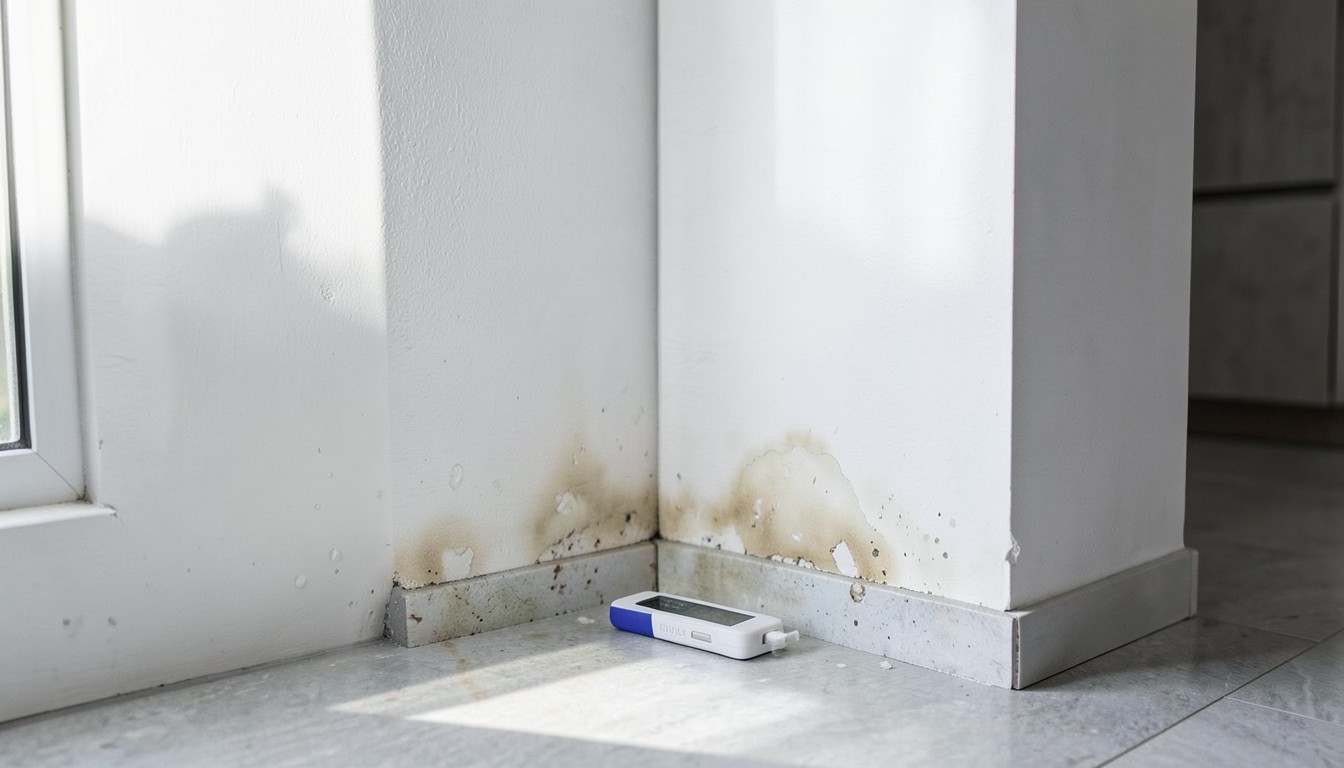
- Brown staining on the ceiling below an upstairs bathroom
- Spongy spots in the lawn directly above where a sewer lateral runs
- A water-bill jump with no usage change — Atlanta DWM bills monthly, so the signal arrives within 30 days
What detection methods do Atlanta plumbers rely on?
For Atlanta the standard sequence accommodates the soil and humidity conditions: (1) static pressure isolation to confirm a supply leak exists, (2) acoustic listening at the supply manifold and along the slab perimeter, (3) FLIR thermal imaging — particularly useful in attics where a true supply leak shows as a cold thermal anomaly against the warm ambient, distinguishing it from HVAC condensate which is typically localized near the evaporator coil drip pan, and (4) sewer-camera inspection of the lateral if the symptom is yard-side rather than house-side. Atlanta's clay-soil-shift pathology means lateral failures are common; the sewer cam catches them before the yard collapses.
Will Georgia homeowners insurance reimburse Atlanta leak detection?
Most GA HO-3 policies cover detection costs when the underlying cause is sudden — a clay-shift pipe rupture, an attic supply-line freeze in the rare deep cold, a broken supply nipple at the water heater. Coverage typically excludes (a) gradual seepage older than 14 days, (b) damage to the failed pipe itself, and (c) anything classified as foundation movement, which can muddy the picture in Atlanta because clay-soil shifts qualify as both. State Farm, USAA, and Allstate routinely reimburse Atlanta detection invoices ($245-$475) when the plumber documents a discrete failure event in writing. Submit photographic evidence with the claim — clay-driven failures often need extra documentation to clear the foundation-movement exclusion.
Why does the water bill go up when there's a hidden leak?
Atlanta DWM meters every gallon and bills both water and sewer based on metered consumption — sewer charges run roughly 1.7x the water charge, so the bill impact compounds. A typical hidden leak (1/2-inch supply line, pinhole, 55 psi street pressure) releases 80-180 gallons per day. Across an Atlanta monthly billing cycle that's 2,400-5,400 gallons of unbilled-but-metered water — about $50-$140 of unexplained increase on the combined bill. Atlanta's 3.5 gpg soft-to-moderate water doesn't drive scale-related leaks the way Phoenix's 17 gpg does, but pinholes from electrochemical corrosion in copper supply lines installed 1965-1985 are a common culprit.
Can an Atlanta homeowner find the leak before calling a plumber?
Confirming a leak exists is the part you can do: shut every fixture, locate the Atlanta DWM meter at the curb stop, and watch the low-flow indicator for 10-15 minutes. Any motion confirms water is escaping somewhere. You can also walk the lawn after a dry stretch and look for unusually green patches over the lateral run — that's water surfacing through clay. What you can't reliably DIY is differentiating an attic supply-line leak from HVAC condensate (the symptom presentation is nearly identical) or locating a clay-shifted lateral break under 4 feet of soil. The Georgia CILB lists 11,420 active Master Plumbers — that diagnostic skill is what you're paying for.
What is the most common kind of leak in Atlanta homes?
Atlanta's three dominant patterns: (1) clay-soil-shift damage to supply and sewer laterals — Georgia Piedmont red clay swells when wet and contracts when dry, repeatedly stressing lateral connections and joints over decades, (2) attic supply-line failures in homes built 1965-1990 where copper supply was run through the unconditioned attic and freeze-thaw cycling during rare hard freezes ruptures the line, and (3) the diagnostic challenge of HVAC-condensate drips that look like plumbing leaks — a clogged condensate drain pan in an Atlanta attic produces a ceiling stain functionally identical to a supply leak. The 1972 median build year puts most stock in the peak failure window for the first two patterns.
How well does FLIR thermal imaging work in Atlanta conditions?
FLIR is particularly valuable in Atlanta attics because the high ambient summer temperature (attic interiors often 130-150°F in July) makes a cold supply-water leak show up as a sharp thermal contrast — the camera essentially shouts at you when there's a true plumbing leak. For slab leaks (less common in Atlanta than in Phoenix because Atlanta has more crawl-space construction), FLIR works but with lower yield. The most useful Atlanta application is differentiating HVAC condensate (localized cool patch near the air-handler) from a supply leak (linear cool streak following the pipe route) — that distinction is hard to make any other way without invasive opening.
Is a system-wide pressure test worth doing in an Atlanta home?
For Atlanta homes with confirmed lateral or attic leaks, a system-wide pressure test ($175-$300) is worthwhile because clay-driven failures tend to cluster — once one joint has been stressed by soil movement, others on the same run are likely already weakened. The test isolates each branch and holds 80 psi for 15 minutes, identifying additional weak points before they fail in service. For homes with crawlspace plumbing where everything is visible, the test is less informative because visual inspection catches most issues. The matched plumber will recommend the test if your home falls in the 1965-1990 vintage with original copper supply, which is the highest-yield group.
Are AlertPlumber-matched plumbers actually verified for leak detection in GA?
The eLocal network's verification process applies to every Atlanta-area plumber routed by AlertPlumber — they confirm active Georgia Construction Industry Licensing Board Master Plumber license (Class I for residential, Class II for unrestricted) — verified against the GA CILB database (11,420 active Master Plumbers statewide). Leak detection in Georgia falls under the Master Plumber scope; no separate detection-specific license exists. AlertPlumber re-verifies license status at routing time, so an expired or suspended license cannot accept the lead. The contractor's name and license number are provided on the live callback so you can independently confirm on the GA Secretary of State professional licensing portal before they roll a truck.
Request a leak detection callback in Atlanta
ZIP, phone, kind of work. AlertPlumber routes to a verified plumber for a free over-phone estimate.